Load a Dishwasher
Learn to load a dishwasher safely: sort dishes, place plates, cups, and utensils correctly, avoid blocking spray arms, and ask an adult.


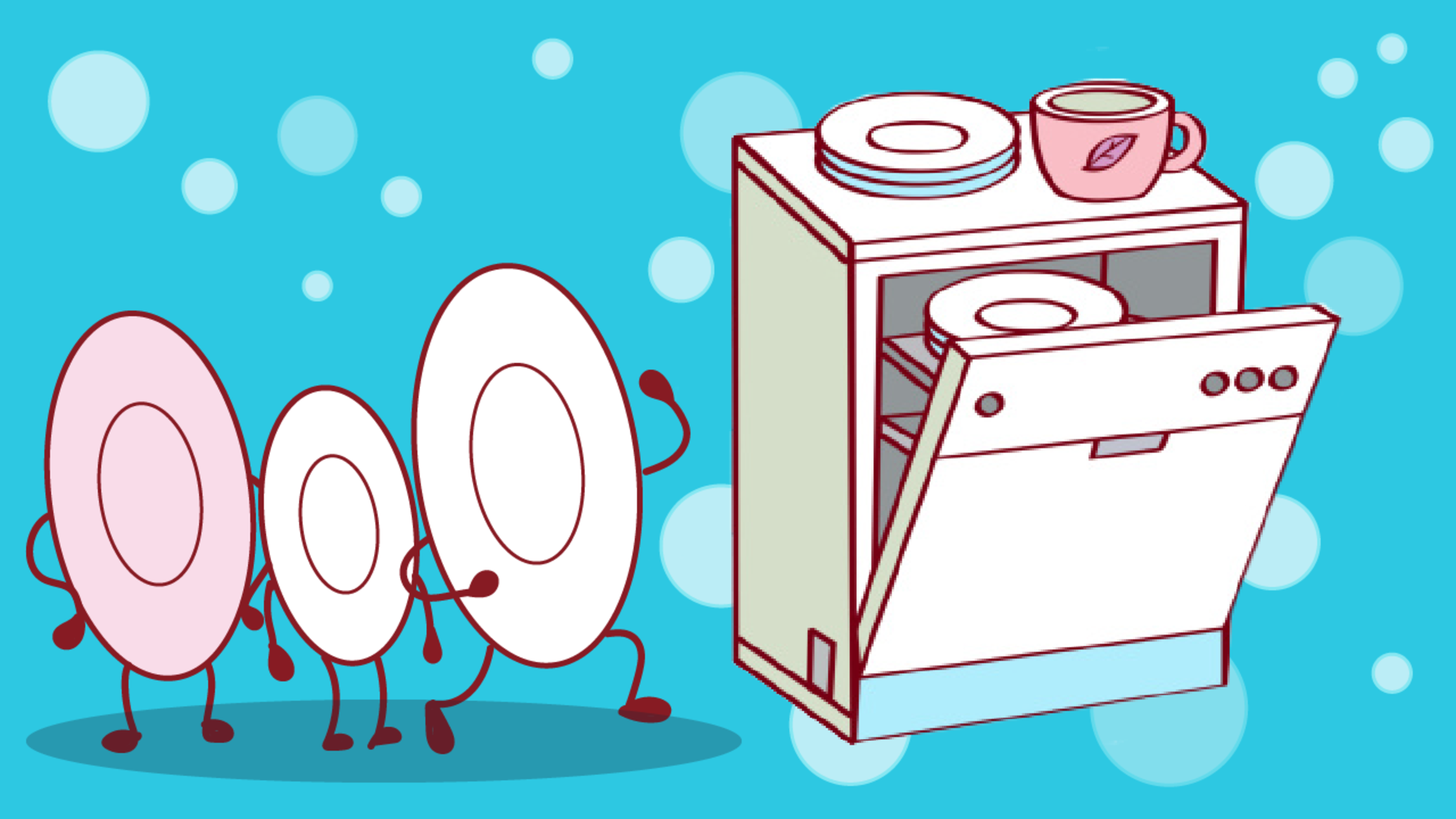

Step-by-step guide to load a dishwasher
How to Correctly Load your Dishwasher...
Step 1
Ask an adult to help you learn how to load the dishwasher safely.
Step 2
Open the dishwasher door so you can reach inside.
Step 3
Pull out the top and bottom racks so you have room to load dishes.
Step 4
Sort the dirty dishes into piles for plates; bowls; cups; utensils; and pans on the counter.
Step 5
Scrape leftover food from each dish into the trash or compost.
Step 6
Place plates standing up on the bottom rack with the dirty side facing the center.
Step 7
Put bowls and pans on the bottom rack tilted downward so water can reach them.
Step 8
Place cups and glasses on the top rack upside down and not touching each other.
Step 9
Put plastic items only on the top rack so they do not melt.
Step 10
Arrange utensils in the utensil basket with handles down and alternate directions so they do not nest; put sharp knives point-down.
Step 11
Check that the spray arms can spin freely so water can reach all the dishes.
Step 12
Add the correct amount of dishwasher detergent to the dispenser following the package directions.
Step 13
Close the dishwasher door and ask your adult to choose the right cycle and start the machine.
Step 14
When the cycle finishes and your adult says it is safe open the dishwasher and help unload the top rack first then the bottom rack.
Step 15
Share your finished dishwasher-loading skills on DIY.org
Help!?
What can we use if we don't have dishwasher detergent or a utensil basket?
If you don't have dishwasher detergent, never use regular dish soap—use a dishwasher pod or powder in the detergent dispenser or handwash, and if you lack a utensil basket, put utensils in a small cup or mesh bag with handles down and knives point-down.
Why might dishes still come out dirty and how can we fix it?
If dishes are dirty, check that the spray arms can spin freely, make sure plates face the center, cups and glasses aren't touching, plastics are only on the top rack, and you added the correct amount of detergent to the dispenser.
How should I change this activity for younger toddlers versus older kids?
For toddlers, have them sort dishes on the counter and scrape leftovers with an adult nearby, while older kids can pull out racks, place plates on the bottom rack and cups on the top rack, check the spray arms, and add detergent with supervision.
How can we extend or personalize the dishwasher-loading activity?
Create a laminated step-by-step checklist (open door, pull racks, sort, scrape, place plates on bottom rack, cups on top rack, check spray arms, add detergent, close door) and time or photograph the result to share your finished dishwasher-loading skills on DIY.org.
Watch videos on how to load a dishwasher
TOP 10 SAMSUNG DISHWASHER LOADING TIPS AND TRICKS | HOW TO LOAD YOUR DISHWASHER PROPERLY
3 Videos

TOP 10 SAMSUNG DISHWASHER LOADING TIPS AND TRICKS | HOW TO LOAD YOUR DISHWASHER PROPERLY
How to Properly Load a Dishwasher (Avoid This Common Mistake!)

Teach Kids How to Load the Dishwasher Properly (52 Essential Life Skills series)
Facts about kitchen safety for kids
💧 Modern ENERGY STAR dishwashers can use as little as 3–4 gallons (11–15 L) of water per cycle—often less than washing by hand.
🍽️ Plates should face the center of the dishwasher so water hits them; cups and plastics belong on the top rack to stay safe from heat.
🔪 Sharp utensils are risky to load—ask an adult to place knives or put them handle-up in a secure holder so no one gets cut.
🔁 The spray arms need room to spin—don’t stack or block items or the water won’t reach all the dishes.
🔒 Many dishwashers include child-locks and safety settings—always ask an adult before pressing buttons or starting a cycle.
How do I teach my child to load the dishwasher safely?
What materials do I need to teach loading a dishwasher?
What ages is loading the dishwasher suitable for?
What are the benefits and safety tips for kids loading the dishwasher?
