How to draw the ocean - a free ocean drawing guide
Draw a layered ocean scene with waves, shoreline, and sea creatures using pencils and colors. Practice texture, perspective, and color blending.


Drawing Apps
Get inspired with these

Instructions
Learn to draw an Easy Underwater Scene | How to Draw Sea Animals in an Ocean | The Kid Next Door
Step 1
Lay out your drawing paper pencil eraser and coloring materials on a clean workspace.
Step 2
Pick the coloring material you want to use now crayons colored pencils or paints.
Step 3
Place your paper in landscape orientation so it is wider than it is tall.
Step 4
Lightly draw a straight horizon line across the middle of the paper with your pencil.
Step 5
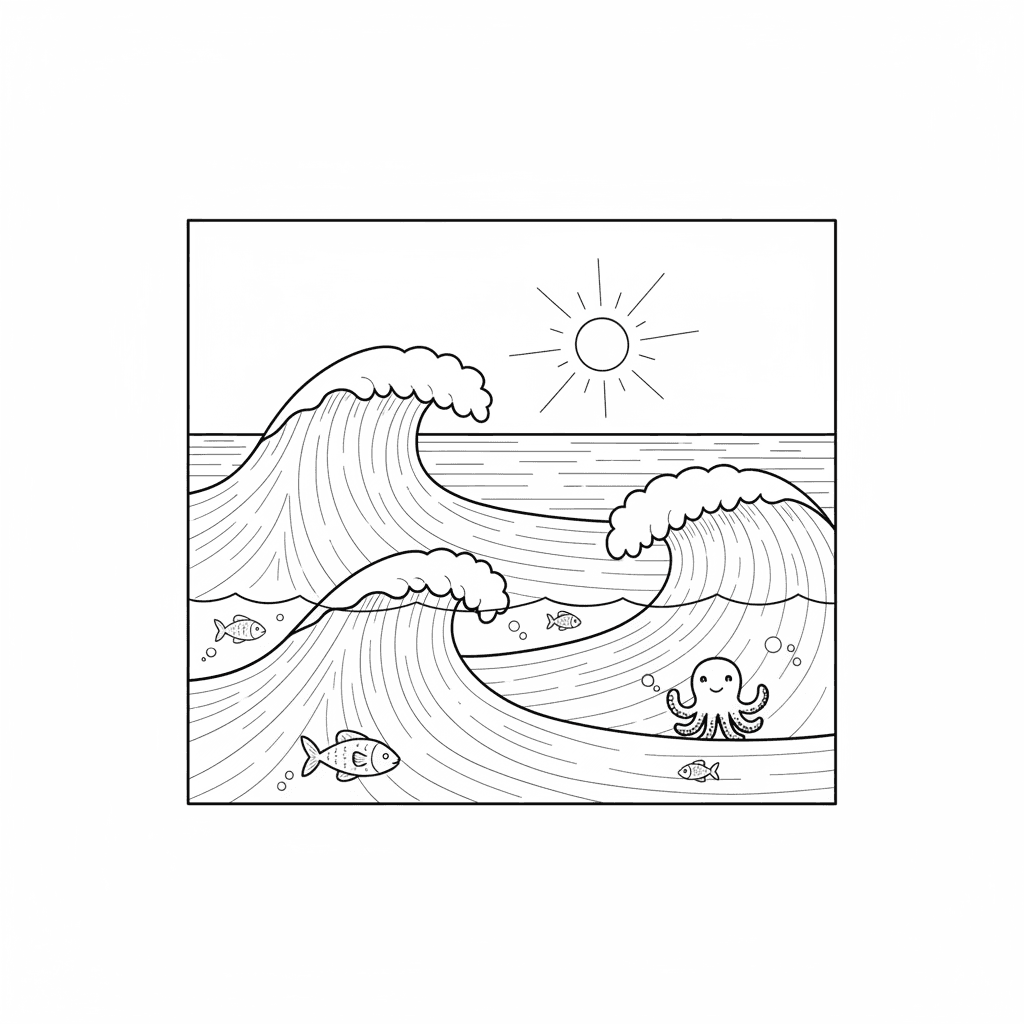
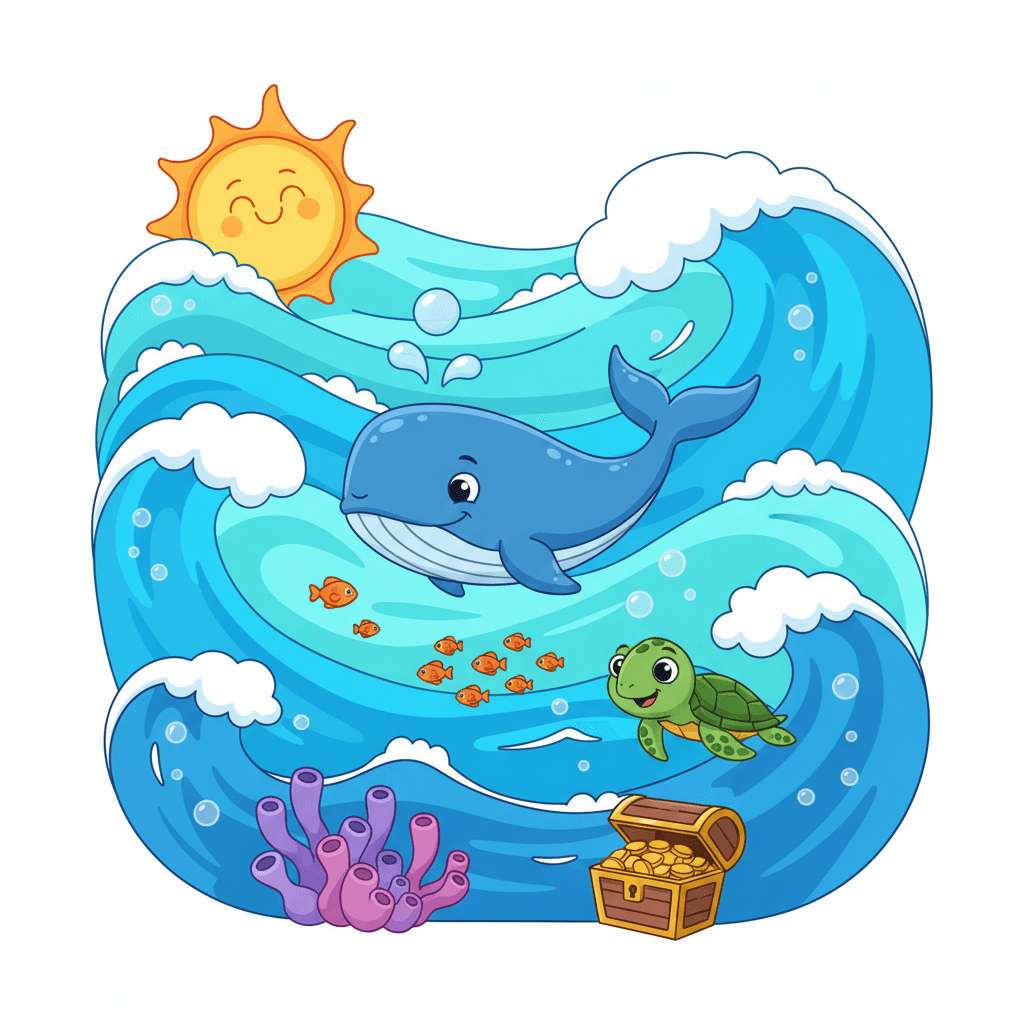
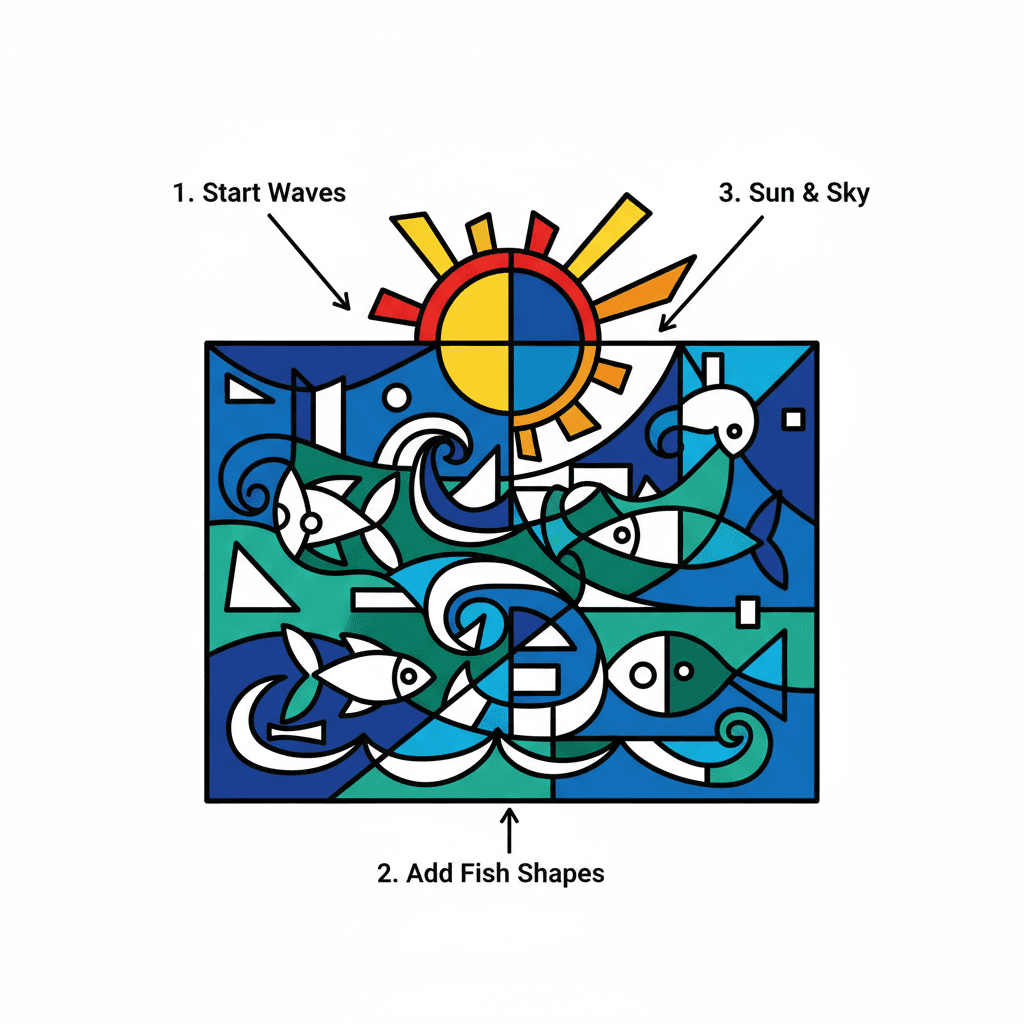
Sketch three horizontal wave layers across the sea area background small waves midground medium waves and a large rolling foreground wave.
Step 6
Draw simple sea creatures on different layers like a circle fish a curved dolphin shape and a whale silhouette.
Step 7
Add sky elements above the horizon such as a sun and a few fluffy clouds.
Step 8
Add small details to the sea and creatures like fins eyes scales and foam lines.
Step 9
Shade the waves by making the bottom of each wave darker with your pencil or by layering a darker crayon at the base.
Step 10
Color the sky using a light to dark gradient from the horizon upward with your chosen coloring materials.
Step 11
Outline the main shapes with a darker color or marker to make them pop.
Step 12
Write your name neatly in a corner as your artist signature.
Step 13
Take a photo or upload your finished ocean scene and share your creation on DIY.org.
Help!?
What can we use instead of crayons, colored pencils, or paints if we don’t have them?
Use washable markers, water‑based felt tips, or watercolor pencils as substitutes for the 'crayons colored pencils or paints' listed in step 2, adjusting drying time if you use wet media.
My horizon line is wobbly — how do I fix it so the ocean looks right?
Lightly erase the crooked line and redraw a 'straight horizon line across the middle of the paper' from the instructions using a ruler or fold the paper as a guide so it sits evenly.
How can I adapt this activity for a 4‑year‑old or a 10‑year‑old?
For younger kids simplify by making larger shapes and one big foreground wave instead of three layers, and for older kids add the three horizontal wave layers, detailed shading at the base of each wave, and small creature details like fins, scales, and foam lines from steps 5, 8, and 7.
How can we personalize or extend the ocean drawing before sharing it?
Glue tissue paper seaweed, sprinkle blue glitter on foam lines, add a paper boat or short caption near your name signature from step 11, then photograph and upload the finished ocean scene as in step 12 to share.
Related videos
How To Draw a Sea Scenery Easy Step By Step |Drawing Sea Scenery Simple
4 Videos
How To Draw a Sea Scenery Easy Step By Step |Drawing Sea Scenery Simple
"How to Draw Underwater Scene Step by Step | Easy Drawing and Coloring for Kids"
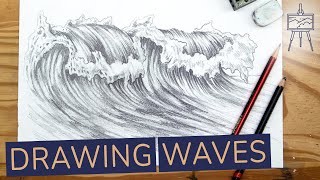
How to Draw Waves Step by Step #drawingtutorial
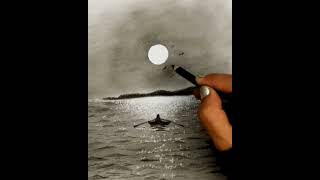
Pencil Drawing Landscape for Beginners | How to Draw Ocean Landscape Scenery Step by Step
Fun Facts
🌊 Seascapes have been a favorite subject for artists since at least the 17th century — perfect practice for ocean scenes!
🎨 Artists often use flowing S-curves to draw waves and show motion and depth in water.
🐠 Scientists have described over 240,000 marine species — so you have tons of creature ideas to sketch!
✏️ Graphite pencils have been used for drawing since the 1500s, making them a timeless tool for shading.
🖌️ Mixing blue with white makes lighter tints for sky and wave highlights, while adding darker blue or a little purple creates shadows.
How do I teach my child to draw a layered ocean scene with waves, sky, and simple sea creatures?
What materials do I need to draw a layered ocean scene at home?
What ages is drawing a layered ocean scene appropriate for?
What are the benefits and variations of drawing a layered ocean scene?
