How to draw space - a free space drawing guide
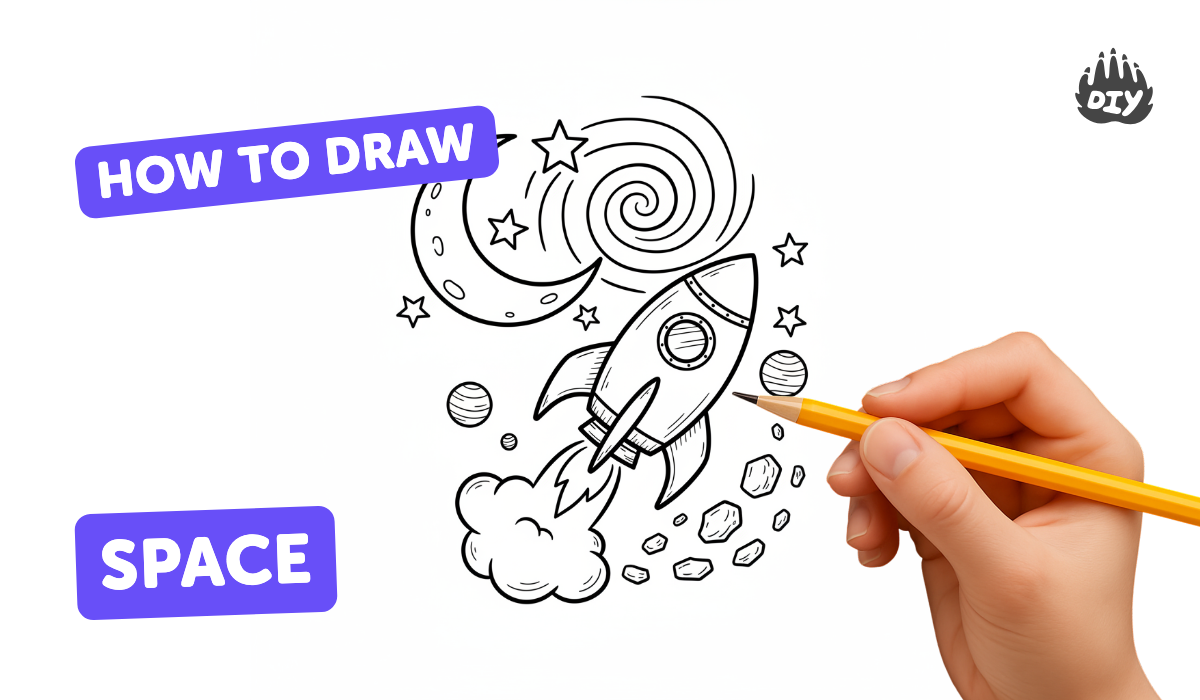
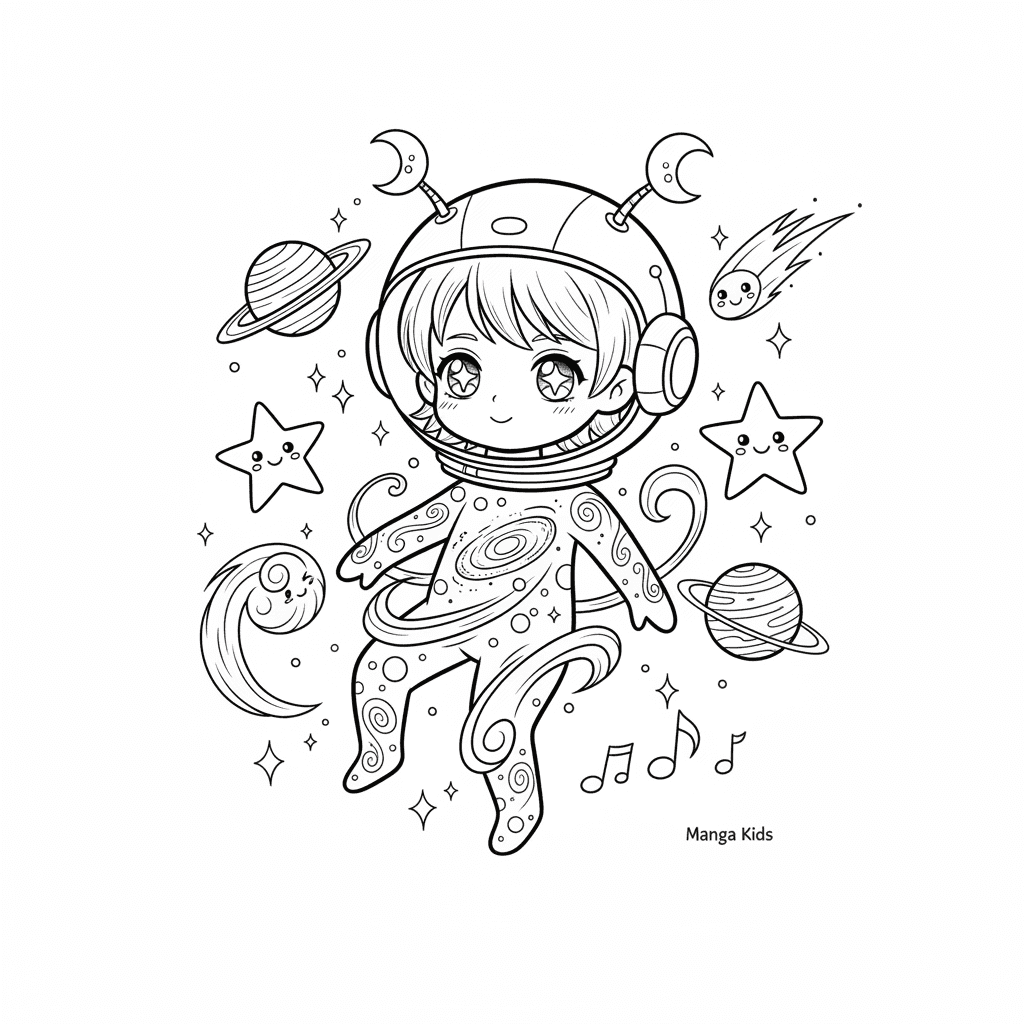
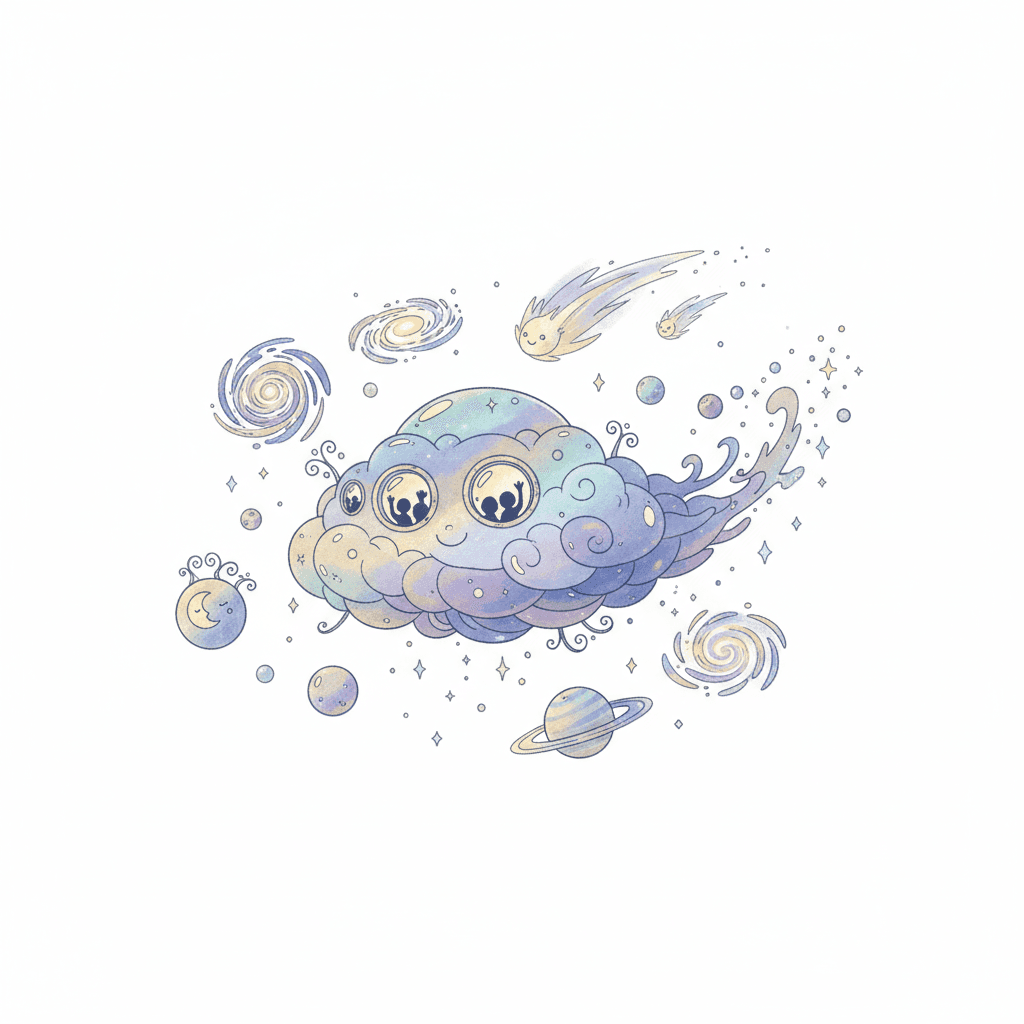
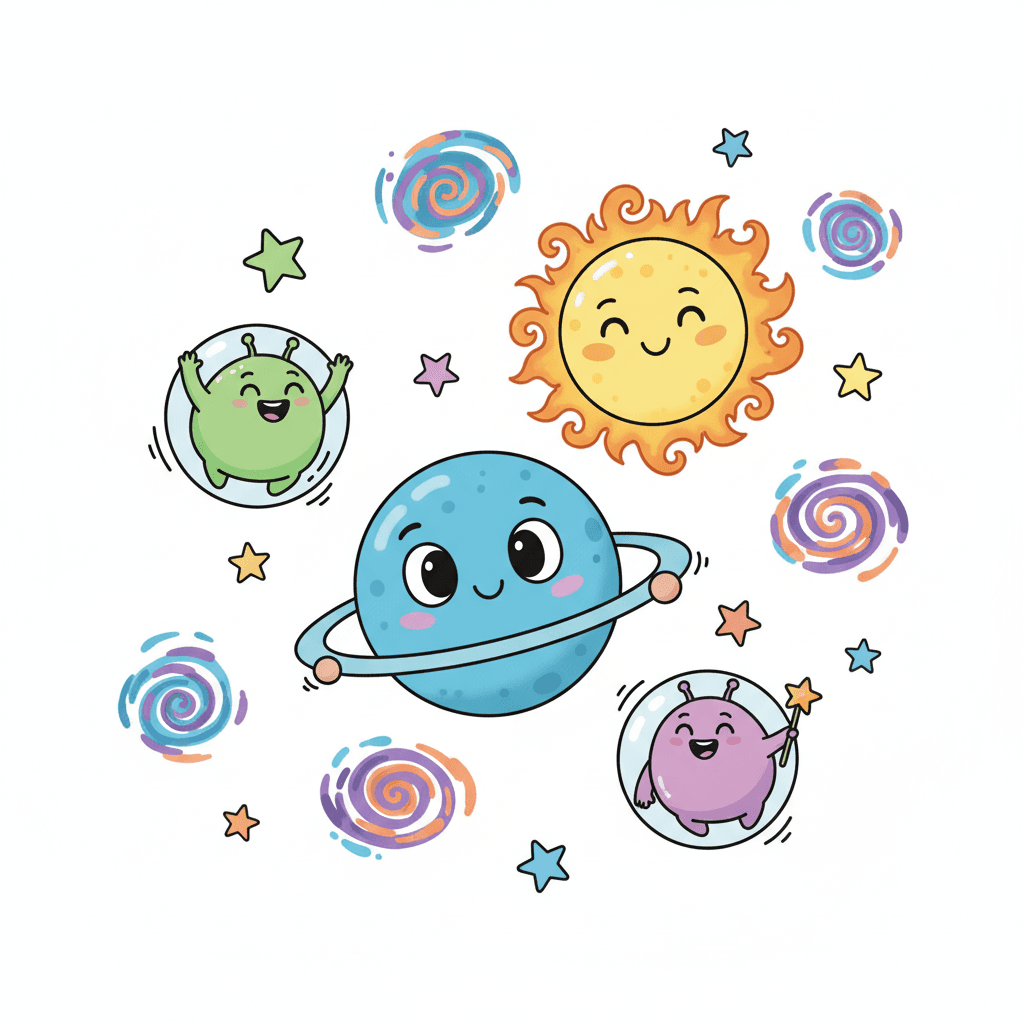
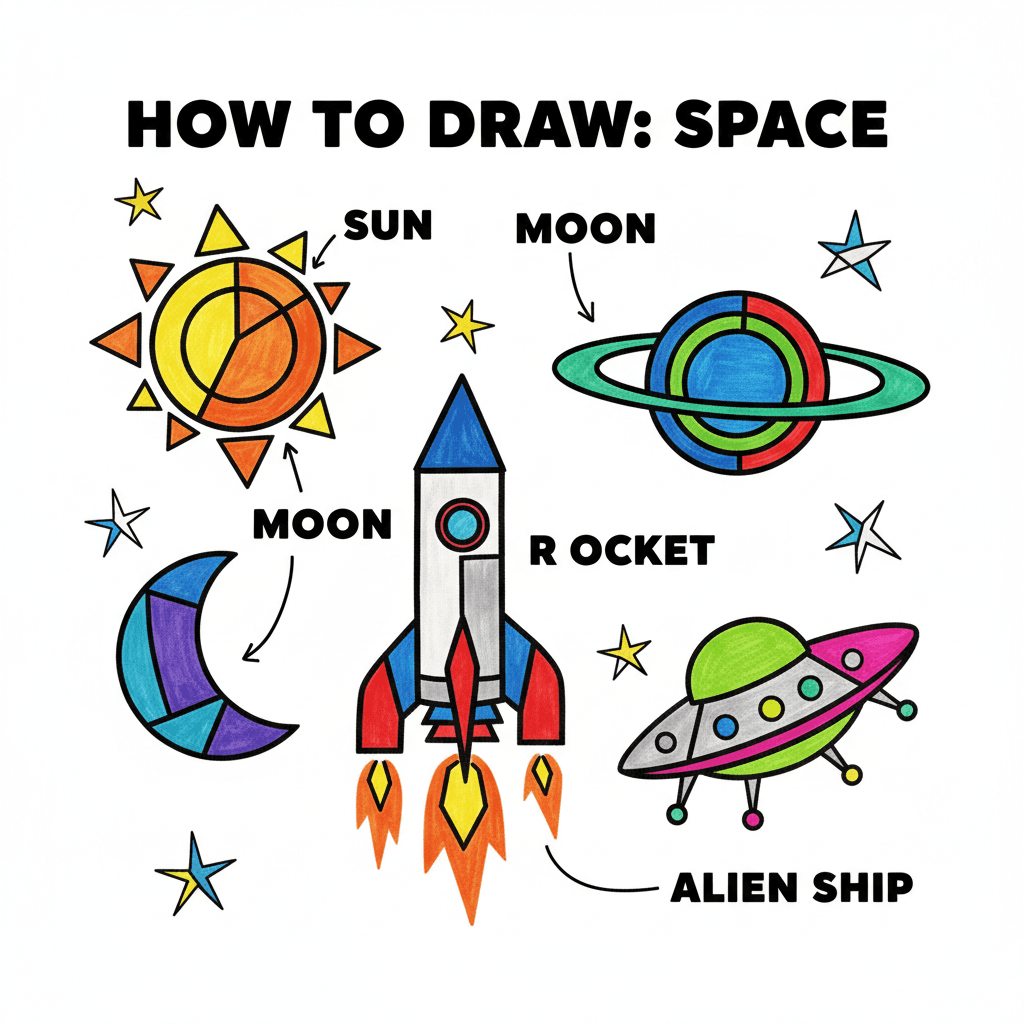
Draw a colorful space scene featuring planets, stars, rockets, and an astronaut using pencils, markers, and blending techniques to learn composition and shading.


Drawing Apps
Get inspired with these


Instructions
Astronaut Drawing for Kids 🚀 | Easy Step-by-Step Space Drawing Tutorial
Step 1
Gather your materials.
Step 2
Lightly sketch a simple layout with your pencil to decide where stars planets comets and the spaceship will go.
Step 3
Draw a large planet using a circle or oval.
Step 4
Draw two or three smaller planets and a moon using smaller circles.
Step 5
Add rings and craters to the planets by drawing curved lines and round patches.
Step 6
Draw different stars by making tiny dots and a few star shapes across the sky.
Step 7
Draw a comet with a pointed head and a flowing tail streaking across the page.
Step 8
Sketch a spaceship using simple shapes like rectangles triangles and circles.
Step 9
Add details to the spaceship such as windows and engines.
Step 10
Shade the planets and the spaceship with your pencil to show where light hits and where shadows fall.
Step 11
Carefully trace the main outlines with a black marker to make them stand out.
Step 12
Erase any extra pencil lines you no longer need.
Step 13
Color the planets comet spaceship and background with your markers.
Step 14
Use a white gel pen to add bright highlights star dots and shine on windows.
Step 15
Share your finished outer space drawing on DIY.org.
Help!?
What can we use if we don't have a white gel pen or markers?
If you don't have a white gel pen, use a small dot of white acrylic paint or white correction fluid for highlights, and swap markers for colored pencils or crayons when coloring the planets, comet, spaceship, and background.
The black marker smeared or the pencil shading looks faint—how do we fix that?
Carefully trace the main outlines with a quick‑dry black marker and let it dry completely before you erase any extra pencil lines, and if shading on the planets or spaceship is faint, darken the pencil strokes or layer with colored pencils before inking.
How can we adapt this drawing activity for different ages?
For younger kids simplify the layout and shapes (use big circles and stickers for stars) and for older kids extend step 9 by practicing realistic shading and adding detailed ring and crater textures before tracing and coloring.
How can we enhance or personalize our finished outer space drawing?
Make the piece unique by adding foil or metallic paper to planet rings, using glow‑in‑the‑dark paint for star dots, writing a short planet name or story beside your spaceship, and then share the finished outer space drawing on DIY.org.
Related videos
How To Draw Space Step By Step 🚀🪐 Space Drawing EASY
4 Videos
How To Draw Space Step By Step 🚀🪐 Space Drawing EASY
How to Draw an Astronaut in Space Scene Step by Step - very easy
How to Draw the SOLAR SYSTEM! | Step by Step Easy Drawing for Kids | Learn Planet Names and Colors
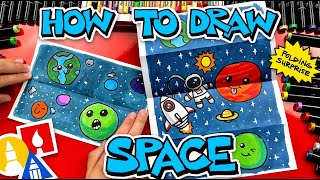
How To Draw Space Folding Surprise
Fun Facts
🌟 The Sun is a star — it's the closest star to Earth, which is why it looks so big and bright.
🪐 Planets don't make their own light; we see them because they reflect sunlight.
☄️ Comets grow glowing tails of gas and dust that can stretch millions of kilometers when they near the Sun.
🚀 Spacecraft often travel over 28,000 km/h to stay in orbit — faster than a supersonic jet!
🌌 Outer space is almost a perfect vacuum, so there's no air to carry sound and space is silent.
How do I draw a detailed outer space scene with stars, planets, comets, and a spaceship?
What materials do I need to draw a detailed outer space picture?
What ages is this space-drawing activity suitable for?
What are the benefits of drawing an outer space scene and safe variations to try?
