How to Draw a Treasure Chest
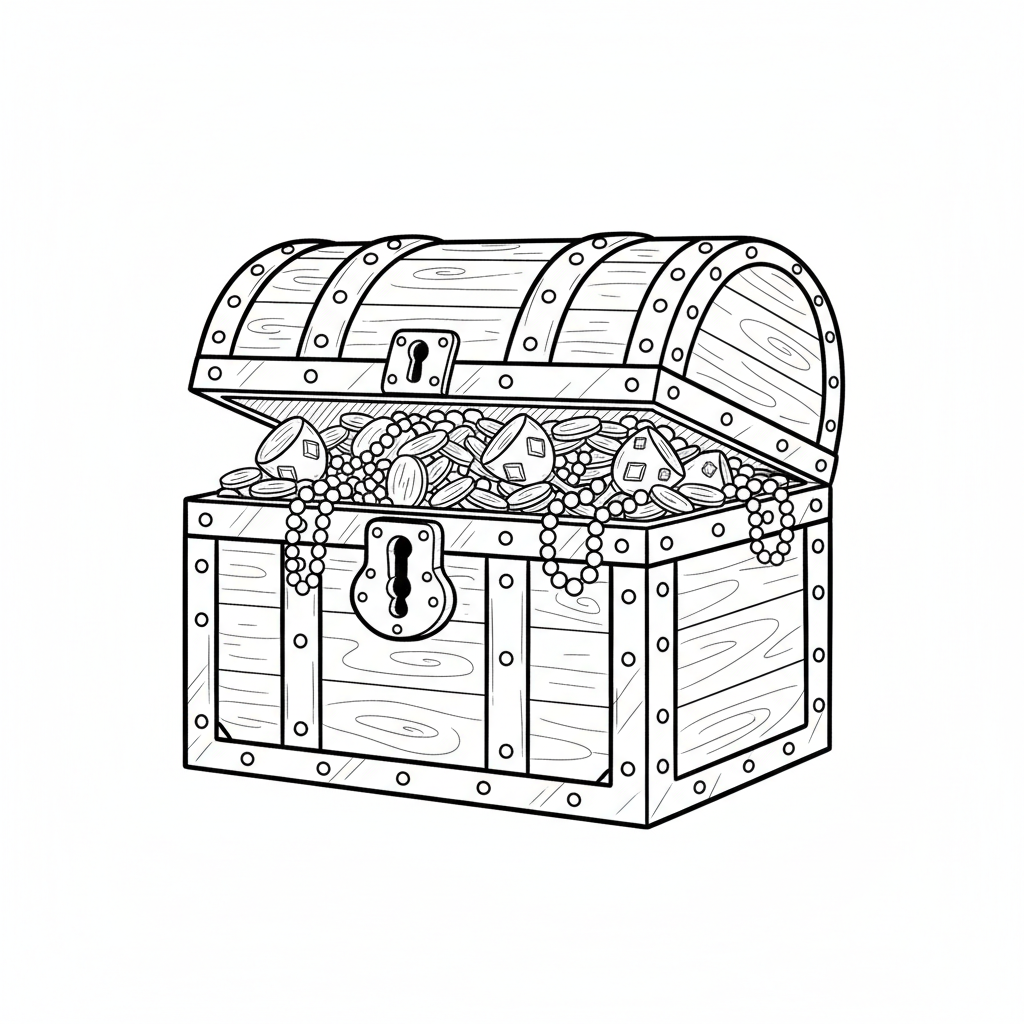
Draw a treasure chest step-by-step using basic shapes, details, and shading. Practice proportions, perspective, and adding wood texture plus metal lock highlights.
About this tutorial
Draw a treasure chest step-by-step using basic shapes, details, and shading. Practice proportions, perspective, and adding wood texture plus metal lock highlights.
What you need
Instructions
- 1
Step 1
Draw a medium rectangle in the center of your paper for the front face of the chest.
- 2
Step 2
From the top two corners of the rectangle draw two short diagonal lines slanting to the right to show depth.
- 3
Step 3
Connect the ends of those diagonals with a vertical line to form the right side panel of the chest.
- 4
Step 4
Draw a gentle curved arc along the top edge of the front rectangle to make the front curve of the lid.
- 5
Step 5
Draw a second curved arc behind the first arc and connect the ends to create the lid thickness in perspective.
- 6
Step 6
Draw a thin horizontal strip where the lid meets the front to represent the metal rim.
- 7
Step 7
Draw a small rounded rectangle in the center front and add a tiny circle for the keyhole to make the lock plate.
- 8
Step 8
Draw evenly spaced vertical lines across the front panel to show wood planks.
- 9
Step 9
Add small circles along the plank lines near the edges to show nail heads.
- 10
Step 10
Add curved wood grain lines on each plank and along the lid following the plank shapes.
- 11
Step 11
Trace the final chest outlines with a darker pencil or marker to make the drawing pop.
- 12
Step 12
Erase any light construction lines and clean up smudges around the drawing.
- 13
Step 13
Make tiny thin crescent highlights on the lock and rim by gently erasing small shapes to show metal shine.
- 14
Step 14
Shade the right side panel darker than the front using light strokes to show perspective.
- 15
Step 15
Share your finished treasure chest on DIY.org
Get inspired
Fun facts
How do I draw a treasure chest step-by-step?
Start by sketching a rectangle for the chest body and a slightly curved rectangle for the lid. Add perspective by drawing vanishing-point guidelines and angled edges. Divide the front into planks with vertical lines, sketch metal bands and a central lock plate, then add a keyhole. Refine with darker lines, erase guides, and add wood grain (short curved lines, knots). Shade under the lid and along planks using a light source for depth; add highlights on metal.
What materials do I need to draw a treasure chest?
Basic sketching tools: a range of pencils (HB for outlines, 2B–4B for shading), a soft eraser, and a sharpener. Use a ruler for perspective and straight edges, a blending stump or tissue for smooth shading, and good-quality drawing paper. Optional: colored pencils or markers for color, fineliner pens for crisp outlines, and reference images. For kids, non-toxic, washable markers and a forgiving eraser make the activity easier.
What ages is this treasure chest drawing activity suitable for?
This activity suits children roughly ages 5–12 with adjustments. Ages 5–7 enjoy simplified step-by-step shapes and adult help with rulers or tracing. Ages 8–10 can follow perspective lines, add plank details, and practice basic shading. Ages 11+ can refine proportions, complex perspective, and advanced texture techniques. Modify complexity and tools for skill level, and supervise younger children when using sharper pencils or small tools.
What are some variations or benefits of drawing a treasure chest?
Variations: draw the chest open with coins and jewels, place it underwater or on a pirate ship, try cartoon vs. realistic styles, or use mixed media like watercolor washes and metallic paint for highlights. Benefits: improves fine motor skills, spatial reasoning, proportion and perspective understanding, texture observation, and creative storytelling. Safety: use age-appropriate, non-toxic materials and supervise younger children with sharp tools or metallic paints.
Watch & Learn
Need help?
What can I use if I don't have a darker pencil or marker to trace the final chest outlines?
If you don't have a marker, use a darker HB/2B pencil, a black colored pencil, or a fine-tip crayon to complete the step "Trace the final chest outlines with a darker pencil or marker".
My lid arcs or the right side panel look off—how do I fix perspective mistakes?
If the right side panel or lid looks skewed, lightly erase the two short diagonal lines and redraw them the same length before reconnecting with the vertical line and adding the lid arcs to restore correct perspective.
How can I adapt this treasure chest drawing for younger or older kids?
For younger kids, simplify by drawing fewer vertical planks and skipping tiny nail heads while using thick crayons for the steps that add wood planks and nail heads, and for older kids, add extra wood grain lines, the thin crescent highlights on the lock and rim, and darker right-side shading to practice value and detail.
How can we make the finished chest more interesting or personal after tracing and shading?
After tracing, shading the right panel, and adding highlights, personalize the drawing by coloring planks brown, drawing coins or gems spilling from an opened lid arc, decorating the lock plate, and then sharing the finished treasure chest on DIY.org.