How to Draw a Toilet
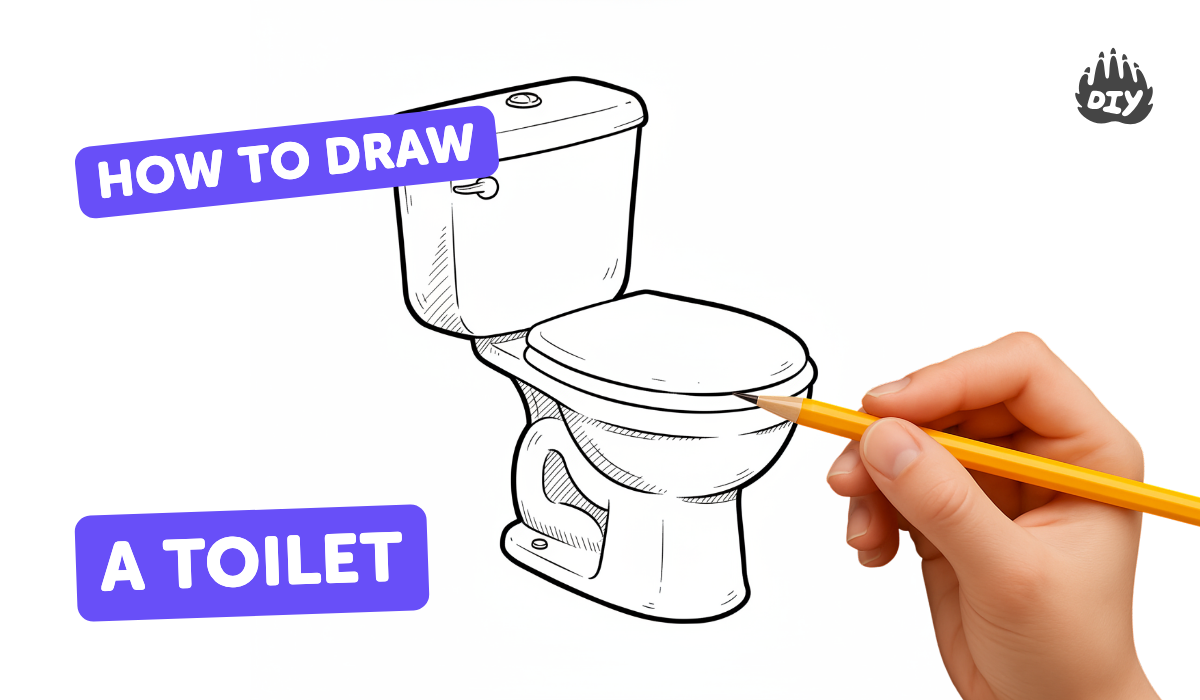
Learn to draw a toilet step-by-step using simple shapes, practice proportions, add details like seat and tank, and color your finished drawing.
About this tutorial
Learn to draw a toilet step-by-step using simple shapes, practice proportions, add details like seat and tank, and color your finished drawing.
What you need
Instructions
- 1
Step 1
Draw a horizontal oval near the top half of the paper for the outer toilet rim.
- 2
Step 2
Draw a slightly smaller oval inside the first oval to make the inner rim opening.
- 3
Step 3
From the left and right edges of the outer oval draw two vertical slightly curved lines down to form the bowl sides.
- 4
Step 4
Connect the two vertical lines at the bottom with a shallow curved line to close the bowl shape.
- 5
Step 5
Directly behind the bowl draw a rounded rectangle slightly above the rim for the water tank.
- 6
Step 6
On the right side of the tank draw a small rectangle or circle to show the flush handle.
- 7
Step 7
Under the bottom of the bowl draw two short vertical lines to start the pedestal.
- 8
Step 8
Connect those two short lines with a wide curved base to finish the pedestal.
- 9
Step 9
Lightly draw a U-shaped ring around the top outer oval to show the toilet seat.
- 10
Step 10
Draw two small rectangles at the back of the seat to make the hinge pieces.
- 11
Step 11
Lightly erase any overlapping sketch lines you do not want in the final drawing.
- 12
Step 12
Trace over the main lines with your pencil to make the final outline darker and cleaner.
- 13
Step 13
Use your coloring materials to color the tank bowl seat and pedestal with your chosen colors.
- 14
Step 14
Add extra details like a water line shading or floor tiles to make your picture more interesting.
- 15
Step 15
Share your finished creation on DIY.org.
Fun facts
How do I teach my child to draw a toilet step-by-step?
Start by showing simple shapes: draw a rectangle for the tank and a large oval for the bowl. Add a smaller oval on top for the seat and a curved line connecting tank and bowl for the base. Refine outlines, erase extra lines, then add details like the flush handle, lid seam, and toilet rim. Practice proportions by comparing sizes, then color or shade. Encourage slow, step-by-step drawing and praise attempts to build confidence.
What materials do we need to draw a toilet with kids?
You only need basic supplies: plain paper or a sketchbook, pencils (HB or 2B), a good eraser, and a pencil sharpener. For coloring, use washable markers, colored pencils, or crayons. Optional items: a ruler for straight tank edges, reference photos, and scrap paper for sketching practice. Choose non-toxic, washable art supplies for younger children and keep a cloth handy for quick cleanups.
What ages is learning to draw a toilet suitable for?
Drawing a toilet works well for kids aged 4–12 with age-adjusted expectations. Preschoolers (4–6) can trace simple shapes and add a seat, while early elementary (6–9) practice proportions and connect shapes. Older kids (10–12) can try realistic details, perspective, and shading. Adapt instruction and tools—larger crayons for young children, finer pencils for older kids—and offer supervision and encouragement as motor skills develop.
What are the benefits and safety tips for drawing a toilet with children?
Drawing a toilet teaches shape recognition, proportions, fine motor skills, and following steps, boosting confidence. It’s a calm, screen-free activity that encourages observation and creativity (decorate or make cartoon versions). Safety tips: use non-toxic, washable supplies, ensure good lighting and seating, and supervise younger children. For variety, try drawing bathroom scenes, labeling parts for a mini science lesson, or turning it into a coloring and storytelling activity.
Watch & Learn
Need help?
What can we use if we don't have a pencil, eraser, or coloring materials from the instructions?
Use a ballpoint pen or felt-tip marker to sketch if you don't have a pencil, a clean corner of a white crayon or the back of a paintbrush to lift light marks instead of an eraser, and replace colored pencils with crayons, markers, or watercolor paints to color the tank, bowl, seat, and pedestal.
My ovals and the two vertical bowl lines look uneven—how can we fix them before tracing the final outline?
Lightly redraw a center guideline and use a ruler or fold the paper in half to measure the left and right edges, erase extra sketch lines, then trace over the main lines to make the outer and inner ovals and the slightly curved vertical lines more even.
How can I change the activity for younger kids or make it more challenging for older kids?
For younger children, pre-draw the outer and inner ovals and the shallow curved bowl base so they can add the seat, hinge rectangles, and color the tank, bowl, seat, and pedestal, while older kids can add detailed hinge pieces, realistic water-line shading, floor tiles, and cleaner traced outlines for a more advanced drawing.
What are some ways to personalize or extend the drawing before sharing it on DIY.org?
Add patterned floor tiles, a plunger or toilet-paper holder next to the pedestal, change the flush handle shape, decorate the seat with colors or stickers, or cut and mount the finished traced drawing on cardboard to create a small 3D display to photograph and share on DIY.org.