How to draw a softball - a free softball drawing guide
Draw a softball by sketching a circle, adding curved seams and stitches, then shade for roundness while practicing observation and measurement.


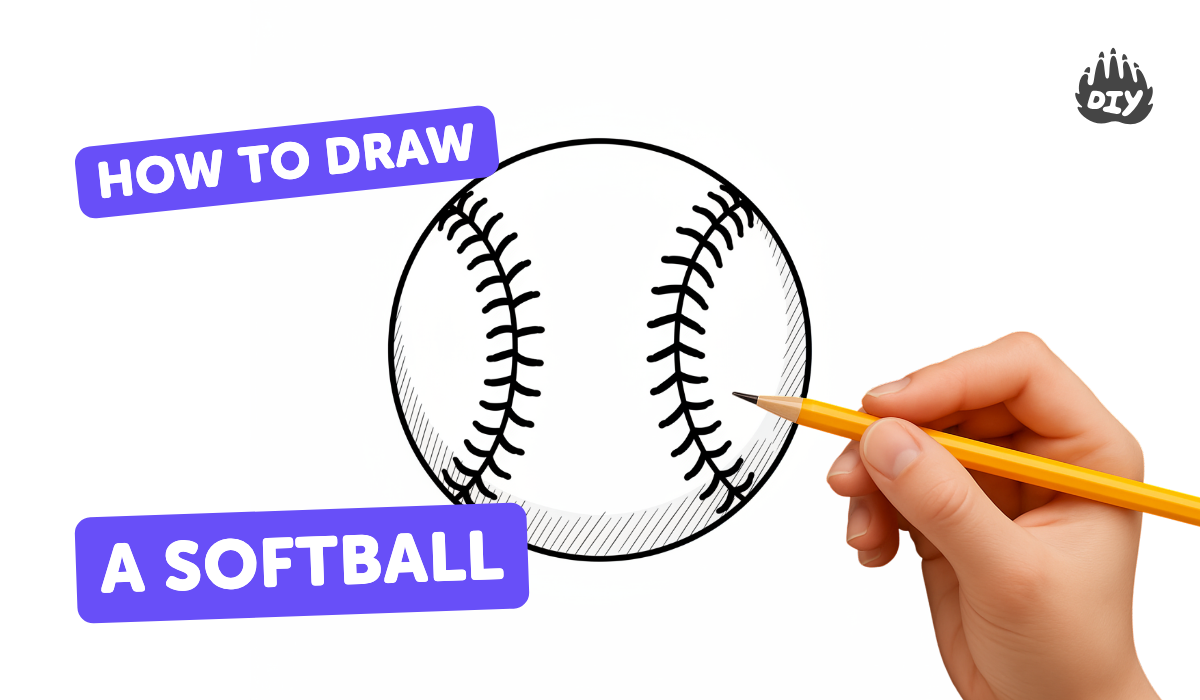
Step-by-step guide to draw a softball
How To Draw a SoftBall for Kids | Easy Drawing
Step 1
Clear a flat workspace and put your paper and tools where you can reach them.
Step 2
Use a compass or trace a round object to lightly sketch a circle near the center of your paper.
Step 3
Measure the circle’s diameter with your ruler and note how wide it is.
Step 4
Lightly mark the center point of the circle using the measurement as a guide.
Step 5
Draw two gently curved seam guidelines across the circle that mirror each other like an elongated S shape.
Step 6
Draw short evenly spaced stitch lines along each seam so they look like the stitches on a softball.
Step 7
Decide where the light is coming from and lightly mark a small spot outside the circle to show the light source.
Step 8
Shade the side of the ball opposite the light source with light pencil strokes to start creating roundness.
Step 9
Darken the shading gradually toward the edge farthest from the light to make the softball look round.
Step 10
Smooth the shading with your finger or a tissue to blend the tones gently.
Step 11
Erase any extra construction marks that you no longer need.
Step 12
Darken the final circle edge and the seam lines and add a small bright highlight on the side facing the light.
Step 13
Share your finished softball drawing on DIY.org.
Help!?
What can I use instead of a compass if I don't have one?
Trace a round object like a cup, bowl, jar lid, or large coin on your paper to lightly sketch the circle in step 2.
My seams look uneven — how can I fix them?
Lightly erase and redraw the two gently curved seam guidelines so they mirror each other, using the circle's center point and the ruler measurement from step 3 to keep them balanced before adding the short stitch lines.
How can I adapt this activity for younger or older kids?
For younger kids, trace a large circle and have an adult draw the seam guidelines so they can add stitches and simple shading, while older kids can measure the diameter, layer darker pencil tones, blend with a tissue or stump, and refine the highlight and edge in step 12 for more realism.
How can we personalize or extend the drawing?
Add color with colored pencils or markers, draw a player number or logo on the ball, sketch a cast shadow on the paper for depth, and then share the finished softball drawing on DIY.org as suggested in the final step.
Watch videos on how to draw a softball
Softball Character | Drawing for Beginners | Fun Drawing Tutorials
4 Videos
Softball Character | Drawing for Beginners | Fun Drawing Tutorials

Glove and Softball | Drawing for Beginners | Fun Drawing Tutorials
How to draw a girl playing softball || draw a softball player girl || pencil sketch tutorial
How to Draw a Baseball | Easy Step-by-Step Drawing for Kids
Facts about observational drawing for kids
🥎 Softballs are bigger than baseballs — a typical softball is about 12 inches in circumference vs. a baseball around 9 inches.
✏️ To make a drawn ball look round, artists place a bright highlight, a core shadow, and smooth midtones between them.
🧵 The red stitches on softballs and baseballs form a figure-eight seam and are slightly raised to help pitchers grip the ball.
📏 Tracing a cup or using a compass is a quick way to get a perfect circle and keep your softball proportional.
🕰️ Softball began indoors in 1887 and later evolved into the outdoor sport known worldwide today.
How do I draw a softball step by step?
What materials do I need to draw a softball?
What ages is drawing a softball suitable for?
What are the benefits of drawing a softball for kids?
