How to draw a soccer player - a free soccer player drawing guide
Follow step by step drawing instructions to sketch a soccer player in action, learn proportions, basic shading, and add a jersey and ball.


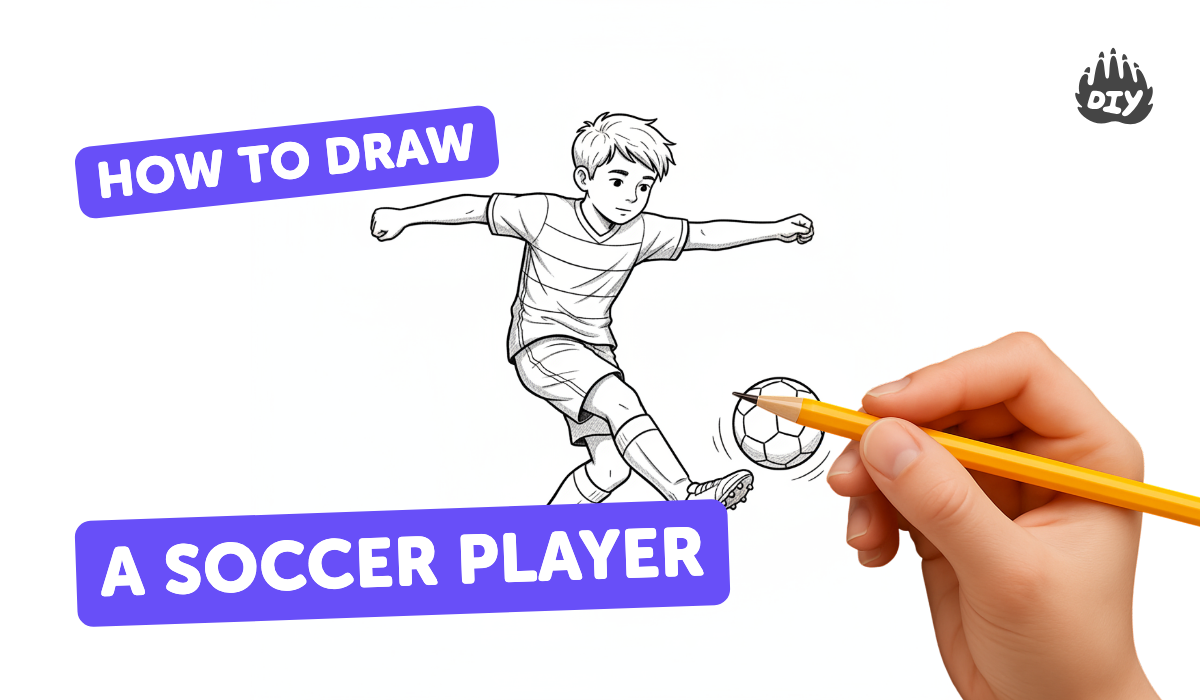
Step-by-step guide to draw a soccer player
How To Draw A Soccer Player
Step 1
Lightly draw a stick figure in a kicking pose with one leg forward and one leg back.
Step 2
Draw a medium oval on top of the stick figure for the head.
Step 3
Draw a long oval under the head for the torso.
Step 4
Put small circles at the shoulder elbow hip and knee points to mark the joints.
Step 5
Draw tube shapes around the stick lines of the arms to make the arms thicker.
Step 6
Draw tube shapes around the stick lines of the legs to make the legs thicker.
Step 7
Draw a circle near the kicking foot for the soccer ball.
Step 8
Draw simple shoe shapes on the ends of each leg.
Step 9
Draw the outline of the jersey over the torso adding a collar and short sleeves.
Step 10
Draw the outline of the shorts around the hips.
Step 11
Add a big number on the front of the jersey.
Step 12
Draw simple eyes a nose a mouth and hair on the head.
Step 13
Erase the stick figure and extra guide marks gently so your drawing looks clean.
Step 14
Add light pencil shading under the jersey folds under the ball and along one side of the body and then color the jersey skin shoes and ball with your coloring materials.
Step 15
Share your finished drawing on DIY.org
Help!?
If I don't have special drawing pencils or certain coloring supplies, what can I use instead?
Use any regular HB or 2B pencil held very lightly for the initial stick figure, a soft crayon or light graphite for the shading under the jersey and ball, and swap markers or crayons for coloring the jersey, skin, shoes, and ball.
My legs look lopsided after I add the tube shapes—how can I fix them without starting over?
Check the small joint circles at the hip and knee to realign the underlying stick lines, lightly erase and redraw the stick leg proportions, then redraw the tube shapes evenly before erasing guide marks.
How can I adapt this drawing activity for different ages or skill levels?
For younger kids use a pre-drawn stick template to trace the head, torso, and legs and stickers for the big jersey number, while older children can add detailed hair, jersey folds, light pencil shading under the ball and along one side of the body, and practice foreshortening on the kicking leg.
What are simple ways to enhance or personalize the finished soccer player drawing?
After erasing guides, add a team logo and player name above the big number, draw a goal and grass beneath the ball for a scene, deepen jersey folds with cross-hatching, mix markers and colored pencils for richer color, and then share the finished drawing on DIY.org.
Watch videos on how to draw a soccer player
How to Draw a Soccer Player - Easy drawing, painting and coloring for kids
4 Videos
How to Draw a Soccer Player - Easy drawing, painting and coloring for kids
How To Draw A Soccer Player
Soccer Player drawing easy | Art tutorial | How to draw football player step by step #artjanag
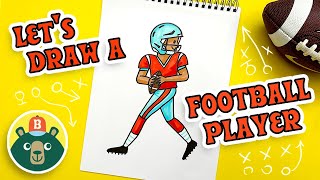
How to Draw a FOOTBALL PLAYER | Easy Step-by-Step for Kids
Facts about figure drawing for kids
⚽ A professional soccer player typically runs 7–11 km during a 90-minute match — great inspiration for dynamic action poses!
✍️ Gesture drawing sessions are often just 30–60 seconds per pose to help artists capture motion quickly.
📏 In classical figure drawing the adult body is often measured as about 7.5–8 heads tall to get realistic proportions.
🎨 Chiaroscuro (Italian for "light-dark") is a shading technique used by masters like Caravaggio to make figures pop.
🥅 A size 5 soccer ball (used in adult play) is about 22 cm across and weighs 410–450 grams — handy for drawing a realistic ball.
How do I teach a child to draw a soccer player step by step?
What materials do I need to draw a soccer player?
What ages is this soccer player drawing activity suitable for?
What are the benefits of drawing a soccer player?
