How to Draw a Pitbull
Draw a realistic pitbull step-by-step using simple shapes, add shading and details, and practice proportions and facial expressions with pencil and eraser.
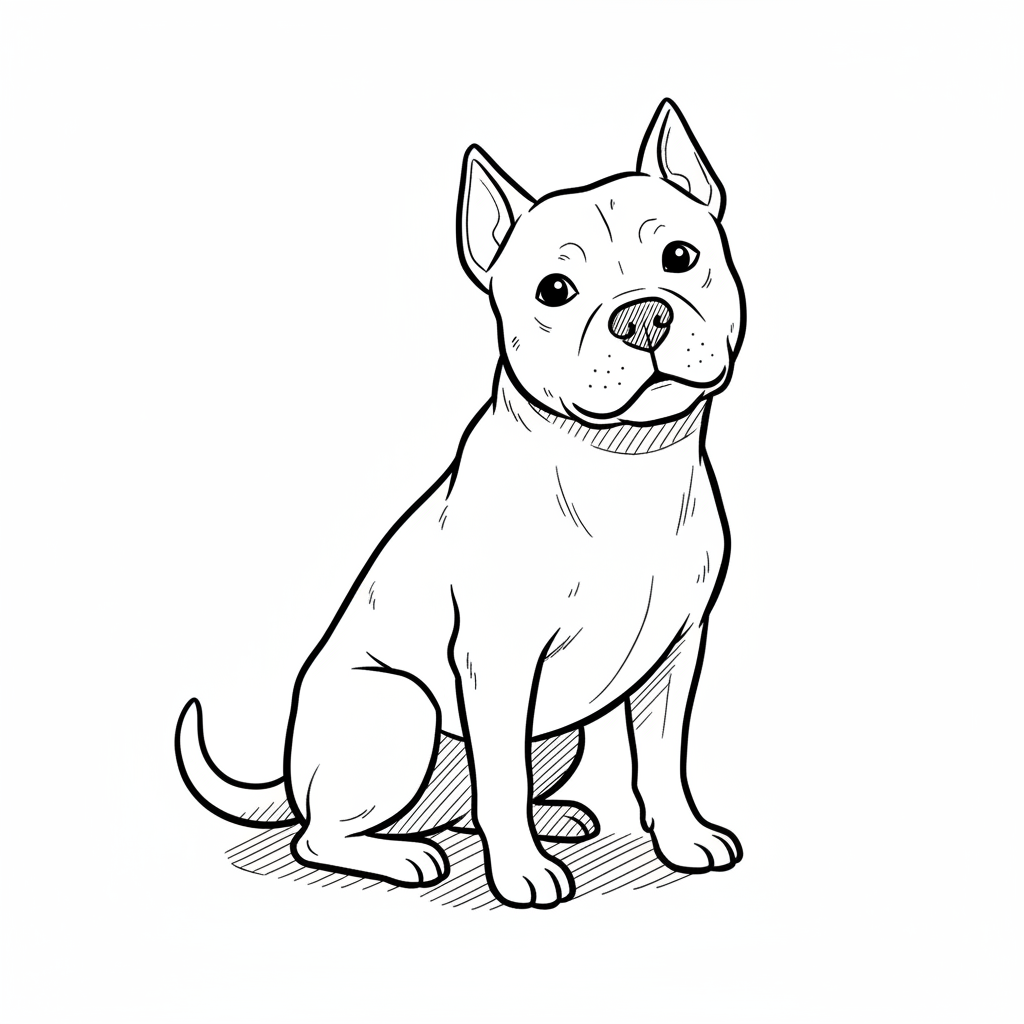
About this tutorial
Draw a realistic pitbull step-by-step using simple shapes, add shading and details, and practice proportions and facial expressions with pencil and eraser.
What you need
Instructions
- 1
Step 1
Pick a clear reference photo of a pitbull and look closely at the head shape and facial expression.
- 2
Step 2
Lightly draw a circle for the skull and a short rectangle or box shape for the muzzle to build the basic head.
- 3
Step 3
Draw a vertical center line and a horizontal eye line across the head to guide where features will go.
- 4
Step 4
Sketch the jawline and cheek muscles by connecting the skull circle and muzzle with curved lines.
- 5
Step 5
Add the ears as simple triangle or folded shapes placed on top of the skull circle.
- 6
Step 6
Draw a thick neck and the top of the chest using rounded shapes to show the pitbull’s muscular build.
- 7
Step 7
Mark small shapes where the eyes nose and mouth will sit using the guide lines to check spacing and proportion.
- 8
Step 8
Erase any guide lines that fall outside the refined head outline so the face looks cleaner.
- 9
Step 9
Refine the eyes nose and mouth by drawing eyelids pupils nostrils and the lip line with clearer strokes.
- 10
Step 10
Draw short curved lines for skin folds and wrinkles to capture the expression and personality.
- 11
Step 11
Shade the main light and shadow areas with your pencil using soft strokes and blend gently with the stump or tissue.
- 12
Step 12
Add short pencil strokes to suggest fur texture following the direction of the hair.
- 13
Step 13
Lift tiny highlights with your eraser and make final contrast adjustments to finish the drawing.
- 14
Step 14
Take a photo of your finished pitbull drawing and share your creation on DIY.org
Get inspired
Fun facts
How do I draw a realistic pitbull step-by-step?
Start with light construction lines: draw a circle for the skull and an oval for the muzzle, then connect with neck and body guides. Map facial proportions—eye line, nose placement and jaw. Refine shapes into contours for ears, cheeks, and strong jaw. Add eyes, nose texture, and subtle mouth lines. Layer shading with soft pencil strokes to model muscle and fur direction, using an eraser for highlights. Finish by cleaning stray lines and strengthening contrast for a realistic look.
What materials do I need to draw a realistic pitbull?
Gather a range of pencils (HB for guidelines, 2B–4B for shading), a kneaded eraser for highlights, a soft rubber eraser for corrections, a sharpener, and smooth drawing paper. Include a blending stump or cotton swab for soft shadows and a reference photo of a pitbull for accurate proportions. Optional: a ruler for initial guides and a kneaded putty eraser to lift graphite for fine fur details.
What ages is drawing a realistic pitbull suitable for?
This activity suits children about 7 and up with adult guidance for proportions and safety around sharp tools. Ages 7–9 can learn basic shapes and simple shading; ages 10–14 usually handle more detailed proportions and texture work. Teens and adults can practice advanced expression and realism. Adjust complexity, time, and supervision to match the child’s fine motor skills and attention span.
What are the benefits of practicing realistic pitbull drawings?
Drawing realistic pitbulls boosts observation skills, hand-eye coordination, and understanding of proportions and anatomy. It teaches shading, contrast control, patience, and problem-solving when correcting mistakes. For children, it builds confidence and artistic vocabulary while encouraging empathy through studying animal expressions. Regular practice improves fine motor skills and visual memory, and the activity can be adapted into a calming, screen-free routine.
Watch & Learn
Need help?
What can I use instead of a blending stump if I don't have one?
If you don't have a stump for step 12's shading and blending, use a folded tissue, a cotton swab, or your fingertip to gently blend the pencil strokes.
My pitbull's muzzle looks too long or too short—how can I fix the proportions?
If the muzzle looks off after drawing the circle and short rectangle in step 2, recheck placement using the vertical center line and horizontal eye line from step 3, erase the rectangle, and redraw it before refining the jawline in step 4.
How can I adapt this drawing activity for different age groups?
For younger kids simplify step 2 to a single oval and skip detailed steps like 9–13, while older kids can focus on refining wrinkles (step 10), adding fur texture (step 13), and practicing more advanced shading in step 12.
How can I enhance or personalize my finished pitbull drawing?
To extend the drawing from step 14, add a colorful collar or background with colored pencils or markers, try different expressions from your reference photo, and then photograph and share your creation on DIY.org as in step 15.