How to Draw a Owl
Draw an owl step by step using pencil and colored pencils. Practice sketching basic shapes, adding feathers, big eyes, and simple shading.
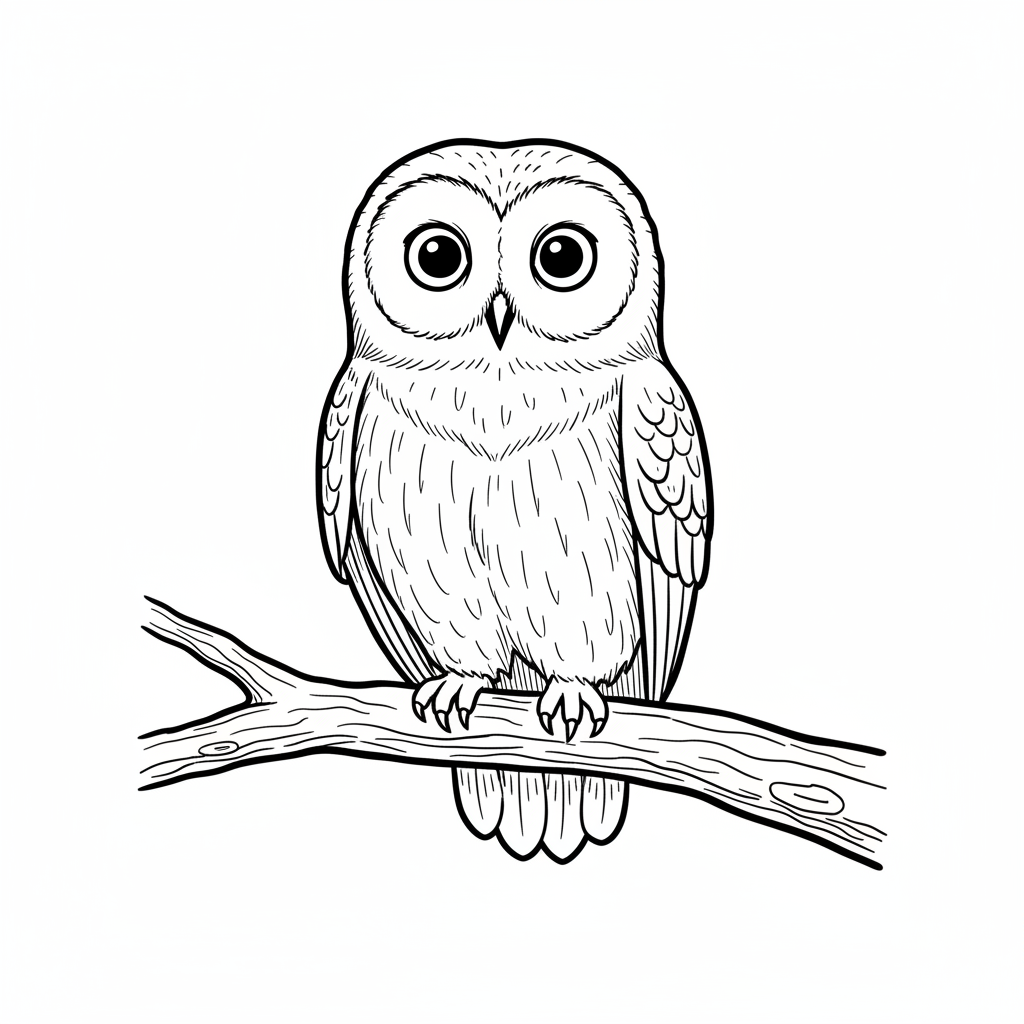
About this tutorial
Draw an owl step by step using pencil and colored pencils. Practice sketching basic shapes, adding feathers, big eyes, and simple shading.
What you need
Instructions
- 1
Step 1
Put a blank sheet of paper on a flat surface.
- 2
Step 2
Draw a large oval in the center of the paper for the owl's body.
- 3
Step 3
Draw a smaller oval on top of the large oval for the owl's head.
- 4
Step 4
Add two small triangle ears at the top sides of the head.
- 5
Step 5
Draw two big circles inside the head for eyes and add smaller circles inside for pupils.
- 6
Step 6
Sketch a small rounded triangle beak between the eyes.
- 7
Step 7
Draw two curved wing shapes one on each side of the body.
- 8
Step 8
Draw two short straight legs under the body.
- 9
Step 9
Add three tiny curved toes to the end of each leg for claws.
- 10
Step 10
Draw short curved lines across the belly and along the wings to make feather details.
- 11
Step 11
Erase extra overlapping lines to clean up your sketch.
- 12
Step 12
Use light pencil strokes to add simple shading under the wings and on the belly for depth.
- 13
Step 13
Choose the colored pencils you want to use for your owl.
- 14
Step 14
Color the owl's body eyes beak wings and feathers using gentle even strokes with your colored pencils.
- 15
Step 15
Share your finished owl drawing on DIY.org.
Get inspired
Fun facts
How do I draw an owl step by step with pencil and colored pencils?
Start by lightly sketching basic shapes: a circle for the head and an oval for the body, add a centerline and eye guideline. Draw two large circles for big owl eyes, add pupils and highlights. Sketch a small triangle beak and curved wing shapes. Add feather details with short, curved strokes and texture lines. Erase guide lines, darken outlines, then shade lightly for form. Finish by coloring with colored pencils, layering and blending for depth.
What materials do I need to draw an owl with pencil and colored pencils?
You’ll need a soft pencil (HB or 2B) for sketching, a darker pencil (4B) for outlining and shading, a good eraser and a sharpener. Use medium-weight drawing paper and a set of colored pencils for layering colors. Optional items: blending stump or tissue for smooth shading, white gel pen or white colored pencil for highlights, and a ruler for symmetrical guides. Keep supplies child-safe and supervised for younger kids.
What ages is drawing a step-by-step owl suitable for?
This owl drawing activity suits ages 4–12, with adaptations. Ages 4–6 benefit from simple shapes and adult help with detailed lines; use chunky pencils for grip. Ages 7–9 can follow step-by-step guidance, practice feathers and basic shading. Ages 10–12 can refine proportions, add detailed texture and more advanced shading with colored pencils. Always supervise young children and adapt complexity to each child’s fine motor skills and attention span.
What are the benefits of drawing an owl with pencils for kids?
Drawing an owl builds fine motor skills, hand-eye coordination, and observational drawing ability. It encourages creativity, patience, and focus as kids break the image into simple shapes and add details. Using colored pencils teaches color blending and layering. This calming activity also boosts confidence when children complete a step-by-step project, and it can become a shared family activity that promotes communication and pride in finished artwork.
Watch & Learn
Need help?
What can we use if we don't have colored pencils or a blank sheet of paper?
If you don't have colored pencils use crayons, washable markers, watercolor paints, or cut colored paper, and if you lack a blank sheet start on printer paper, a cereal-box panel, or cardstock before you 'Put a blank sheet of paper on a flat surface.'
My owl's head or body looks out of proportion—how can I fix it?
Draw both ovals with very light pencil strokes and correct sizes before adding ears and eyes, then 'Erase extra overlapping lines to clean up your sketch' to adjust proportions cleanly.
How can this activity be adapted for younger or older children?
For younger kids simplify by tracing cup shapes for the 'large oval' and 'smaller oval' and using stickers for eyes, while older kids can add detailed 'short curved lines' for feathers and more advanced shading with colored pencils.
What are simple ways to extend or personalize the finished owl drawing?
After you 'Color the owl's body eyes beak wings and feathers' add a background branch and moon, glue on googly eyes or glitter for texture, or cut the owl out and mount it on cardstock to share on DIY.org.