How to Draw a Nutcracker
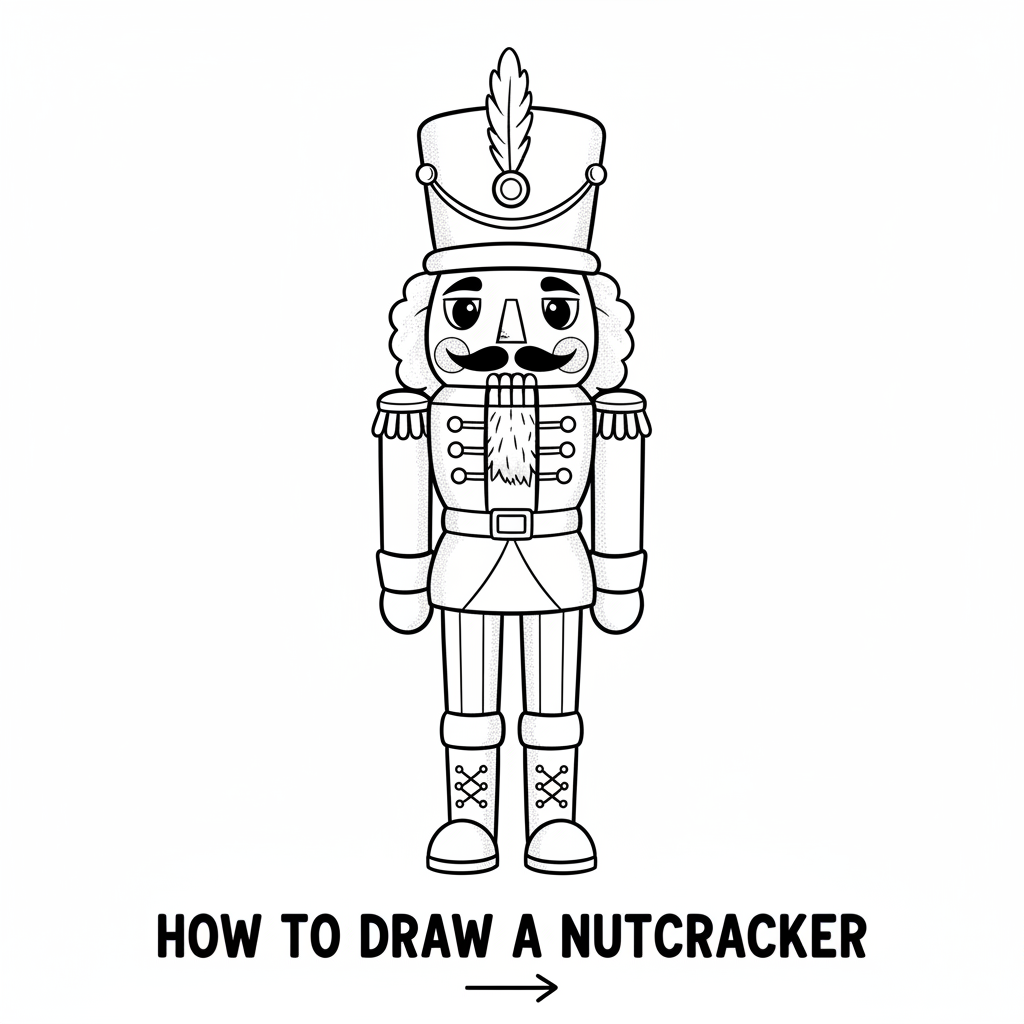
Draw a classic wooden nutcracker by sketching basic shapes, adding facial details, uniform decorations, and coloring to create a finished illustrated nutcracker.
About this tutorial
Draw a classic wooden nutcracker by sketching basic shapes, adding facial details, uniform decorations, and coloring to create a finished illustrated nutcracker.
What you need
Instructions
- 1
Step 1
Gather your materials and clear a flat space to draw.
- 2
Step 2
Lightly draw a vertical center line down the middle of your paper to keep the nutcracker symmetrical.
- 3
Step 3
Draw a large rectangle in the middle of the paper for the nutcracker’s torso aligned with the center line.
- 4
Step 4
Draw a smaller rectangle directly above the torso for the head aligned to the center line.
- 5
Step 5
Add a rectangular jaw piece below the head to make the nutcracker’s movable mouth.
- 6
Step 6
Sketch a tall hat shape on top of the head with a flat brim and a taller top section.
- 7
Step 7
Draw two shoulder shapes on either side of the top of the torso and add long rectangles for the arms ending with simple ovals for hands.
- 8
Step 8
Draw two rectangles below the torso for the legs and add boot shapes at the bottom of each leg.
- 9
Step 9
Add facial details: draw round eyes a triangular nose eyebrows and a mustache above the jaw line.
- 10
Step 10
Decorate the uniform by drawing epaulettes on the shoulders buttons down the front and a belt at the waist.
- 11
Step 11
Carefully trace or ink over the pencil lines you want to keep using your black fine-liner or marker.
- 12
Step 12
Wait for the ink to dry then gently erase the pencil guide lines.
- 13
Step 13
Colour your nutcracker with bold bright colours to finish your illustration.
- 14
Step 14
Share your finished nutcracker illustration on DIY.org.
Get inspired
Fun facts
How do I draw a classic wooden nutcracker with my child?
Start by lightly sketching basic shapes: an oval or rectangle for the head, a rectangle for the torso, cylinders for arms and legs, and a trapezoid for the hat. Add a dividing line for the jaw to create the swinging mouth. Draw facial features—eyes, nose, mustache—and uniform details like epaulettes, buttons, and a belt. Refine lines, erase guides, ink if desired, then color with bold reds, blues, golds, and add highlights and shading to finish the illustrated nutcracker.
What materials do I need to draw and color a nutcracker?
You'll need basic drawing supplies: pencils (HB and a softer 2B), eraser, sharpener, and a ruler for straight uniform details. For finishing, use fine liners or black pen to outline, plus colored pencils, markers, or watercolor paints for color. Choose medium-weight drawing paper or cardstock so colors layer nicely. Optional: blending stump for shading, glitter or metallic pens for gold details. Use non-toxic, child-safe materials and supervise younger kids with sharp tools.
What ages is drawing a nutcracker suitable for?
This activity suits lots of ages. Preschoolers (4–6) can do simplified shapes and color with help. Elementary kids (7–9) can follow steps to add facial details and basic uniform decorations. Ages 10+ can work on symmetry, shading, and intricate patterns. Adjust complexity: trace templates for younger children, offer step-by-step demos for beginners, and challenge older kids with perspective and texture. Supervision is recommended for small children using scissors, sharp pencils, or paint.
What are the benefits of drawing a nutcracker with kids?
Drawing a nutcracker builds fine motor skills, hand–eye coordination, and sequential thinking as kids sketch shapes, refine details, and color. It encourages creativity, color mixing, and pattern recognition while connecting to holiday traditions and storytelling. The step-by-step process boosts focus and confidence when children complete the finished illustration. To expand learning, discuss symmetry and proportions, try different color palettes, or turn drawings into cards and decorations for
Watch & Learn
Need help?
What can we use instead of a black fine-liner or marker if we don't have one?
If you don't have a black fine-liner or marker, use a black ballpoint pen or a sharpened dark pencil to carefully trace the pencil lines and then wait for ink to dry (if used) before erasing the pencil guide lines.
My nutcracker looks lopsided—how can I fix symmetry problems?
Use the lightly drawn vertical center line as your guide to redraw or adjust the torso, head, arms, and boot shapes, lightly erase uneven sides before inking, and compare mirrored features like the eyes, epaulettes, and buttons to balance them.
How can I adapt this drawing activity for younger or older kids?
For younger children, pre-draw the vertical center line and basic rectangles for the torso and head so they can add simple facial details and colour, while older kids can add shading, intricate uniform decorations, and a movable jaw by reinforcing the rectangular jaw piece.
What are some ways to enhance or personalize the nutcracker drawing?
Make the rectangular jaw piece movable by attaching it with a small paper hinge or brass fastener, add fabric or tinsel to the epaulettes, and finish with bold bright colours or glitter before sharing your finished nutcracker illustration on DIY.org.