How to draw a mandala - a free mandala drawing guide
Learn to draw a symmetrical mandala using simple shapes, a compass or cup, and colored pencils, practicing patterns, symmetry, and focus.


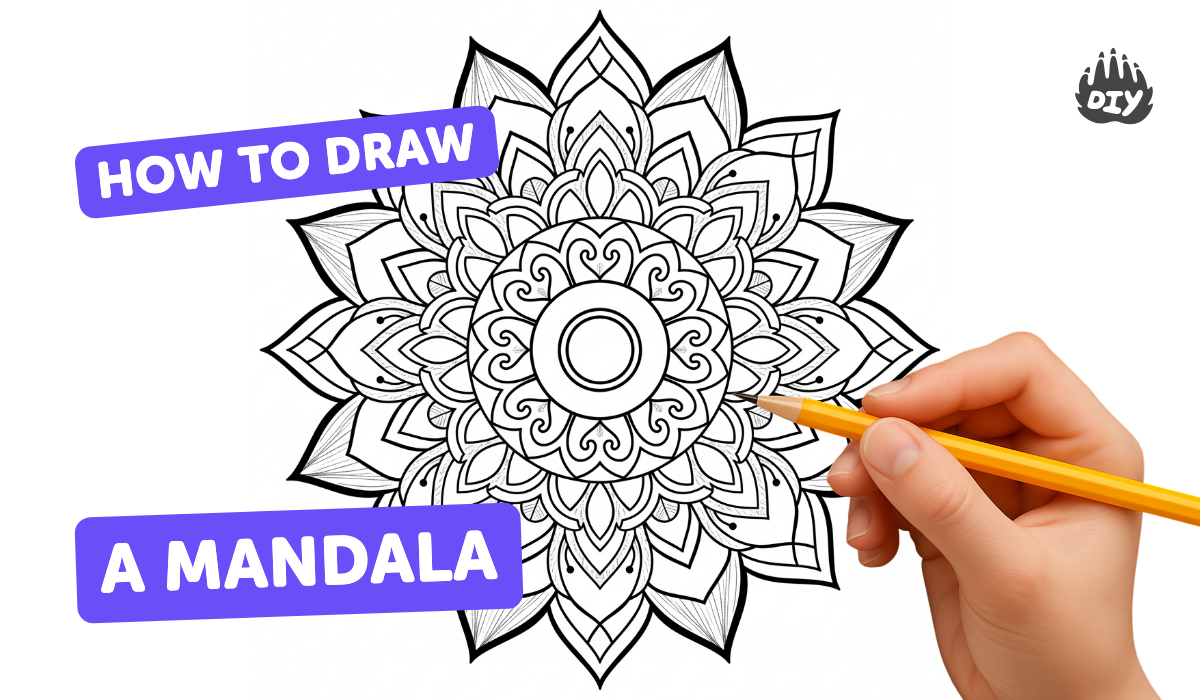
Step-by-step guide to draw a symmetrical mandala
How to Draw a Mandala: Easy Step-by-Step Tutorial for Beginners!
Step 1
Gather your materials and put them on a flat table so everything is ready.
Step 2
Fold the paper in half one way and then fold it in half the other way to make creases that cross in the middle.
Step 3
Unfold the paper flat so you can see the crease lines forming a cross.
Step 4
Put a small dot at the spot where the creases cross to mark the center.
Step 5
Choose whether you will use a compass or a cup to draw circles.
Step 6
Place the compass point on the center dot or put the cup center on the dot and trace a small circle.
Step 7
Make three more circles around the center, each one a little larger than the last, to create concentric rings.
Step 8
Use the ruler to draw a light horizontal line through the center across all the rings.
Step 9
Use the ruler to draw a light vertical line through the center across all the rings.
Step 10
Draw two diagonal lines through the center so the circle is divided into eight equal wedge shapes.
Step 11
Pick one simple shape like a petal dot or triangle and draw it once in the smallest ring inside one wedge.
Step 12
Copy that same shape into every wedge of the same ring so the pattern repeats all the way around.
Step 13
Make different simple repeating shapes for the other rings so each ring has its own symmetric pattern.
Step 14
Erase any extra pencil creases or guide marks gently and then color your mandala using matching colors in each repeated section to keep it symmetrical.
Step 15
Share a photo of your finished mandala on DIY.org so others can see your beautiful, symmetrical design.
Help!?
What can we use instead of a compass or a cup to draw the concentric circles?
Use stacked coins, jar lids, bottle caps, or tape a small coin to a string and hold its end on the center dot to trace the concentric rings from the step where you draw circles.
My circles or wedges aren't lining up—what should I try to fix mistakes while making the mandala?
Use the paper creases and the center dot as alignment guides, tape the cup or steady the compass point on the center dot, redraw faint guide lines with a light pencil, and erase gently to keep rings and wedge divisions concentric and neat.
How can I adapt this mandala activity for different ages?
For younger children, pre-draw the concentric rings and reduce to four large wedges and use stickers or stamps for the repeating shapes, while older kids can add more rings, divide into more than eight wedges, and use fine liners and shading to create intricate symmetric patterns.
How can we extend or personalize the finished mandala before sharing it on DIY.org?
After erasing pencil guide marks, personalize by adding metallic pens or glitter to the colored matching sections, layering watercolor washes between rings, cutting a small hole to hang as a suncatcher, or signing and framing the design before photographing it to share on DIY.org.
Watch videos on how to draw a symmetrical mandala
How to Draw an Easy Mandala - a Step by Step Tutorial | Anyone Can Make This Mandala Art!
4 Videos
How to Draw an Easy Mandala - a Step by Step Tutorial | Anyone Can Make This Mandala Art!
How to Draw a Beginner Mandala in a Few Easy Steps: Drawing Tutorial for Beginner Artists
Let's create Mini Mandalas with some basic & easy Patterns ✨🥰 How to draw Mandala Art for beginners
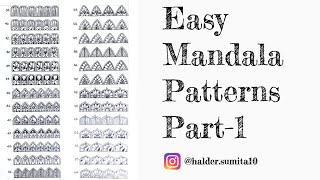
100 Easy Mandala Patterns For Beginners (Part-1)
Facts about symmetry, patterns, and basic geometry
🌀 The word "mandala" comes from Sanskrit and literally means "circle" — many mandalas map patterns outward from a single center point.
🎯 Radial symmetry is when designs repeat around a center; using 4, 6, or 8 equal slices is a common trick to keep mandalas balanced.
🧭 A drafting compass (or a cup used as a circle guide) helps you draw perfect rings — the simplest way to build mandala layers.
✏️ A small set of colored pencils can produce hundreds of shades by layering colors and changing pressure for lighter or darker tones.
🧘♀️ Drawing mandalas is often used as a mindfulness exercise because concentrating on repeating patterns can calm the mind and boost focus.
How do I draw a symmetrical mandala with my child?
What materials do I need to draw a mandala with simple shapes?
What ages is drawing a mandala suitable for?
What are the benefits of drawing mandalas for children?
