How to Draw a Lobster
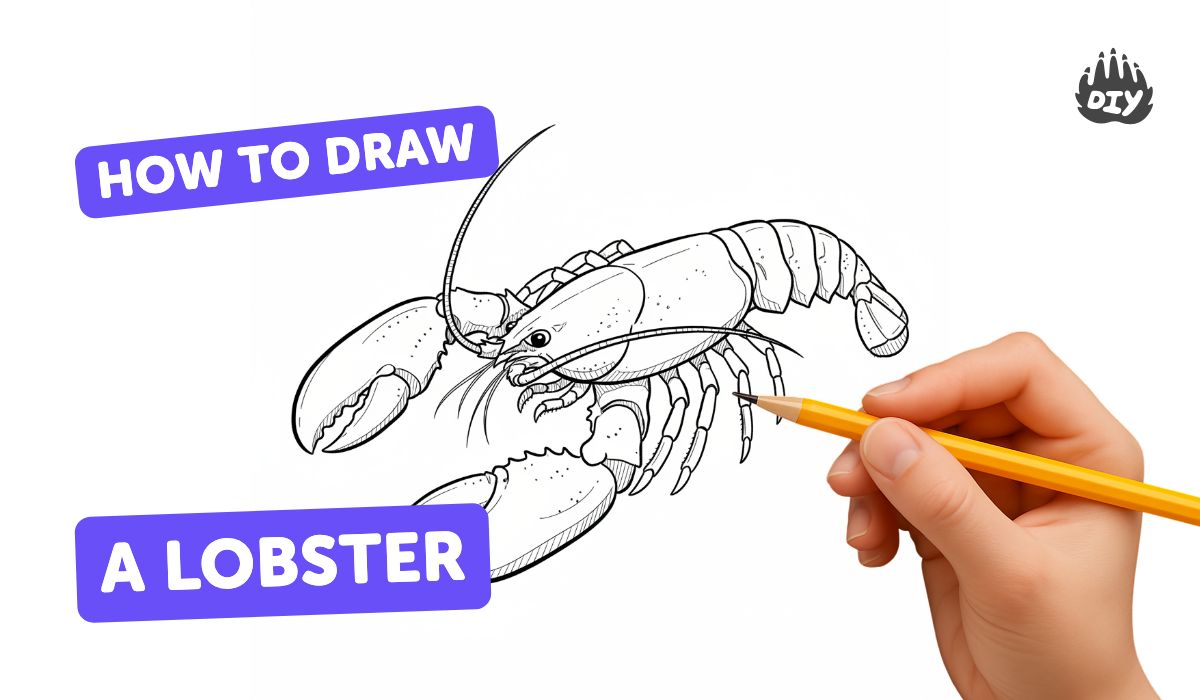
Draw a realistic lobster step by step using simple shapes, add claws, tail, antennae, and shading while observing proportions and color choices.
About this tutorial
Draw a realistic lobster step by step using simple shapes, add claws, tail, antennae, and shading while observing proportions and color choices.
What you need
Instructions
- 1
Step 1
Put your paper on the table in a landscape position so you have lots of room to draw.
- 2
Step 2
Lightly draw a center guideline from left to right to show where the lobster’s head and tail will go.
- 3
Step 3
Sketch a medium oval near the left third of the guideline for the lobster’s head and front body.
- 4
Step 4
Draw a long row of 5 or 6 overlapping rounded segments along the guideline to make the lobster’s tail and end with a three-lobed fan.
- 5
Step 5
Draw two small circles near the front of the head to mark where the claws will attach.
- 6
Step 6
From each circle draw the big claw shapes by making a larger rounded pincer on one side and a smaller curved pincer on the other.
- 7
Step 7
Draw four pairs of bent walking legs as simple angled lines along each side of the body segments.
- 8
Step 8
Draw two long thin curved antennae stretching out from the front of the head.
- 9
Step 9
Add eye stalks by drawing two short stems with small circles on top near the front of the head.
- 10
Step 10
Smooth and connect the simple shapes into one continuous lobster outline by tracing around your sketch to make a clear silhouette.
- 11
Step 11
Erase the center guideline and any extra sketch marks so the lobster outline is clean.
- 12
Step 12
Darken the final outline with your black pen or a darker pencil to make the lobster stand out.
- 13
Step 13
Add segment lines across the tail and small texture lines on the claws and shell to show ridges and details.
- 14
Step 14
Color your lobster using base colors and add darker tones and lighter highlights then gently blend with a cotton swab or tissue for a realistic look.
- 15
Step 15
Share your finished lobster drawing on DIY.org.
Fun facts
How do you draw a realistic lobster step by step?
Start with a light reference photo. Sketch simple shapes: an elongated oval for the cephalothorax, segmented rectangles for the abdomen, a fan for the tail, and two large ovals for claws. Add long antennae, small stalked eyes, and pairs of walking legs. Refine outlines, add shell ridges and texture. Determine a light source and add shading on curved surfaces and beneath claws. Finish with color choices—deep reds, browns, and orange highlights—adjusting contrast to increase realism.
What materials do I need to draw a realistic lobster?
Gather a reference photo, medium-weight drawing paper, HB and 2B pencils for sketching and darker lines, an eraser, and a pencil sharpener. For shading and blending use a blending stump or soft tissue. Color options include colored pencils, watercolor, or markers. Optional tools: ruler for proportions, kneaded eraser for highlights, and a white gel pen for small bright reflections. Use non-toxic art supplies for kids.
What ages is drawing a realistic lobster suitable for?
This activity suits children around 7 years and up; younger kids (4–6) can try simplified shapes and bright colors with adult help. Ages 7–12 can practice proportion, basic shading, and texture, while teens and adults can focus on realistic detail and color blending. Adapt complexity to skill level: simplify claws and tail for beginners, and add more segments, shadow work, and color depth for advanced learners.
What are the benefits and safe variations of drawing a lobster?
Drawing a lobster builds observation skills, fine motor control, and understanding of proportions and light. It encourages patience and attention to detail, boosting confidence. For safety, choose non-toxic, washable art supplies and supervise use of sharp tools. Variations: make a cartoon lobster with exaggerated claws, create a mixed-media collage using painted paper, or practice watercolor washes for a softer, marine look. Turn it into a science lesson about crustaceans.
Watch & Learn
Need help?
What can I use if I don't have a cotton swab, tissue, or black pen for blending and outlining?
If you don't have a cotton swab or tissue for blending or a black pen for the final outline, use a clean fingertip or folded paper towel to blend and a fine-tipped marker or darker pencil to darken the final outline.
My tail segments and claws look uneven—how can I fix them while following the steps?
If the tail segments or claws look uneven, keep your initial strokes light, follow the center guideline to realign the row of overlapping rounded segments and the claw attachment circles, then smooth them into one continuous outline before erasing stray marks.
How can I adapt these instructions for different age groups?
For younger children, simplify by drawing only three tail segments and basic oval claws with crayons, while older kids can add the segment lines, texture lines on the claws and shell, and use darker tones plus a cotton swab or tissue to blend for a realistic finish.
What are some ways to extend or personalize the lobster drawing activity?
Extend the activity by adding an underwater background with seaweed, rocks, and bubbles, experimenting with bold color patterns or realistic highlights and darker tones blended with a cotton swab, and then share the finished lobster on DIY.org.