How to Draw a Komodo Dragon
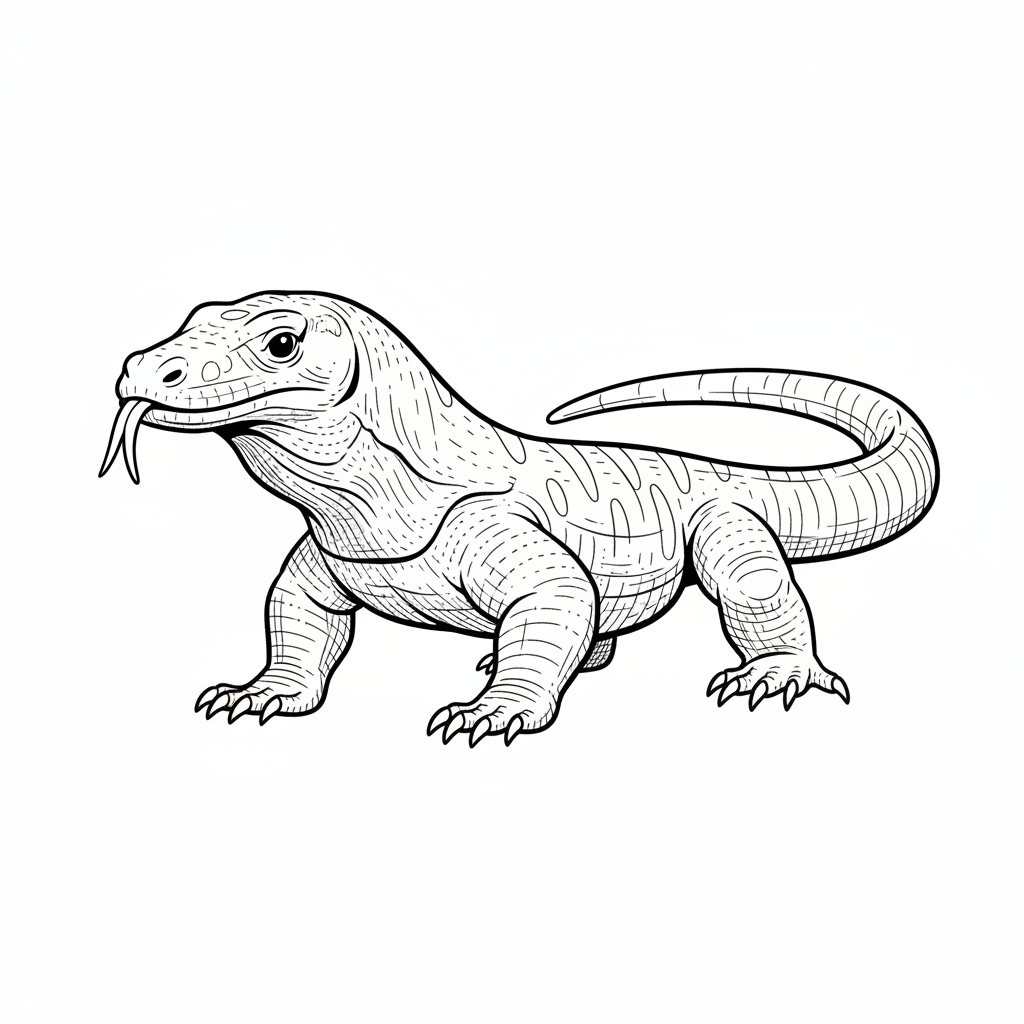
Draw a realistic Komodo dragon step-by-step using simple shapes, shading, and texture techniques to capture its form and scales. Practice observation and patience.
About this tutorial
Draw a realistic Komodo dragon step-by-step using simple shapes, shading, and texture techniques to capture its form and scales. Practice observation and patience.
What you need
Instructions
- 1
Step 1
Gather your materials and place your reference photo where you can see it clearly.
- 2
Step 2
Draw a light horizontal ground line near the bottom of the page to give your Komodo a place to stand.
- 3
Step 3
Sketch simple shapes to map the body: a large oval for the body a circle for the head a long curved line for the tail and straight lines where the legs will go.
- 4
Step 4
Connect the head and body with two curved lines to form the neck and smooth the overall body outline.
- 5
Step 5
Draw each leg as a rounded rectangle showing where the knee and ankle sit.
- 6
Step 6
Add toes as small ovals and put short pointed triangles at the tips to show claws.
- 7
Step 7
Shape the head by drawing the snout a curved mouth line a small nostril and the eye spot.
- 8
Step 8
Refine the tail by widening it near the body and tapering it to a point with smooth curved lines.
- 9
Step 9
Draw skin folds near the neck and joints using short curved lines to show loose skin.
- 10
Step 10
Lightly sketch scale patterns using larger plate-like scales along the spine and many tiny pebble marks on the sides.
- 11
Step 11
Erase the extra construction lines so only your clean outline and texture marks remain.
- 12
Step 12
Decide where the light is coming from so you know which parts will be darker.
- 13
Step 13
Shade the shadowed areas with soft pencil strokes following the body curves to show volume.
- 14
Step 14
Darken between scale groups to add depth and gently blend shaded areas with a tissue or stump to smooth transitions.
- 15
Step 15
Share your finished Komodo dragon drawing on DIY.org.
Get inspired
Fun facts
How do I draw a Komodo dragon step by step?
Start with simple shapes: draw an oval for the body, a smaller oval for the head, a long tapering shape for the tail, and cylinders for legs. Refine the outline to connect shapes smoothly, add jawline and claws. Block in large scale patterns with light lines, then shade under the belly and behind limbs for volume. Add textured, overlapping scales with short curved strokes. Use an eraser for highlights and study a photo for accuracy and patience.
What materials do I need to draw a realistic Komodo dragon?
You’ll need drawing paper, a range of pencils (HB for sketching, 2B–4B for darker lines and shading), a kneaded eraser, pencil sharpener, and a blending stump or cotton swab for smooth shading. Optional supplies: fine-tip ink pen for outlines, colored pencils or watercolor for color, a reference photo of a Komodo dragon, and a ruler for proportions. Good light and a comfortable workspace help too.
What ages is drawing a Komodo dragon suitable for?
This activity suits kids about 6 and up, with simpler shapes and adult help for younger children. Ages 8–12 can follow step-by-step guidance and practice shading and texture. Teenagers and older kids can work on realism, detailed scales, and advanced shading techniques. Adjust complexity: younger kids do basic outlines and big scales while older kids refine proportions and realistic textures. Patience and practice matter more than age.
What are the benefits of drawing a Komodo dragon for kids?
Drawing a Komodo dragon improves observation, fine motor skills, and patience while teaching proportion, texture and shading. It encourages focus and careful study of a reference photo, boosting confidence as complexity is mastered. The activity connects art with nature and biology, sparking curiosity about reptiles. Repetition strengthens hand control and visual analysis, and finishing a realistic piece gives a strong sense of accomplishment.
Watch & Learn
Need help?
What can we use if we don't have a blending stump or a printed reference photo?
If you don't have a blending stump, use a folded tissue, cotton swab, or your fingertip to gently blend the shadowed areas, and if you lack a printed reference photo use a screen image or a Komodo toy as your visible reference for the 'Gather your materials and place your reference photo where you can see it clearly' step.
My Komodo's legs look wrong—how can I fix the proportions?
If the legs look too short or misaligned, go back to the 'Sketch simple shapes to map the body' step and redraw the straight guideline lines for the legs with very light strokes, check angles against your reference, then reshape each leg as rounded rectangles in the 'Draw each leg' step before adding toes and claws.
How can I adapt the activity for younger or older children?
For younger children simplify steps 3–6 by using big ovals and one-piece legs and skip the tiny pebble scales, while older kids should follow 'Lightly sketch scale patterns' and 'Darken between scale groups' and spend more time shading and blending for realism.
What are some ways to personalize or extend the Komodo drawing once it's finished?
To personalize and extend your drawing, decide the light source in the 'Decide where the light is coming from' step, add a colored background or habitat, emphasize plate-like spine scales for drama, or create a series showing different poses before sharing on DIY.org.