How to Draw a Jacket
Draw a jacket step by step using basic shapes, proportions, and shading. Practice sketching collars, sleeves, buttons, and fabric folds.
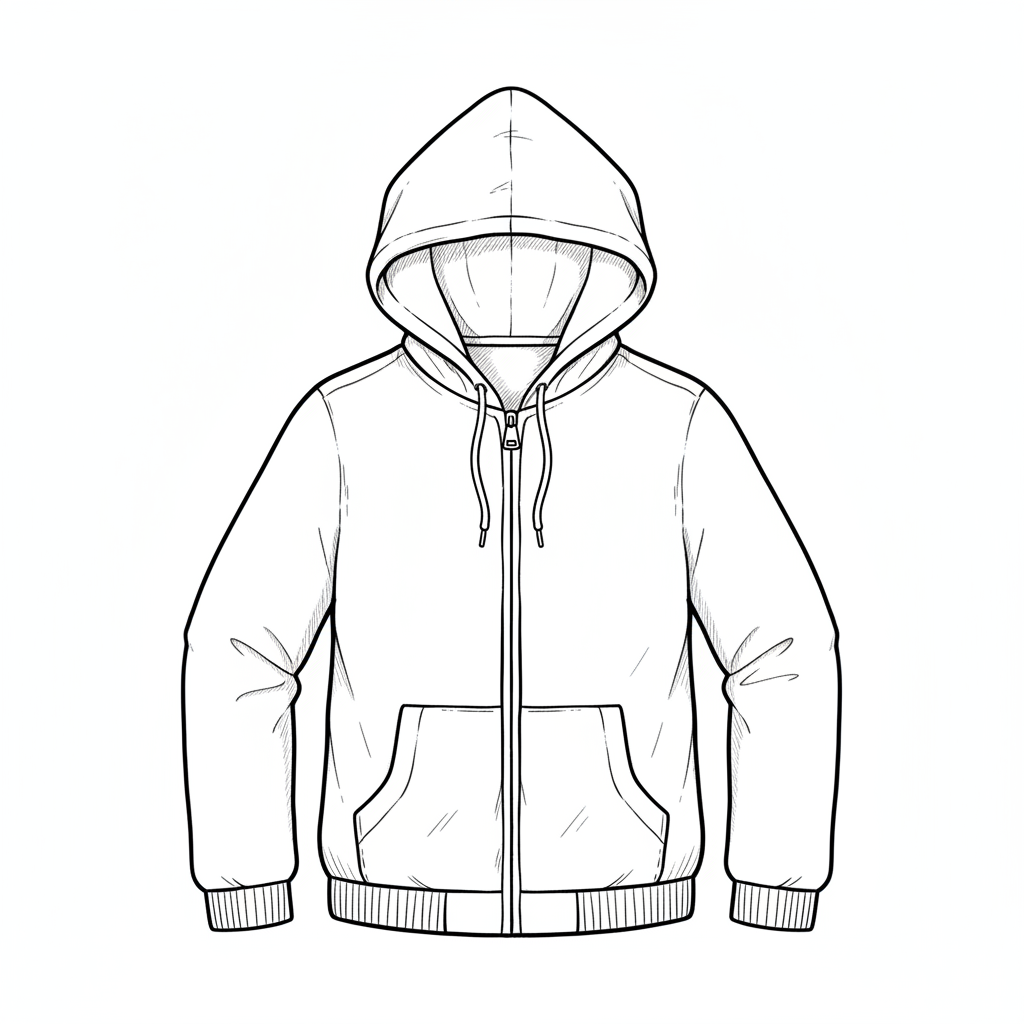
About this tutorial
Draw a jacket step by step using basic shapes, proportions, and shading. Practice sketching collars, sleeves, buttons, and fabric folds.
What you need
Instructions
- 1
Step 1
Draw a light vertical center guide line down the middle of your page.
- 2
Step 2
Mark a small horizontal dash for the shoulder line near the top and another dash for the jacket length near the bottom.
- 3
Step 3
Sketch a simple rectangle or slightly tapered trapezoid around the guides to show the jacket body.
- 4
Step 4
Draw two slanted shoulder lines from the top corners toward the center dash.
- 5
Step 5
Draw the sleeve shapes as long rectangles or tapered tubes attached to the shoulder lines.
- 6
Step 6
Sketch the collar by drawing two triangular or curved lapel shapes at the top center of the jacket.
- 7
Step 7
Draw a straight center button line down the vertical guide inside the jacket body.
- 8
Step 8
Add buttons as circles spaced evenly along the button line.
- 9
Step 9
Draw pocket shapes on each side of the jacket front as small rectangles or curved flaps.
- 10
Step 10
Add a few short curved lines near the elbows and waist to show fabric folds.
- 11
Step 11
Erase the light guide marks so only the jacket drawing remains.
- 12
Step 12
Darken and clean up the outside lines of the jacket collar sleeves pockets and buttons.
- 13
Step 13
Add light shading under folds along the sides and under the collar using your pencil and blend gently with a stump or tissue.
- 14
Step 14
Color your jacket using your coloring materials and add tiny details like buttonholes or stitching.
- 15
Step 15
Take a photo of your finished jacket drawing and share your creation on DIY.org.
Get inspired
Fun facts
How do you draw a jacket step by step?
Start with simple shapes: draw an oval or rectangle for the torso and a centerline to set symmetry. Mark shoulder points and sketch sleeve guides as tapered rectangles. Add the collar by drawing two curved triangles, then outline lapels and button line. Block in pockets and seams, refine contours, erase construction lines, and add folds where fabric bends (underarms, elbows). Finish with light shading to show volume, darkening creases and edges for contrast.
What materials do I need to draw a jacket?
You only need basic supplies: pencils (HB and 2B), a soft eraser, sharpener, and plain drawing paper (A4 works). A ruler helps for straight seams and button lines. Optional items: blending stump or tissue for smooth shading, colored pencils or markers for color, and a reference photo or a jacket on a hanger to study folds and proportions.
What ages is this jacket drawing activity suitable for?
This activity suits a wide range: young children (4–6) can trace and practice basic shapes; ages 7–10 can learn proportions and simple collars; 11+ can focus on sleeve construction, buttons, and shading. Adjust complexity to skill level and offer supervision for pencil use. Encourage patience—progress comes with practice rather than age alone.
What are helpful variations and benefits of drawing jackets?
Try variations like hoodies, blazers, puffer jackets, or coats to explore different silhouettes and textures. Practice drawing denim seams, quilted panels, or shiny raincoats to learn how materials affect folds and light. Benefits include improved observation, fine motor skills, and understanding of clothing structure—use this project for fashion design basics or storytelling characters with distinct outfits.
Watch & Learn
Need help?
What can we use if we don't have a blending stump or special coloring materials for the shading and coloring steps?
Use a clean tissue, cotton swab, fingertip, or small piece of paper to blend the pencil shading and substitute crayons, colored pencils, or markers for specialty coloring materials when you color your jacket.
My jacket looks uneven or the sleeves are misaligned—what step should I check and how can I fix it?
If the jacket is uneven, re-establish the light vertical center guide line and the small horizontal shoulder dashes before redrawing the rectangle and slanted shoulder lines, or fold the paper/use a ruler to find the exact center for symmetric sleeves.
How can I adapt this jacket drawing activity for different ages or skill levels?
For younger kids simplify to one big rectangle for the body and sticker or drawn circle buttons and skip shading, while older kids can refine the triangular or curved lapels, add fabric folds, blend shading with a stump or tissue, and draw tiny buttonholes or stitching.
What are some ways to extend or personalize the jacket drawing after finishing the basic steps?
Personalize by adding patterns, patches, or glued fabric swatches to the pockets, try alternate styles like a hood or bomber in new sketches, use mixed media for color, then take a photo of the finished jacket and share it on DIY.org as the final step.