How to Draw a Honey Bee
Draw a honey bee step-by-step using basic shapes, pencil lines, and color. Practice observation, proportion, and simple shading to create a realistic insect.
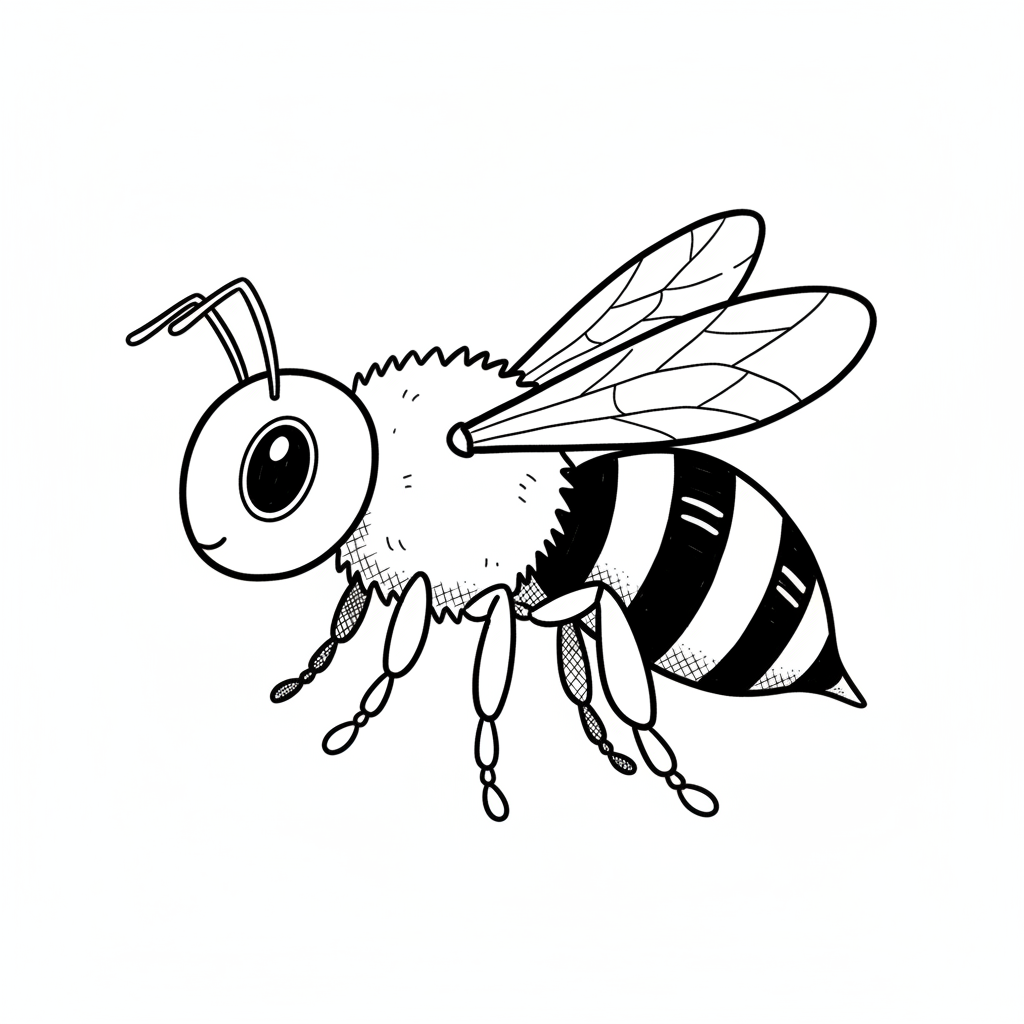
About this tutorial
Draw a honey bee step-by-step using basic shapes, pencil lines, and color. Practice observation, proportion, and simple shading to create a realistic insect.
What you need
Instructions
- 1
Step 1
Place your paper on a flat surface and put your pencil and eraser nearby so you can reach them easily.
- 2
Step 2
Lightly draw a small circle near the top of the paper for the bee's head.
- 3
Step 3
Draw a larger oval attached behind the head for the bee's body.
- 4
Step 4
Add a slightly narrower oval between the head and body to show the thorax where the wings will sit.
- 5
Step 5
Sketch two teardrop-shaped wings on top of the body one on each side.
- 6
Step 6
Draw two curved antennae coming out from the top of the head.
- 7
Step 7
Draw two large round eyes on the head using simple circles.
- 8
Step 8
Draw six thin curved legs three on each side of the body starting from the thorax area.
- 9
Step 9
Add three or four curved bands across the abdomen to make the bee's stripes.
- 10
Step 10
Gently erase any extra guideline lines to clean up your drawing.
- 11
Step 11
Add soft pencil shading along the underside of the body and near the wing bases to show shadow.
- 12
Step 12
Gently blend the shaded areas with a cotton swab or tissue to make the shading smooth.
- 13
Step 13
Trace the main outlines with a black fine-tip marker and wait a moment for the ink to dry.
- 14
Step 14
Color your bee using your coloring materials and keep the stripes alternating for a realistic look.
- 15
Step 15
Take a photo or upload your finished honey bee drawing and share it on DIY.org
Get inspired
Fun facts
How do I draw a honey bee step by step?
Start with light pencil guidelines: draw a small circle for the head, a larger oval for the abdomen, and a narrower thorax between them. Sketch wing shapes as elongated teardrops and add simple legs and antennae with thin lines. Block in the bee’s stripes, then refine contours and erase construction lines. Add basic shading to show curve—darker along edges and under wings—then color with yellow, black and soft gray highlights. Finish with a fine pen outline if desired.
What materials do I need to draw a realistic honey bee?
You’ll need a few basic supplies: drawing paper or sketchbook, a sharp HB pencil for construction lines and a softer 2B for darker lines and shading, a good eraser and sharpener, colored pencils or markers for color, and a thin black fineliner for outlines. Optional: blending stump or tissue for smooth shading, a ruler to check proportions, and reference photos of honey bees. Substitute crayons or watercolors for younger children.
What ages is drawing a honey bee suitable for?
Suitable for ages 6–12 with adjustments: ages 6–8 work well with step-by-step guidance and simpler shapes, focusing on bold stripes and basic coloring. Ages 9–12 can practice proportion, light pencil construction, and simple shading to make a more realistic bee. For preschoolers (3–5), simplify to stickers or big shapes and let them color. Provide supervision for younger children when using sharpeners or scissors.
What are the benefits of drawing honey bees for kids?
Drawing a honey bee builds observational skills, proportion awareness, and fine motor control through line work and shading. Practicing basic shapes and gradual construction improves confidence and patience, while learning to blend and add shadows introduces important value study. It also connects art to nature—use the activity to discuss pollination and insect anatomy. Encouraging repeated attempts boosts improvement and creativity, making it a relaxed, educational exercise for families.
Watch & Learn
Need help?
What can I use if I don't have a black fine-tip marker, cotton swab, or certain coloring materials?
Use a black ballpoint pen or thin permanent marker to trace the main outlines, a folded tissue or your fingertip to blend the pencil shading instead of a cotton swab, and crayons or colored pencils for coloring while keeping the alternating stripes.
My wings look uneven and my legs are too long—how do I fix these problems?
Lightly sketch the small head circle, larger body oval and thorax first, erase and adjust wing placement and leg length using the eraser before tracing with the black fine-tip marker, and if shading smudges wait for the ink to dry then gently blend with a tissue.
How can I adapt this bee drawing for younger or older kids?
For younger children simplify by tracing pre-drawn circle and oval templates and using thick crayons for bold stripes, while older kids can add detailed thorax and six legs, soft pencil shading blended with a cotton swab, and a fine-tip marker outline for a polished finish.
What are easy ways to extend or personalize the honey bee drawing activity?
Add a background of flowers or a honeycomb, label the head, thorax and abdomen, decorate the wings with metallic gel pens or glitter glue, and then take a photo to upload your customized bee to DIY.org.