How to Draw a Grizzly Bear
Draw a grizzly bear step-by-step using simple shapes, outlines, and shading with pencil. Practice proportions, fur texture, and observing reference images.
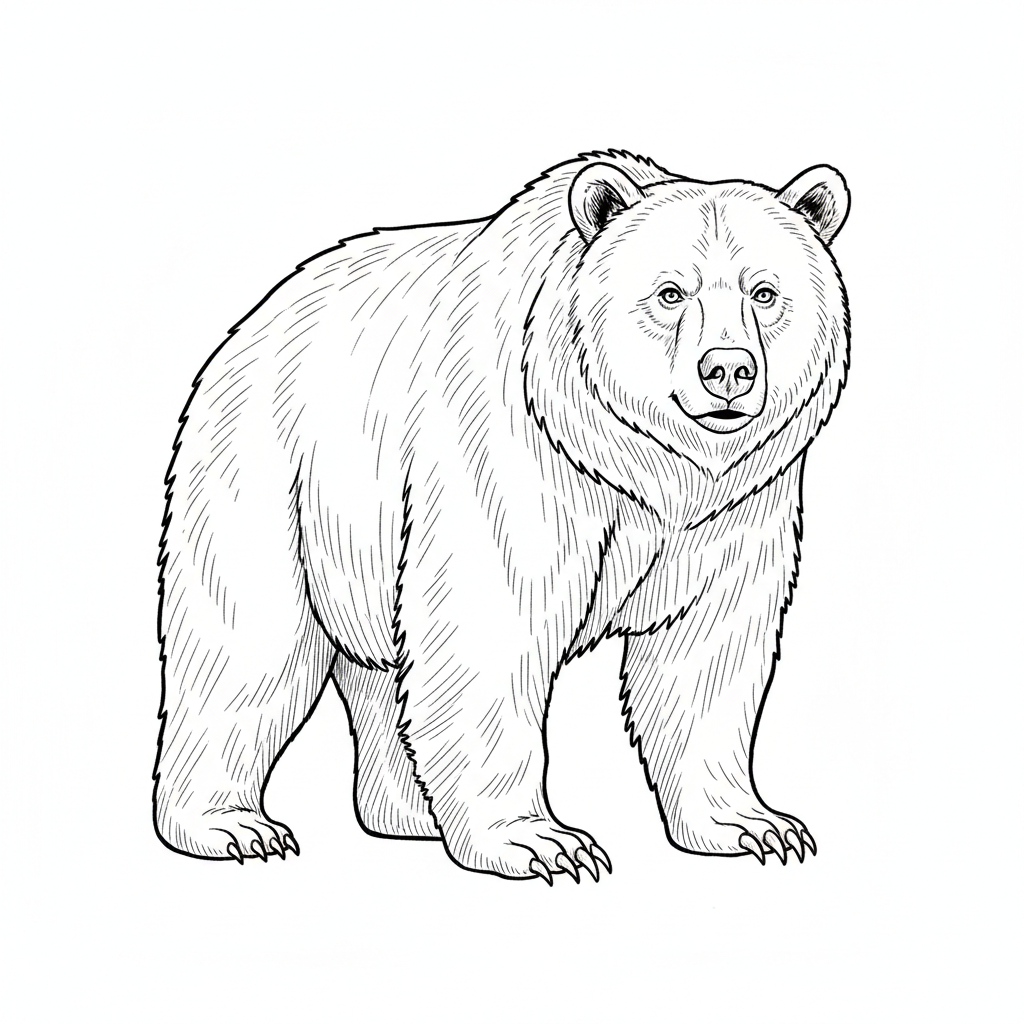
About this tutorial
Draw a grizzly bear step-by-step using simple shapes, outlines, and shading with pencil. Practice proportions, fur texture, and observing reference images.
What you need
Instructions
- 1
Step 1
Lightly draw a large oval in the middle of the paper for the bear's body.
- 2
Step 2
Draw a smaller circle overlapping the top front of the oval for the bear's head.
- 3
Step 3
Add one vertical and one horizontal guideline inside the head circle to mark eye and nose placement.
- 4
Step 4
Sketch two rounded ears on top of the head circle.
- 5
Step 5
Draw an elongated oval sticking out from the front of the head circle for the snout.
- 6
Step 6
Place a small rounded triangle at the tip of the snout for the nose.
- 7
Step 7
Draw two small circles on the horizontal guideline for the eyes.
- 8
Step 8
Draw four thick rounded shapes under the body to make the bear's legs.
- 9
Step 9
Add oval shapes at the ends of each leg to make the paws.
- 10
Step 10
Draw three short curved lines on each paw to show claws.
- 11
Step 11
Lightly erase any extra construction lines you no longer need.
- 12
Step 12
Go over the final outer shapes with firmer pencil strokes to darken the outline you want to keep.
- 13
Step 13
Use short quick pencil strokes that follow the curve of the body to create fur texture all over the bear.
- 14
Step 14
Shade under the belly under the chin and inside the legs with softer pressure and gently blend with a tissue or blending stump.
- 15
Step 15
Take a photo of your finished grizzly and share your drawing on DIY.org.
Get inspired
Fun facts
How do I teach my child to draw a grizzly bear step-by-step?
Start by lightly sketching basic shapes: a large oval for the body, a smaller circle for the head, and limbs as cylinders or ovals. Add guide lines to place eyes, nose, and mouth. Refine the outline, shaping the snout, ears, and powerful shoulders. Use short, directional pencil strokes for fur texture and cross-contour lines for volume. Shade from light to dark to suggest depth, erase construction lines, and compare often to reference photos to adjust proportions.
What materials do I need to draw a grizzly bear with pencil?
You'll need drawing paper or a sketchbook, a range of pencils (HB for sketching, 2B–4B for shading), a kneaded or vinyl eraser, a pencil sharpener, and a blending stump or cotton swab for smoothing tones. Optional: a ruler for proportions, reference photos of grizzly bears, and colored pencils for finishing. For young children, use thicker paper and a soft, easy-to-grip pencil or graphite stick.
What ages is drawing a grizzly bear suitable for?
Suitable for ages 6 and up with supervision; younger children (4–6) can try simplified shape exercises with thicker pencils and larger paper. Ages 7–12 can follow step-by-step proportions, practice basic shading and fur strokes. Teenagers and adults can work on detailed texture, accurate anatomy, and advanced shading. Adjust complexity, use references, and offer guidance—short sessions and praise help maintain focus for younger artists.
What are the benefits of drawing a grizzly bear and how can I vary the activity?
Drawing a grizzly bear builds observation, proportion awareness, fine motor skills, and patience. It teaches texture rendering and value control, boosting confidence as skills improve. Variations: sketch a standing, walking, or cub pose; try charcoal for bolder marks, colored pencils or watercolor for color studies; use grid transfer for accuracy; or make a collage combining pencil texture with painted backgrounds. Encourage reference study and praise progress to keep it fun and educational.
Watch & Learn
Need help?
What can we use instead of a blending stump or a special eraser?
If you don't have a blending stump, use a folded tissue or cotton swab to blend the shading under the belly, chin, and inside the legs, and use a clean regular eraser to gently lift construction lines before darkening the final outline.
My shading keeps smudging and the paws look messy—what should I do?
Use lighter pressure when shading under the belly, chin, and inside the legs and blend gently with a tissue or stump while resting your hand on scrap paper to avoid smudges, then redraw the three short curved claw lines on each paw after blending.
How can I adapt this grizzly drawing for different ages?
For preschoolers pre-draw the large oval body, head circle, and four thick leg shapes and have them add simple ears and paws, for elementary kids follow all steps but simplify fur texture and claws, and for older kids focus on short curved pencil strokes for fur, deeper shading under the belly/chin/inside legs, and using reference photos to refine proportions.
How can we make the finished grizzly more creative or challenging?
After you complete the fur texture and shading under the belly and chin, personalize the scene by adding a forest background (trees, rocks, river), color with colored pencils or watercolor, draw a family of bears at different sizes using the same steps, and photograph the finished piece with a title before sharing on DIY.org.