How to Draw a Dog Paw
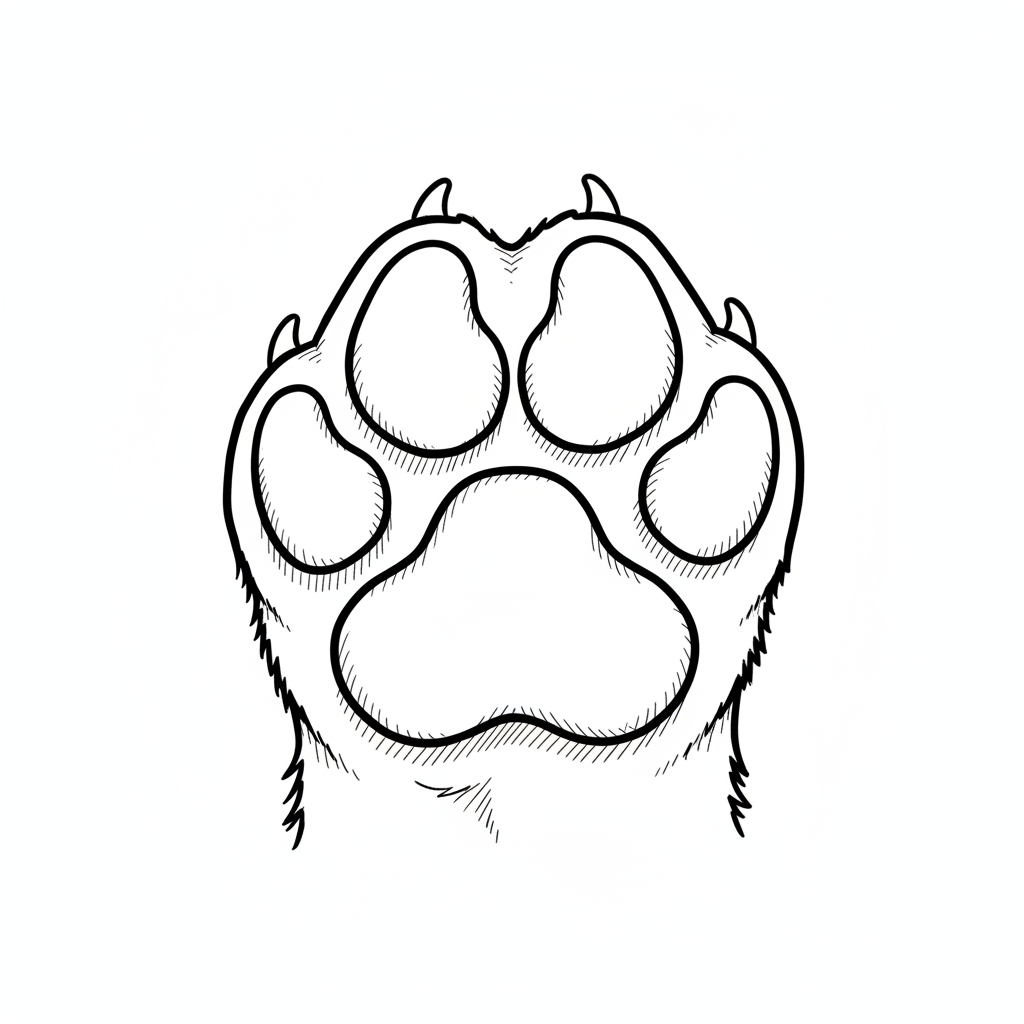
Draw a realistic dog paw using simple shapes and shading. Practice proportions, symmetry, and texture while adding personal details and coloring.
About this tutorial
Draw a realistic dog paw using simple shapes and shading. Practice proportions, symmetry, and texture while adding personal details and coloring.
What you need
Instructions
- 1
Step 1
Gather your materials and place them where you can reach them.
- 2
Step 2
Look at a clear photo of a dog paw and notice the big pad the four toe pads and how they sit together.
- 3
Step 3
Lightly draw a large oval in the center of your paper for the main paw pad.
- 4
Step 4
Lightly sketch four smaller ovals above the big oval spaced evenly for the toe pads.
- 5
Step 5
Draw a soft curved line below the main pad to show the bottom edge of the paw.
- 6
Step 6
Erase any extra overlapping lines so the pads look neat and separate.
- 7
Step 7
Adjust the sizes or positions of any pad by redrawing it until the paw looks balanced and symmetrical.
- 8
Step 8
Draw small rounded triangles at the top of each toe pad to make toenails.
- 9
Step 9
Add short curved strokes around the pads to suggest fur and skin creases.
- 10
Step 10
Shade the pads with light pencil strokes following the round shape to create depth.
- 11
Step 11
Darken shadows under and between the pads to increase contrast and realism.
- 12
Step 12
Gently blend your shading with a tissue or cotton swab to smooth transitions.
- 13
Step 13
Add color and personal touches like spots stripes or a collar using your coloring materials.
- 14
Step 14
Share your finished drawing on DIY.org.
Get inspired
Fun facts
How do I draw a realistic dog paw step by step?
To draw a realistic dog paw, start with a reference photo and lightly sketch simple shapes: a rounded central pad and four toe ovals. Check proportions and symmetry, then refine outlines and add small wrinkles where pads meet. Indicate fur direction with short strokes, then shade under pads and between toes to create depth. Erase construction lines and finish with color or texture matching the dog’s coat.
What materials do I need to draw a dog paw?
You’ll need drawing paper, a range of pencils (HB for sketching, 2B–4B for darker shading), a kneaded eraser, a regular eraser, a sharpener, and blending tools such as a paper stump or cotton swab. Include a clear reference photo of a dog paw and a ruler for checking proportions. Optional supplies: colored pencils or watercolors for color, and washable markers for younger children.
What ages is drawing a realistic dog paw suitable for?
This activity suits children ages five to twelve with adjustments: ages five to seven can simplify the paw into big shapes and focus on coloring with adult help for handling tools. Ages eight to twelve can work on proportions, shading, and texture more independently. Teenagers can refine realism and advanced techniques. Always supervise younger kids and adapt expectations to each child’s fine motor skills.
What are the benefits of drawing a realistic dog paw?
Drawing realistic dog paws improves observation, fine motor control, and spatial reasoning as children practice proportions, symmetry, and texture. The step-by-step process builds patience and concentration, while shading teaches light and form. Personalizing paw details encourages creativity and emotional expression. It’s a low-cost, calming activity that boosts confidence and attention to detail and can lead to projects like paw-print cards or pet portraits.
Watch & Learn
Need help?
What can we use if we don't have a cotton swab or tissue for blending?
If you don't have a tissue or cotton swab for blending the shading, use a blending stump, a clean fingertip, or a small piece of paper towel to gently smooth pencil strokes.
My paw looks lopsided after sketching; how can I fix the symmetry?
Lightly erase and redraw individual ovals as the instructions say—compare to your reference photo and adjust the size and spacing of the four toe ovals and the main pad until the paw looks balanced.
How can I simplify or make the activity harder for different ages?
For younger children, pre-draw the large central oval and toe ovals for them to trace and use markers instead of shading, while older kids can add detailed fur strokes, triangular toenails, and layered shading as described in the shading and fur steps.
What are some ways to personalize or extend the drawing once the paw is finished?
Extend the activity by adding spots, stripes, a collar, background elements, or a second paw, experiment with colored pencils or watercolor for the 'Add color and personal touches' step, and then share it on DIY.org.