How to Draw a Clownfish
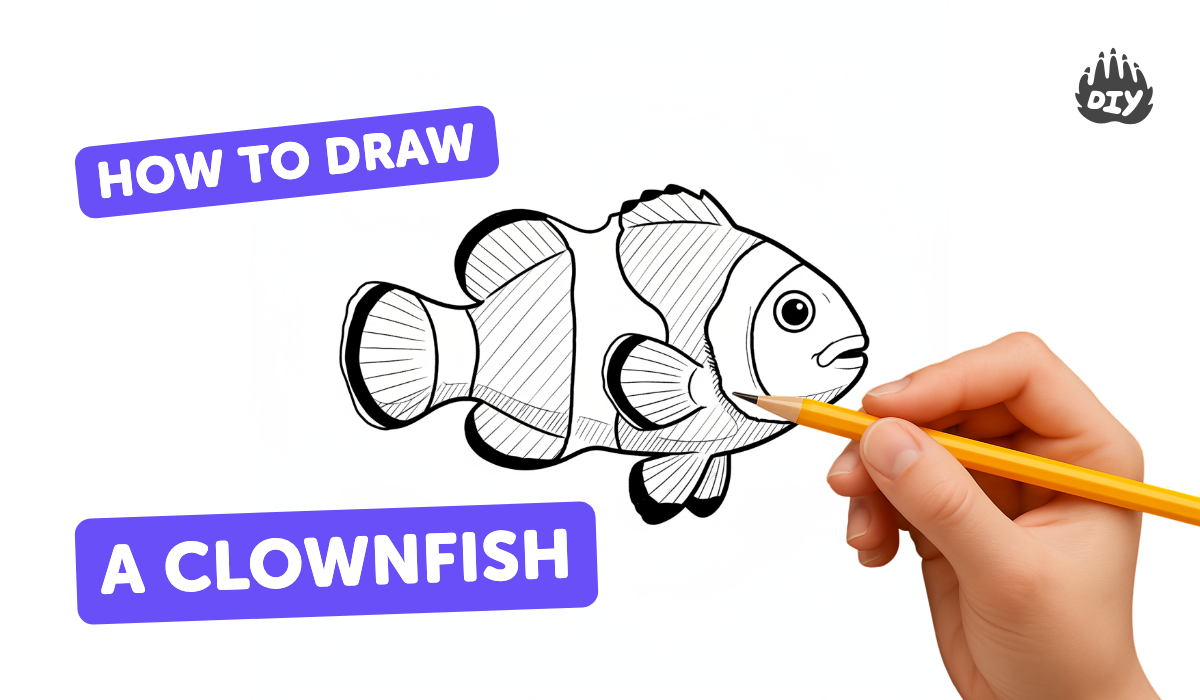
Draw a colorful clownfish step by step using pencil, ink, and colored pencils. Learn proportions, simple shapes, and patterns while practicing observation and neatness.
About this tutorial
Draw a colorful clownfish step by step using pencil, ink, and colored pencils. Learn proportions, simple shapes, and patterns while practicing observation and neatness.
What you need
Instructions
- 1
Step 1
Find a clean flat surface and place your paper and pencil in front of you so you can sit comfortably.
- 2
Step 2
Lightly draw a horizontal oval in the middle of the paper to make the main body of the clownfish.
- 3
Step 3
Draw a curved triangular tail attached to the right end of the oval to show the fish’s tail.
- 4
Step 4
Add a rounded fin on top of the oval like a soft triangle to make the dorsal fin.
- 5
Step 5
Draw a teardrop-shaped fin on the side of the oval for the pectoral fin.
- 6
Step 6
Draw a small circle near the front of the oval for the eye.
- 7
Step 7
Draw a tiny curved line in front of the eye for the fish’s smile-shaped mouth.
- 8
Step 8
Lightly sketch three curved vertical lines across the body to mark the clownfish’s white stripes.
- 9
Step 9
Erase any extra overlap lines so the fish’s outline and stripe marks look neat and clear.
- 10
Step 10
Carefully trace over your final pencil lines and stripe marks with the fine-tip ink pen.
- 11
Step 11
Let the ink dry fully and then gently erase all remaining pencil marks so only the ink lines remain.
- 12
Step 12
Color the fish’s body orange with even strokes, leaving the three stripe areas white.
- 13
Step 13
Use black colored pencil to draw thin outlines around the white stripes and add a black tip to the tail.
- 14
Step 14
Use a darker orange pencil to add a little shading along the bottom edge and behind the fins to make the fish look round.
- 15
Step 15
Sign your name and share a photo of your finished clownfish on DIY.org
Fun facts
How do I draw a colorful clownfish step by step using pencil, ink, and colored pencils?
Start by lightly sketching simple shapes: an oval body, a curved tail, and fins. Block in major stripes and eye placement. Refine outlines, adding fin detail and scale suggestions. Use an eraser to clean extra pencil lines. Ink over final lines with a fine black pen; wait to dry then erase remaining pencil marks. Color with colored pencils: lay down base orange, add white stripes, shade with darker orange and black edges, and finish highlights with a white pencil or gel pen.
What materials do I need to draw a clownfish with pencil, ink, and colored pencils?
You’ll need pencils (HB for sketching and a darker 2B), a good eraser and sharpener, a fineliner or waterproof black ink pen, and a set of colored pencils including several oranges, black, white, yellow, and brown. Use smooth drawing paper or a sketchbook. Optional items: a blending stump or tissue for softening color, a ruler for proportions, and a scrap piece of paper to test colors.
What ages is this clownfish drawing activity suitable for?
This activity suits different ages: children 5 to 7 can draw a simplified clownfish with adult help for sharpening or inking; ages 8 to 12 can complete the full step-by-step process, practice shading, and ink confidently; teens and adults can refine proportions, add texture, and experiment with color blending. Adjust complexity and provide supervision for young children when using sharp tools, pens, or small parts.
What are the benefits of drawing a clownfish with pencil, ink, and colored pencils?
Drawing a clownfish builds observation, proportion skills, and fine motor control. Using pencil, ink, and colored pencils teaches layering: sketching lightly, inking confidently, and adding color and shading. It encourages patience, neatness, color mixing, and creativity while reinforcing shapes and patterns. The marine subject supports learning about animals and habitats and is calming, boosting concentration and artistic confidence.
Watch & Learn
Need help?
What can we use if we don't have a fine-tip ink pen or orange/darker-orange colored pencils?
Trace your final pencil lines with a black gel pen or thin permanent marker instead of the fine-tip ink pen and color the body with orange crayons or washable markers, using a darker orange marker or layered crayon for the shading step and a black crayon or marker to outline the white stripes and add the black tail tip.
My fish's stripes and outline look messy after inking—how can I fix that?
Before you trace with the pen, lightly sketch the three curved vertical stripe lines and erase extra overlap lines until the body and stripe marks look neat, then let the ink dry fully as instructed before gently erasing remaining pencil marks to avoid smudges.
How can I adapt this clownfish drawing for younger kids or older kids?
For younger kids simplify steps by drawing the horizontal oval and one large stripe, skip the fine-tip inking and use crayons or stickers for the eye, while older kids can refine the curve of the dorsal fin, add the darker orange shading behind the fins, and use the black colored pencil to make crisper stripe outlines and tail details.
How can we extend or personalize the clownfish project after finishing the drawing?
Add a blue watercolor wash background with coral and bubble details, create patterned or glittered white stripes, include other fish, then sign your name and follow the final step to share a photo of your personalized clownfish on DIY.org.