How to draw a carnation - a free carnation drawing guide
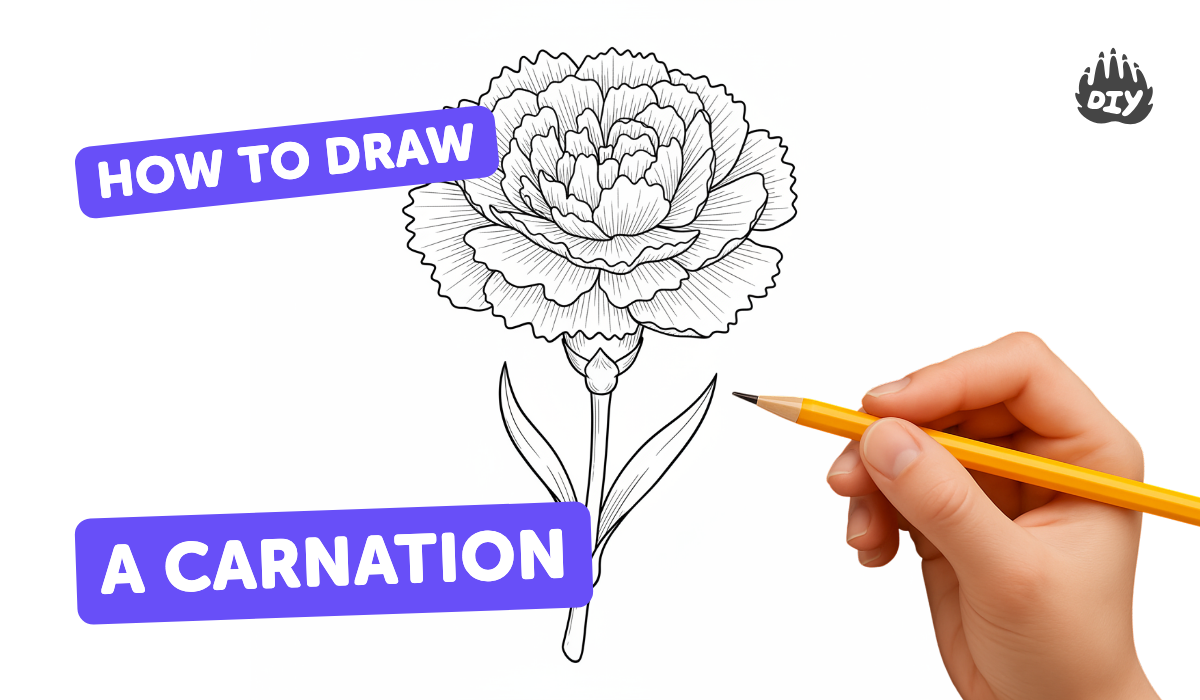
Draw a carnation: sketch the center, add ruffled petals, refine shapes, then shade for texture. Practice layering petals and shading to improve detail.


Drawing Apps
Photos of carnation drawing examples
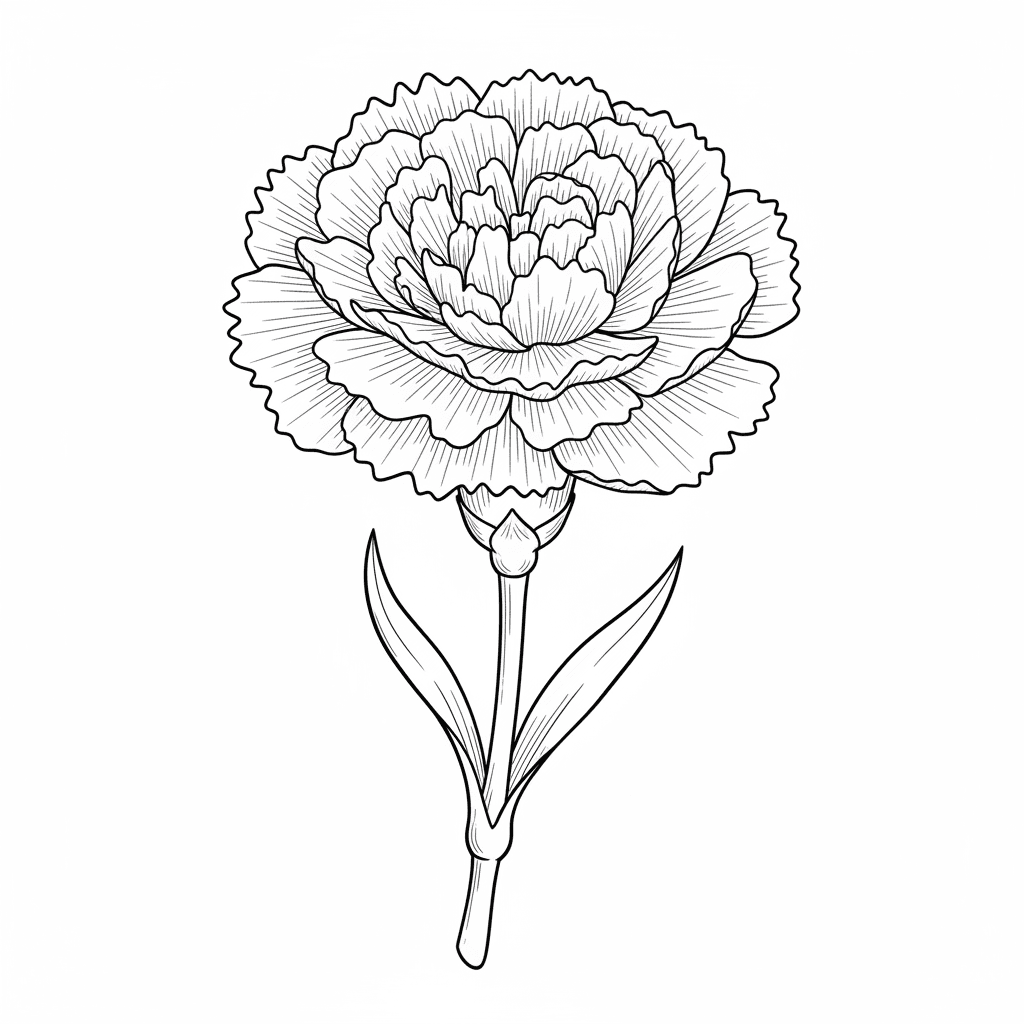
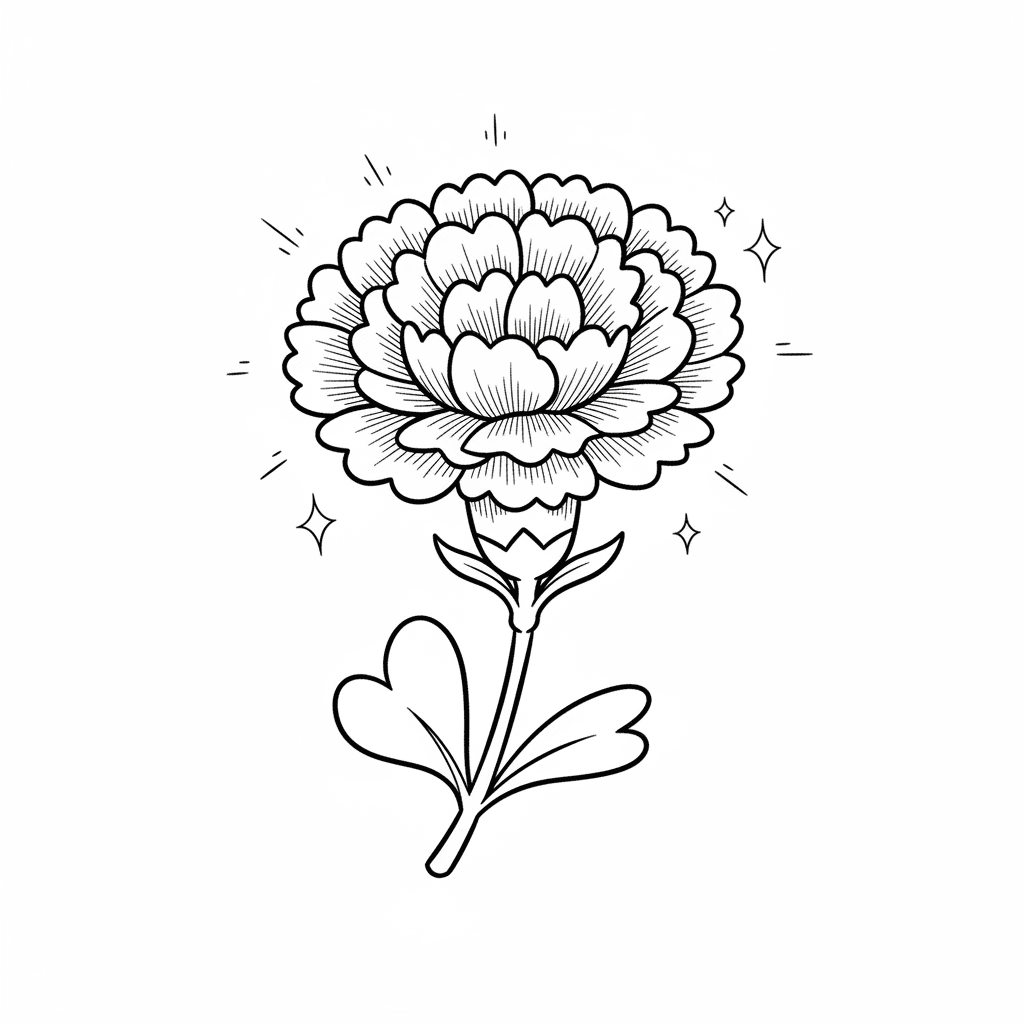
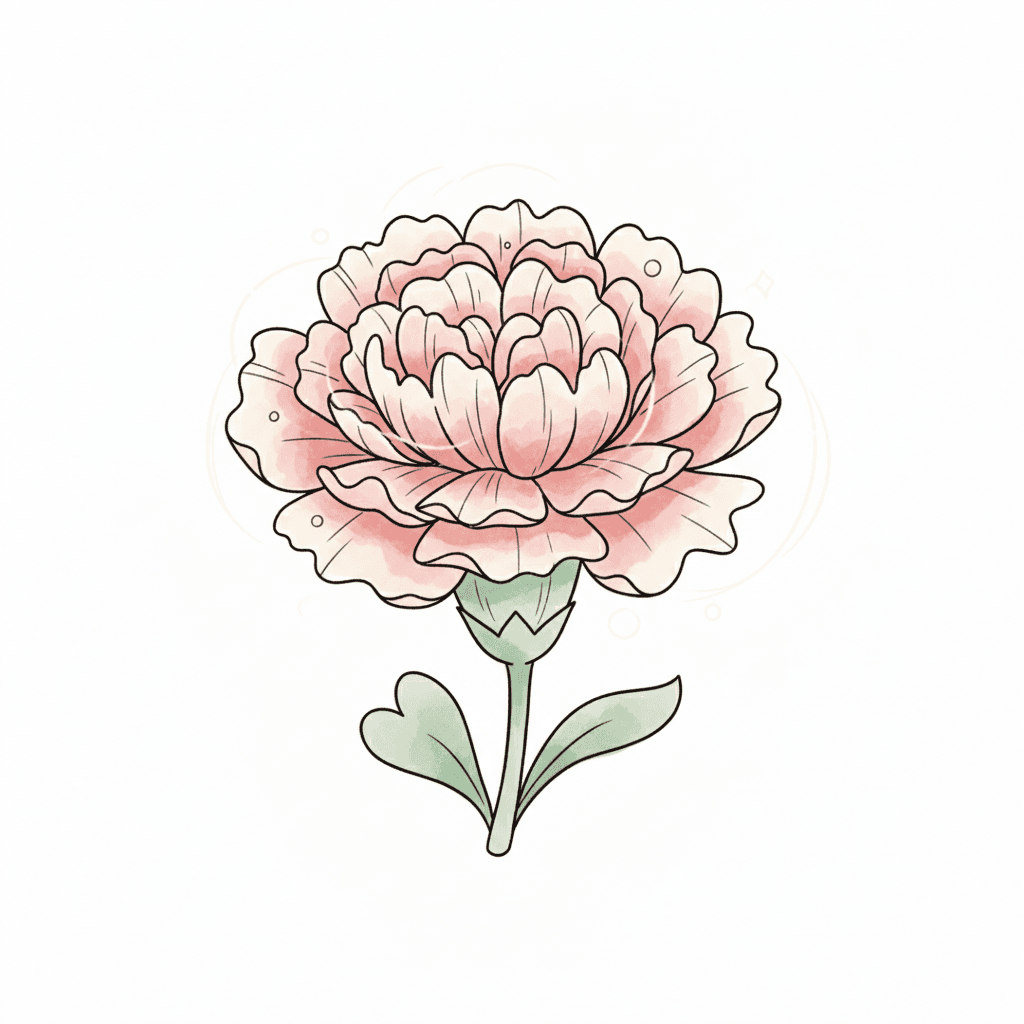
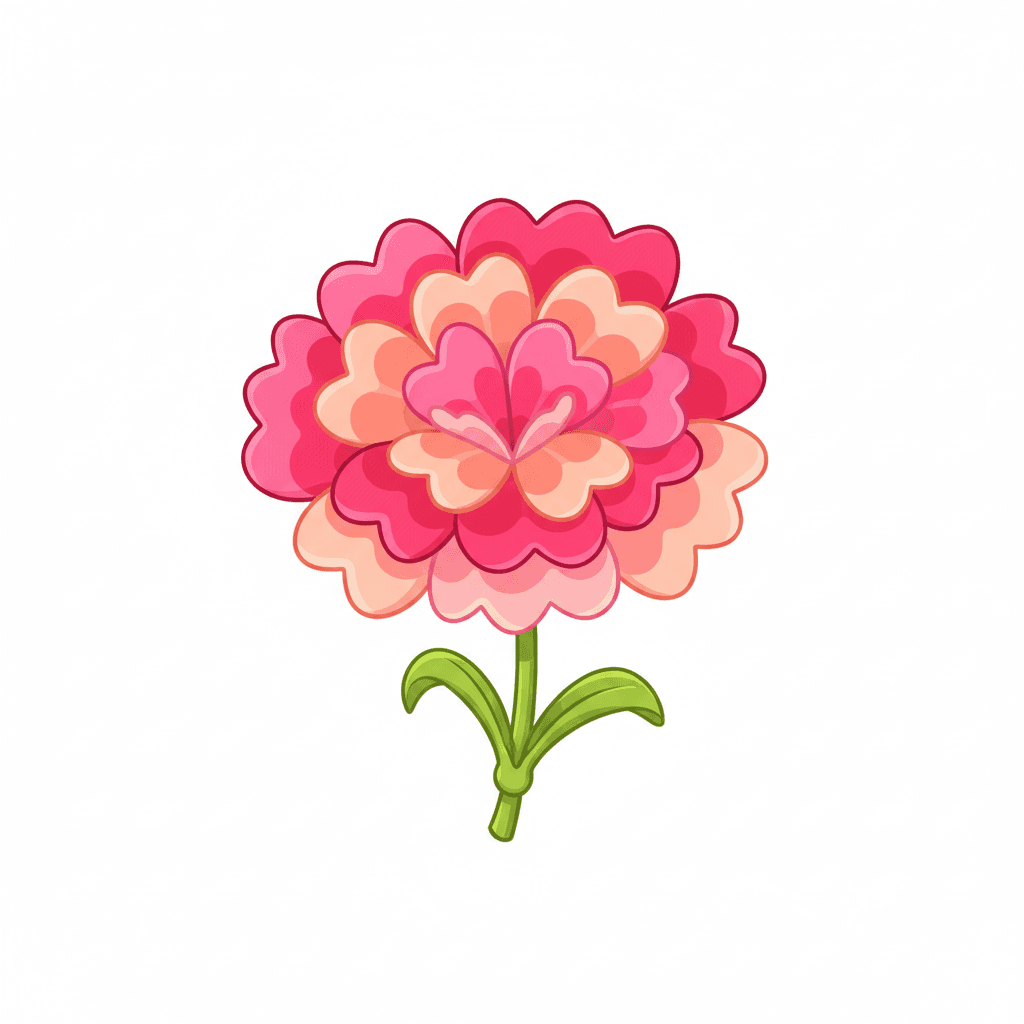
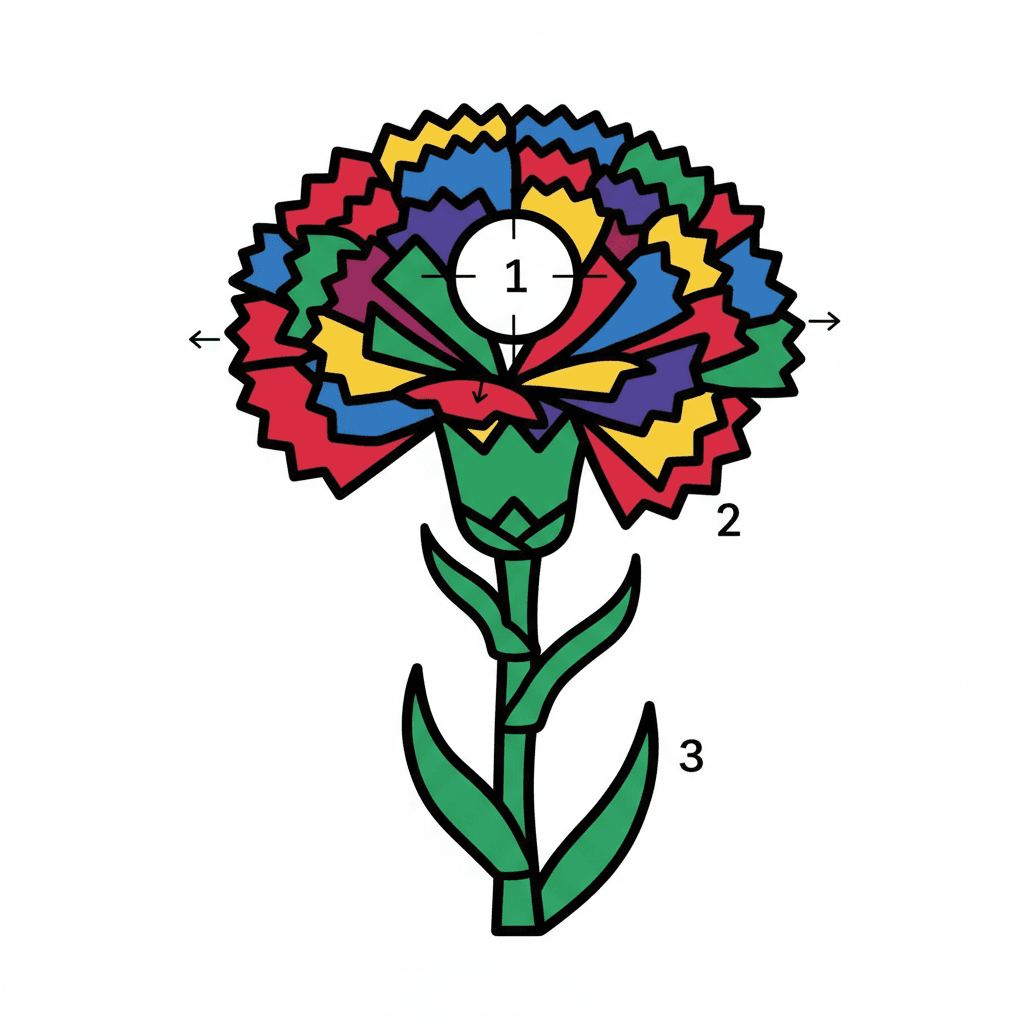
Step-by-step guide to draw a carnation
How To Draw Carnations! (Art For Kids!) - Easy Step By Step Beginner Art/Drawing Lesson!
Step 1
Put your drawing paper flat in front of you.
Step 2
Lightly draw a small circle near the middle to mark the carnation center.
Step 3
Sketch short irregular wavy lines around the circle to make the inner ruffled petals.
Step 4
Add a second ring of larger ruffled petals around the first using slightly longer wavy lines.
Step 5
Continue adding another outer layer of even bigger ruffled petals to build fullness.
Step 6
Erase any extra overlapping lines softly to clean up the petal edges.
Step 7
Refine each petal with small jagged or frilly edges to capture the carnation’s ruffled look.
Step 8
Draw a curved stem from the base of the flower.
Step 9
Draw one or two simple leaves along the stem.
Step 10
Lightly press with your pencil along the inner base of each petal to add thin shading lines for depth.
Step 11
Smudge those shading lines gently with your fingertip or a blending stump to soften them.
Step 12
Darken shadowed areas at the petal bases and under overlapping petals to create contrast.
Step 13
Add gentle lines and tiny creases on petals to suggest texture.
Step 14
Erase stray marks to tidy the drawing.
Step 15
Share your finished carnation drawing on DIY.org.
Help!?
What can we use instead of a blending stump if we don't have one?
If you don't have a blending stump, gently smudge the thin shading lines from 'Lightly press with your pencil along the inner base of each petal' using your fingertip, a tissue, or a cotton swab as a substitute.
My petals look flat or messy when I add more layers—how can I fix that?
Draw the second and outer rings of ruffled petals with lighter, shorter wavy lines, softly erase extra overlapping lines as in 'Erase any extra overlapping lines softly', and then darken shadowed areas at the petal bases to create depth.
How can I adapt this carnation drawing for different ages?
For younger kids, simplify to one ring of large ruffled petals and use a marker to skip smudging, for school-age kids follow all steps including refining jagged edges and gentle smudging, and for teens add extra thin shading lines, tiny creases, and stronger contrast.
How can we personalize or extend the activity after finishing the carnation?
After erasing stray marks, personalize your drawing by adding color with colored pencils or watercolor over the petals, drawing additional stems and leaves to make a bouquet, or photographing and sharing the finished carnation on DIY.org.
Watch videos on how to draw a carnation
How to Draw a Carnation Flower: Carnation Flower Drawing Easy Step by Step
4 Videos
How to Draw a Carnation Flower: Carnation Flower Drawing Easy Step by Step
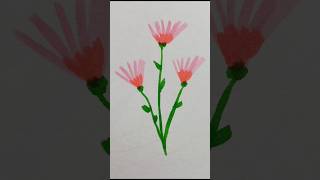
Draw a Simple Carnation Flower | Easy Step-by-Step Drawing Tutorial
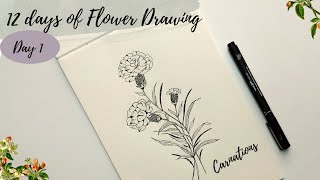
How to draw flowers - Day 1. Carnation flower drawing tutorial for beginners.
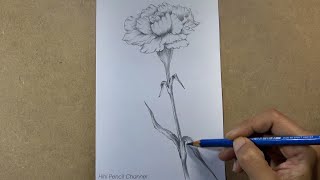
How to draw a Carnation flower step by step | Pencil Sketch
Facts about drawing flowers for kids
🌸 Carnations belong to the genus Dianthus and include hundreds of species and garden varieties.
🎨 Botanical illustrators like Pierre-Joseph Redouté made super-detailed flower drawings that scientists and gardeners used before photography.
✂️ The ruffled edge of a carnation petal (the frill) is perfect for practicing layered, wavy petal shapes.
✏️ Shading with soft, overlapping strokes and changing pencil pressure makes petals look soft and three-dimensional.
🏺 Carnations have been grown for over 2,000 years and were loved in ancient Greece and Rome for decoration and ceremonies.
How do you draw a carnation step by step?
What materials do I need to draw a carnation?
What ages is drawing a carnation suitable for?
What are the benefits of drawing carnations for kids?
