How to Draw a Blue Jay
Draw a detailed blue jay using pencil and colored pencils. Practice observation, proportions, and feather texture to improve realistic bird drawing skills.
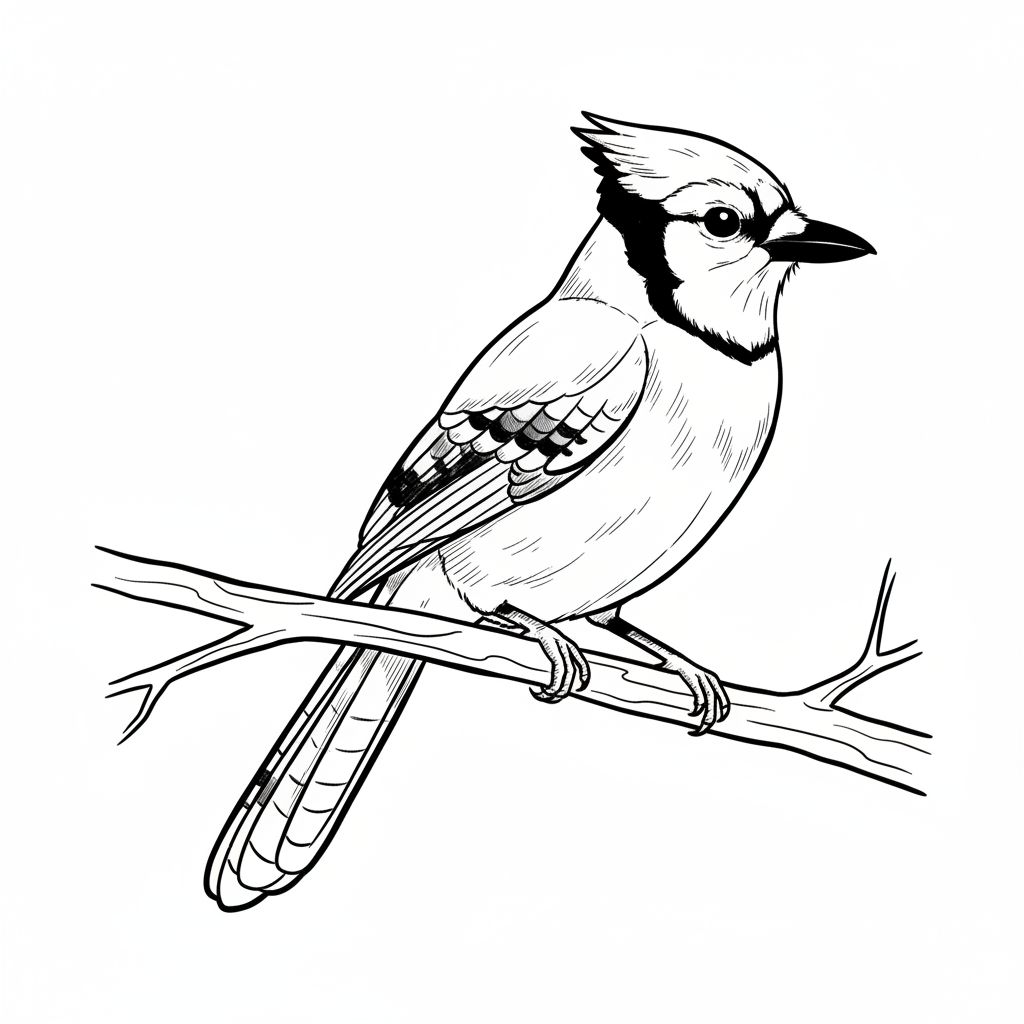
About this tutorial
Draw a detailed blue jay using pencil and colored pencils. Practice observation, proportions, and feather texture to improve realistic bird drawing skills.
What you need
Instructions
- 1
Step 1
Gather your materials and clear a comfy workspace to draw.
- 2
Step 2
Put the reference photo next to your paper and look at it closely for one minute.
- 3
Step 3
Lightly draw a circle for the head and an oval for the body to map size and placement.
- 4
Step 4
Draw a light guideline from the head through the oval to set the bird’s posture and tail direction.
- 5
Step 5
Mark the eye and beak positions with tiny dots to check proportions.
- 6
Step 6
Sketch the head outline and beak shape with smooth light lines.
- 7
Step 7
Draw the wing and tail outlines and connect them to the body shape.
- 8
Step 8
Add rows of feather groups on the wing and tail using short curved strokes for texture.
- 9
Step 9
Draw the eye detail and leave a tiny white spot for a highlight.
- 10
Step 10
Erase extra construction lines and gently darken the final outlines you want to keep.
- 11
Step 11
Color the main blue areas with light layers of blue colored pencil to build up color.
- 12
Step 12
Add the black markings on the face wing and tail to match your reference.
- 13
Step 13
Apply gray shading where the bird has shadows to add depth.
- 14
Step 14
Use a white colored pencil or leave small uncolored spots to add bright highlights on feathers.
- 15
Step 15
Share your finished blue jay on DIY.org.
Get inspired
Fun facts
How do I teach my child to draw a detailed blue jay step-by-step?
Start with a clear reference photo and have your child observe proportions: head, body, tail and beak. Lightly sketch simple shapes (oval body, circle head, triangle beak). Add wing and tail outlines, then block in feather groups. Refine outlines, erase guidelines, and use short pencil strokes to suggest feather texture. Shade for volume with varying pencil pressure. Finish with colored pencils: layer light blues, add darker blues and blacks for markings, and leave tiny white highlights for the
What materials do I need to draw a realistic blue jay with pencil and colored pencils?
Gather these basics: good-weight drawing paper, a set of graphite pencils (HB, 2B, 4B), a sharpener, kneaded and vinyl erasers, a ruler for proportion guides, and a printed reference photo. For color use a set of colored pencils with several blue tones, black, gray, and white. Optional tools: blending stump, lightbox or tracing paper for practice, and masking tape to secure paper. Non-toxic, child-safe supplies are recommended.
What ages is drawing a detailed blue jay suitable for?
This activity works for children about 6 and up with adult help; ages 8–12 can handle the steps and fine details independently. Teens and adults can explore more realistic textures and advanced shading. Adapt for younger kids by simplifying shapes and focusing on bold colors instead of fine feather detail. Match session length to attention span—shorter steps and breaks help younger artists stay engaged while building skill and confidence.
What are the benefits of drawing a realistic blue jay and simple variations to try?
Drawing a realistic blue jay builds observation, hand–eye coordination, fine motor skills, patience, and understanding of proportions and texture. It also teaches color layering and light/shadow. Variations: draw just the head close-up, create a stylized or cartoon blue jay, try watercolor washes then colored-pencil details, or practice motion poses. Safety tip: use non-toxic supplies and supervise pencil sharpeners with younger children.
Watch & Learn
Need help?
What can we use if we don't have a blue colored pencil or a white colored pencil?
If you don’t have a blue or white colored pencil, build the main blue areas with light layers of blue marker or watercolor and add highlights with a white gel pen or by leaving tiny uncolored spots as the instructions suggest.
My head and body look out of proportion after mapping the circle and oval—how can I fix that?
If proportions look off after lightly drawing the circle and oval, compare sizes using the reference photo and your pencil to remeasure, lightly adjust the shapes, and use the guideline from the head through the oval to realign posture before darkening outlines.
How can I adapt this drawing activity for younger or older kids?
For younger children, simplify by tracing or using a big circle and oval and coloring broad blue areas without detailed feather rows, while older kids can add the rows of feather groups, black face/wing markings, and layered gray shading for more depth.
What are easy ways to extend or personalize the blue jay drawing?
To extend and personalize the activity, add a painted sky or branch background before erasing construction lines, experiment with mixed media and extra white highlights on feathers, and then share your finished blue jay on DIY.org.