How to Draw a Bell
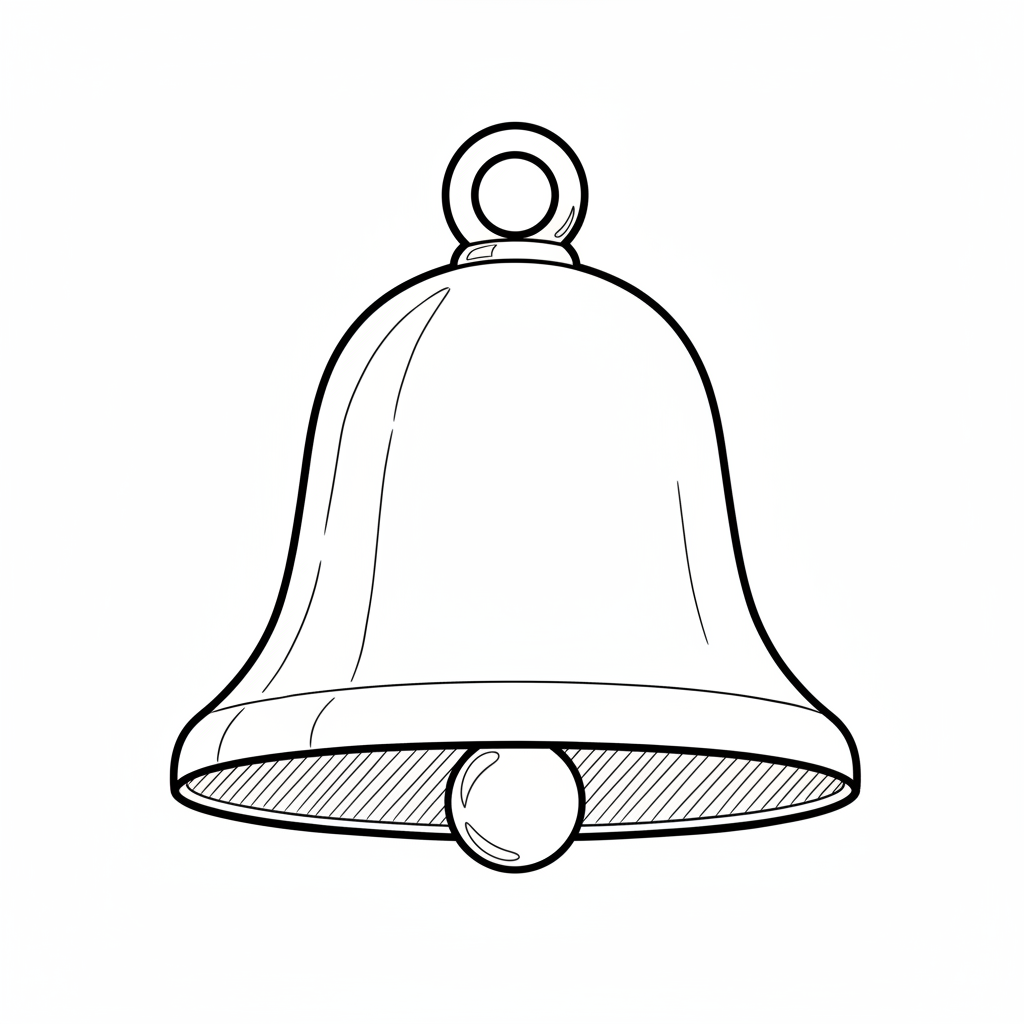
Draw a bell using basic shapes, outlines, and simple shading to create a clear form. Practice symmetry, proportions, and decorative pattern details.
About this tutorial
Draw a bell using basic shapes, outlines, and simple shading to create a clear form. Practice symmetry, proportions, and decorative pattern details.
What you need
Instructions
- 1
Step 1
Gather all your materials and find a flat surface to draw on.
- 2
Step 2
Lightly draw a straight vertical centerline down the middle of your paper to help keep your bell symmetrical.
- 3
Step 3
Sketch a wide rounded dome shape centered on the line for the main body of the bell.
- 4
Step 4
Add a short horizontal line at the bottom of the dome to mark the bell's rim.
- 5
Step 5
Draw a thin curved line just above the rim to show the bell's edge thickness.
- 6
Step 6
Inside the bell draw a small circle near the bottom center for the clapper and a short line to attach it.
- 7
Step 7
Draw a small loop or rectangle on the top center of the dome for the bell’s handle.
- 8
Step 8
Use your ruler to mark evenly spaced dots along the rim on both sides of the centerline to guide decorations.
- 9
Step 9
Draw matching decorative shapes at each dot such as tiny circles stripes or stars to keep the pattern balanced.
- 10
Step 10
Erase the centerline and any extra guide marks gently so your bell lines look clean.
- 11
Step 11
Choose which side the light will come from so your shading will look realistic.
- 12
Step 12
Shade the side of the bell opposite your chosen light source lightly with your pencil to show roundness.
- 13
Step 13
Add a darker shadow under the rim and a small shadow under the clapper to make the bell look three dimensional.
- 14
Step 14
Use a tissue or your finger to blend the shaded areas softly so the tones look smooth.
- 15
Step 15
Share your finished bell on DIY.org
Get inspired
Fun facts
How do I draw a bell step by step with a child?
Start by lightly sketching a vertical centerline and a rounded dome shape for the bell’s body using an oval for the top and a wider curved line for the skirt. Add a small rectangle or circle at the top for the handle. Refine the bell’s curve on both sides for symmetry, erase guidelines, then draw the clapper inside. Shade gradients along the curve to show form, and add decorative bands or patterns for details.
What materials do I need to draw a bell with my child?
You only need simple art supplies: drawing paper or a sketchbook, a couple of pencils (HB and 2B), an eraser, and a sharpener. Add a ruler or straightedge and a compass for precise guides if you want. For finishing, use colored pencils, markers, or watercolor and a blending stump or cotton swab for soft shading. Optional: stencils, stickers, and reference photos of bells for inspiration.
What ages is drawing a bell suitable for?
Drawing a bell is great for ages about 4 to 12, with adaptations. Preschoolers (4–5) can trace simple shapes and add big patterns with help. Early elementary (6–8) can draw the bell using basic shapes and try simple symmetry. Older kids (9–12+) can practice accurate proportions, detailed decorations, and shading. Adjust instruction and tools to each child’s motor skills and attention span.
What are the benefits of drawing a bell for kids?
Drawing a bell builds fine motor control, hand-eye coordination, and understanding of shapes and symmetry. Practicing proportions and shading strengthens spatial reasoning and light/shape observation. Decorating the bell encourages pattern recognition and creativity, while following step-by-step guidance improves attention and patience. It’s also a low-cost, screen-free activity that boosts confidence when children finish a recognizable, decorated object.
Watch & Learn
Need help?
I don’t have a ruler or a tissue—what can I use instead to mark the rim dots and blend shading?
Use a straight book edge, the long side of a credit card, or a folded piece of paper to mark evenly spaced dots along the rim, and use a cotton ball, Q‑tip, blending stump, or your fingertip instead of a tissue to softly blend the shaded side.
My dome looks lopsided after erasing the centerline—how can I fix symmetry?
Redraw a very light vertical centerline, fold the paper in half to compare each side of the dome, or trace one half and flip it to match before erasing guide marks gently to clean up the bell lines.
How can I adapt this drawing for younger or older kids?
For younger children simplify to a large rounded dome, one clapper circle, and sticker decorations without the ruler dots or blended shading, while older kids can use precise ruler-measured dots, more intricate decorative shapes along the rim, and careful blended shading with a tissue or stump for realism.
What are ways to extend or personalize the bell activity after finishing the drawing?
Add color with metallic pencils or paint, develop unique patterns at each rim dot, cut and fold multiple drawn bells into a paper mobile, and photograph your finished bell to share on DIY.org.