Harvest wild mushrooms
Learn to identify and safely harvest wild mushrooms with adult supervision, using a basket and knife, and record observations in a nature journal.


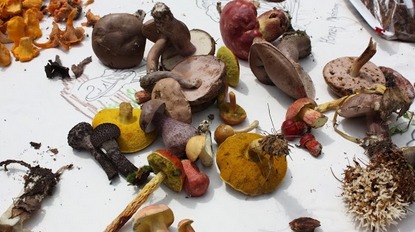
Step-by-step guide to harvest wild mushrooms
The Ultimate Wild Mushroom foraging guide
Step 1
Ask an adult to supervise your mushroom hunt.
Step 2
Agree safety rules with your adult helper before you go.
Step 3
Put on your gloves.
Step 4
Put on your sturdy shoes.
Step 5
Gather your basket field guide magnifying glass nature journal and pencil and walk to the mushroom area with your adult.
Step 6
Walk slowly and scan the ground logs and leaf litter for mushrooms.
Step 7
Stop when you see a mushroom and examine it closely with your magnifying glass.
Step 8
Compare the mushroom to pictures and notes in your field guide or app to check if it matches a safe species.
Step 9
If you are unsure at any time do not touch the mushroom and tell your adult.
Step 10
If your adult confirms it is safe have the adult cut the mushroom at the base with the knife.
Step 11
Place the harvested mushroom stem down in the basket.
Step 12
Sit with your adult and record the mushroom name date location habitat and a drawing in your Nature journal.
Step 13
Clean your hands and tools with your adult after you finish.
Step 14
Share your finished nature journal page and photos of your mushrooms on DIY.org
Help!?
What can we use if we don't have a magnifying glass, field guide, or basket?
Use your smartphone camera zoom or a cheap toy loupe for the magnifying glass, a fungi ID app or printed photos instead of a paper field guide, and a breathable paper bag or mesh produce bag in place of the basket.
What if we can't find mushrooms or can't tell whether one is safe to harvest?
After rain walk very slowly scanning the ground, logs, and leaf litter as the instructions say, and if identification is unclear do not touch the mushroom and tell your adult so they can check the field guide or app.
How can we adapt the hunt for different ages of children?
For preschoolers let the adult lead safety rules and cutting while the child wears gloves, uses the magnifying glass, and makes simple drawings in the nature journal, for early elementary children have them note name/date/location with help, and for older kids encourage independent ID with the field guide and detailed journal entries.
How can we extend or personalize the mushroom-hunting activity?
Make spore prints to add to your nature journal, label each harvested mushroom stem-down in the basket with date and habitat, take photos during inspection to include on your DIY.org post, and decorate the journal page with sketches and stickers.
Watch videos on how to harvest wild mushrooms
Beginners Guide to Wild Mushroom Foraging - 2024
4 Videos
Beginners Guide to Wild Mushroom Foraging - 2024
How to Harvest Wild Mushrooms Safely | Foraging Tips for Beginners 🍄 #shorts
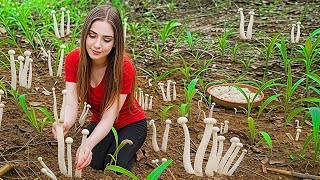
Mushroom Harvesting for Beginners! 🍄 How to Find Safe Mushroom Edible Fungi After the Rain
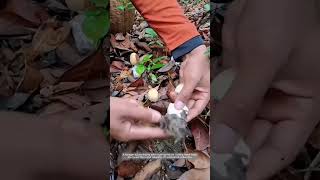
Harvesting Wild Mushrooms: Careful Collection from the Forest Floor
Facts about mushroom foraging and identification
🍄 Many edible mushrooms have poisonous look-alikes — always confirm multiple ID features with an adult.
🔬 Mycology, the study of fungi, includes over 120,000 described species and new ones are still being discovered.
🧺 Foragers often use baskets so loose spores can fall out and help mushrooms reproduce in the wild.
✂️ It's best to cut mushrooms at the stem base with a knife to protect the underground mycelium.
📓 Making sketches, notes, and spore prints in a nature journal makes future identification much easier.
How do we safely harvest wild mushrooms and record observations with a child?
What materials do I need for harvesting wild mushrooms with a child?
What ages is mushroom foraging suitable for?
What safety tips should I follow when foraging wild mushrooms with children?
