Draw & Learn About Sea Slugs
Draw colorful sea slugs using reference photos, label body parts, learn about their habitats and diets, and create a short fact-filled sketch page.


Drawing Apps
Step-by-step guide to Draw & Learn About Sea Slugs
Step 1
Gather all the materials listed.
Step 2
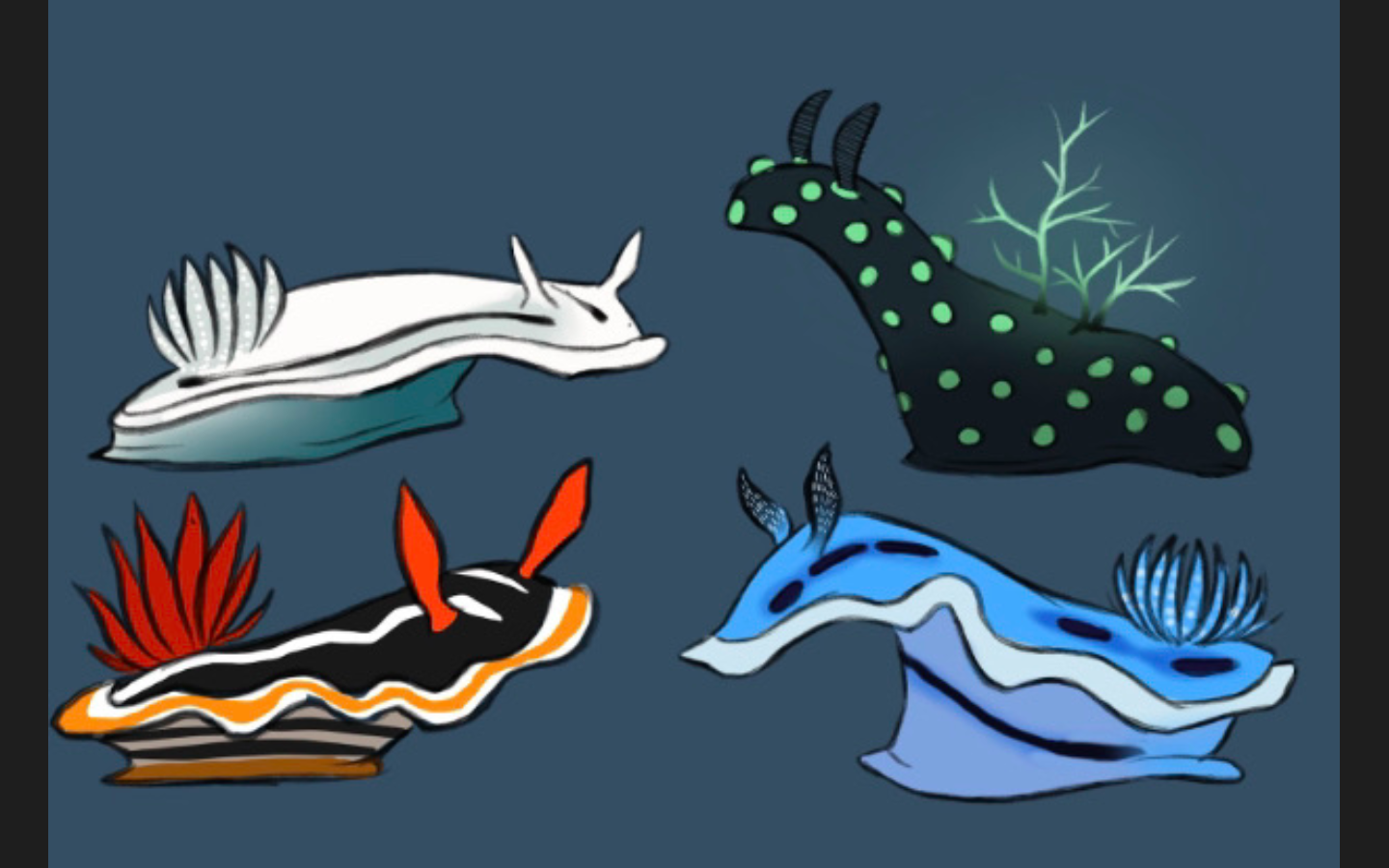
Pick three reference photos of different-looking sea slugs to copy from.
Step 3
Look closely at the first photo and notice the overall body shape.
Step 4
Lightly sketch the main body shape of the first sea slug with your pencil.
Step 5
Add the slug's special features like rhinophores gills or the foot to the sketch.
Step 6
Repeat Steps 3 to 5 for the other two reference photos.
Step 7
Trace the final outlines of all three sketches with your black pen or fine liner.
Step 8
Erase any extra pencil lines gently so your drawings are clean.
Step 9
Colour each sea slug using the colors and patterns you saw in the photos.
Step 10
Label each body part on your drawings with neat words and arrows.
Step 11
Write a short fact about where each sea slug lives next to its drawing.
Step 12
Write a short fact about what each sea slug eats next to its drawing.
Step 13
Add a title and the date at the top of your sketch page.
Step 14
Share a photo of your finished fact-filled sketch page on DIY.org.
Help!?
What can I use if I don't have a black pen/fine liner, colored pencils, or printed reference photos?
If you don't have a black pen/fine liner for Step 7 you can use a dark ballpoint or a permanent marker tip for outlines, substitute colored pencils in Step 10 with crayons, washable markers, or watercolors, and replace printed reference photos in Step 2 with images on a tablet or phone screen.
My outlines smudged and the ink bled when I traced—how can I fix that?
To avoid bleeding in Step 7 trace your final pencil lines on a scrap of thicker paper or let ink dry fully before erasing in Step 8, or use the light pencil-only method from Step 4 and place tracing paper over the photo to copy the shape accurately without heavy ink.
How can I change the activity for younger or older kids?
For younger children simplify Steps 3–6 by tracing the main body shape and using broad crayons for Step 10 with only one or two labels in Step 11, while older kids can add scientific names, precise measurements, extra pattern detail, and longer habitat and diet facts in Steps 12–14.
What are some ways to extend or personalize the finished sketch page?
Enhance your project from Steps 3–14 by adding a habitat collage behind each drawing, making a small clay model to match a colored slug, creating a comparison chart of body parts from Step 11, or recording a short narration to upload with the photo in Step 15 on DIY.org.
Watch videos on how to Draw & Learn About Sea Slugs
How to Do a Pencil Drawing | Drawing Tutorials
4 Videos

How to Do a Pencil Drawing | Drawing Tutorials

How to Draw with a Pencil: Ultimate Beginner's Guide #art #realismface #drawingtechnique
The ULTIMATE Realistic DRAWING Guide | Easy Step By Step Process Drawing Tutorial - COMPLETE EDITION

Mastering the Art of Pencil Sketching : A Step by Step Guide | Artwork | Pencil Sketching | Drawing
Facts about sea slugs and marine biology
🐚 Nudibranchs are a group of colorful sea slugs that have lost their external shells as adults.
🌈 Many sea slugs use bright colors to warn predators they are toxic or taste bad (a strategy called aposematism).
🍽️ Different species eat sponges, hydroids, algae, or even other sea slugs — diet shapes their colors and shapes!
🧪 Some nudibranchs steal stinging cells from their prey and store them for their own defense (kleptocnidae behavior).
🌊 Sea slugs live all over the world from tide pools to deep seas and range in size from a few millimeters to over 30 cm.
How do I guide my child to do the Draw & Learn About Sea Slugs activity?
What materials do I need for the sea slug drawing and learning activity?
What ages is the Draw & Learn About Sea Slugs activity suitable for?
What are the benefits of doing a sea slug drawing and learning activity with children?
