Create a unique set for a LEGO® minifig
Design and build a unique LEGO minifigure scene using bricks, accessories, and simple craft materials; plan, customize, and display your finished creation.


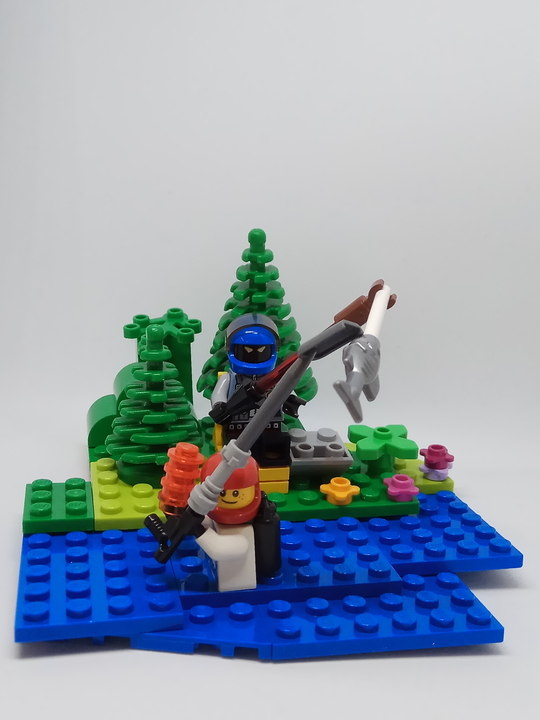

Step-by-step guide to create a unique set for a LEGO® minifig
How to MAKE COOL LEGO minifigures?
Step 1
Find a clean flat workspace where you can build without losing pieces.
Step 2
Lay out your LEGO bricks minifigure(s) baseplate accessories and craft materials so you can see everything.
Step 3
Pick a fun theme or story for your minifigure scene like space adventure city park or jungle quest.
Step 4
Draw a simple sketch plan showing where your minifigure and the main props will go.
Step 5
Choose the minifigure you will feature and decide its role in the story.
Step 6
Build the ground and main structures of your scene on the baseplate using LEGO bricks.
Step 7
Add small LEGO accessories to make props like benches tools signs or treasure chests.
Step 8
Cut one or two paper props such as a sign cape hat or backdrop from construction paper.
Step 9
Attach the paper props to the minifigure or to the scene using tape or glue.
Step 10
Decorate your paper props and background with colouring materials to add color and details.
Step 11
Arrange and tweak the minifigure and props until your scene looks just right.
Step 12
Write a short title or description of your scene on a sticky note.
Step 13
Place the sticky note beside your display so people know your story.
Step 14
Share your finished creation on DIY.org
Help!?
What can we use if we don't have LEGO bricks or a baseplate?
Substitute a cardboard or stiff craft foam sheet for the baseplate and use Duplo, Mega Bloks, small action figures, or printable minifigure cutouts and bottle caps for accessories to complete the scene.
My paper prop keeps falling off the minifigure—how can I fix it?
Secure paper props by using double-sided tape or a small dab of tacky glue when you 'attach the paper props to the minifigure or to the scene using tape or glue,' or fasten them to the baseplate with a paperclip or thin wire anchor while drying.
How can I change the activity for different ages?
For younger children skip the cutting step and use pre-cut shapes and Duplo on a large base while older kids can make a detailed sketch plan, complex builds, and write a longer sticky-note description before sharing.
What are some ways to enhance or personalize our minifigure scene?
Add fabric capes, laminated signs, small LED lights, movable hinges on props, more detailed painted backdrops, or photograph a stop-motion story to share on DIY.org.
Watch videos on how to create a unique set for a LEGO® minifig
Building an EPIC Custom LEGO Minifigure From Scratch!
4 Videos

Building an EPIC Custom LEGO Minifigure From Scratch!

Create AMAZING New LEGO Minifigures With Easy Assembly!
Creating the Most AMAZING Custom LEGO Minifigure Ever!
How to Animate Minifigure Walking and Running (LEGO Stop-Motion Tutorial)
Facts about LEGO building and model-making for kids
🧱 LEGO has produced more than 600 billion bricks since 1949 — that’s enough to build lots of tiny towns!
🧍 The modern LEGO minifigure debuted in 1978 and quickly became the face of LEGO play.
🎨 Jens Nygaard Knudsen led the team that designed the original minifigure look that’s still loved today.
🎬 Fans have been making LEGO 'brickfilms' and stop-motion shorts for decades to bring minifig scenes to life.
🖼️ Dioramas are miniature scenes modelers use to tell stories—perfect inspiration for your minifig display.
How do I design and build a unique LEGO minifigure scene?
What materials do I need to create a custom LEGO minifigure scene?
What ages is designing and building a minifigure scene suitable for?
What are the benefits of making a custom LEGO minifigure scene?
