Craft a geese
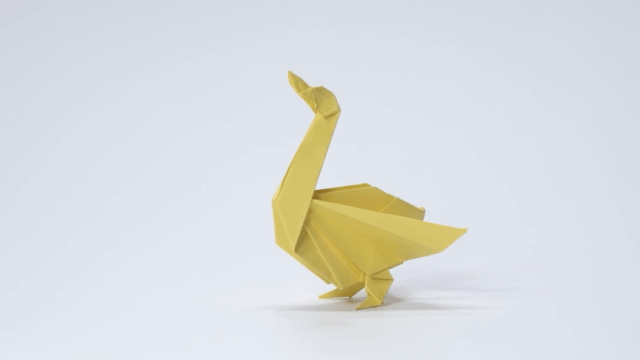
Make a colorful paper goose using scissors, glue, and markers. Fold, cut, decorate, and learn simple symmetry and bird features.
About this activity
Make a colorful paper goose using scissors, glue, and markers. Fold, cut, decorate, and learn simple symmetry and bird features.
What you need
Step by step
- 1
Step 1
Choose a sheet of colored paper for the goose body.
- 2
Step 2
Fold the paper in half vertically to make a center line.
- 3
Step 3
Use a pencil to draw half of a goose silhouette along the folded edge.
- 4
Step 4
Cut along the pencil line through both layers to create a symmetrical goose shape.
- 5
Step 5
Unfold the paper to reveal the full goose silhouette.
- 6
Step 6
Cut a wing shape from a different colored paper.
- 7
Step 7
Cut a tail shape from a different colored paper.
- 8
Step 8
Glue the wing onto one side of the goose body in the spot where wings belong.
- 9
Step 9
Glue the tail onto the back of the goose body.
- 10
Step 10
Cut a small triangle from colored paper for the beak.
- 11
Step 11
Glue the beak onto the goose's head.
- 12
Step 12
Use a marker to draw an eye and simple feather lines on the goose.
- 13
Step 13
Draw matching patterns on both sides of the goose with markers to show symmetry.
- 14
Step 14
Share your finished colorful paper goose on DIY.org.
Fun facts
How do I make a colorful paper goose with my child?
To make a colorful paper goose, start with a rectangular sheet of colored paper. Fold it in half lengthwise to create symmetry, then lightly draw a goose outline (head, neck, body, tail) along the fold. Cut along the outline—keep the fold intact at the neck so the two halves mirror each other. Unfold, then add wings and a beak from contrasting paper and glue them on. Decorate with markers for eyes, feathers, and patterns. Finish with a small tail and let glue dry. Supervise scissors use.
What materials do I need for a paper goose craft?
Materials needed: colored construction paper or cardstock, pencil and eraser, child-safe scissors, glue stick or white school glue, washable markers or crayons, and optional googly eyes, tissue paper or scrap paper for feathers, and a ruler for straighter folds. Also have a cutting mat or protective surface and small cloth for cleanup. For younger children, pre-cut shapes or safety scissors reduce risk.
What ages is this paper goose activity suitable for?
Suitable ages: 3–5 with adult help (use pre-cut shapes and safety scissors), 6–8 ideal for independent folding, cutting, and decorating, 9+ can add symmetrical design, patterns, or simple collage techniques. Adjust complexity: toddlers focus on gluing and coloring, preschoolers practice cutting, older kids explore symmetry, layering, and fine details. Always supervise scissors and small pieces for younger children.
What are the benefits of making paper geese and are there safety tips or fun variations?
Making paper geese builds fine motor skills, introduces symmetry and basic geometry, encourages creativity, and teaches bird features like beaks and wings. It supports language development when naming parts and colors. Safety tips: use child-safe scissors, supervise glue use, and avoid small embellishments for very young children. Variation: fold two papers for a 3D goose, add patterned collage feathers, or mount on a straw or stick to create puppets.
Watch & Learn
Need help?
What can we use instead of colored paper, glue, or markers if we don't have them?
Use white printer paper colored with crayons or colored pencils for the goose body, clear tape or a glue stick instead of liquid glue for attaching the wing and tail, and a pen if you don't have markers.
My child cut uneven geese or the layers shifted when cutting—how can we fix that?
Fold the paper firmly along the center line and press the fold with a ruler or fingernail, then use clips or a paperweight to hold both layers while cutting slowly with sharp scissors so the silhouette stays symmetrical.
How can we adapt this goose craft for a 3-year-old versus a 10-year-old?
For 3-year-olds, pre-cut the goose body and large wing and tail pieces for them to glue and draw a simple eye, while 10-year-olds can freehand the folded-edge silhouette, add layered wings or detailed feather lines, and create complex symmetrical marker patterns.
How can we extend or personalize the finished paper goose beyond drawing patterns and posting on DIY.org?
Turn several finished geese into a colorful mobile by punching a small hole at the top of each goose, tying thread through the hole at different lengths, or add sequins and textured paper to the glued wing and tail for extra decoration before sharing.