Build something with letters or numbers using LEGO®
Use LEGO® bricks to build letters and numbers, create words or math problems, and explore patterns, counting, and design through hands-on building.


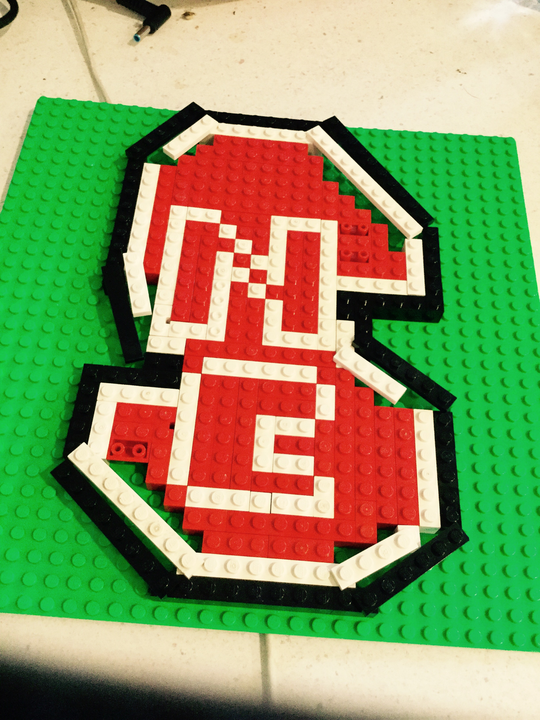

Step-by-step guide to build letters and numbers with LEGO®
How To Make Lego ALPHABET (Complete) - 10664 Lego Bricks and More Creative Tower Tutorial
Step 1
Place your LEGO bricks and baseplate on a clear flat table.
Step 2
Decide if you will build letters numbers or a mix of both.
Step 3
Write the word or math problem you want to build on your paper.
Step 4
Choose how many studs wide and tall each letter or number should be.
Step 5
Mark the position for each letter or number on your paper or with single-stud spacer bricks on the baseplate.
Step 6
Pick a color for each letter or number.
Step 7
Gather the bricks in the colors you chose for the first letter or number.
Step 8
Build the first letter or number on the baseplate following your size marks.
Step 9
Build each remaining letter or number one at a time leaving at least one stud gap between them.
Step 10
Add a pattern or counting feature like alternating colors stripes or stacked towers to show numbers.
Step 11
Press every brick firmly so all letters and numbers are stable.
Step 12
Share your finished LEGO letters or numbers on DIY.org.
Help!?
What can I use instead of a LEGO baseplate or single-stud spacer bricks if I don't have them?
Use a piece of cardboard drawn with a stud grid and small round stickers or coins as position markers instead of a LEGO baseplate and single-stud spacer bricks when you mark positions and place bricks.
My letters keep wobbling or my number towers fall over — how can I make them more stable?
Press every brick firmly as the instructions say and stabilize tall stacks by building wider bases with 2x2 plates or adding flat plates under letters while aligning pieces to your marked positions on the baseplate or paper.
How can I change the activity for different age groups?
For younger children use larger DUPLO bricks, make each letter or number only a few studs wide/tall and pre-mark positions on the paper or baseplate, while older kids can increase the studs size, write longer words or math problems, and add alternating-color stripes or stacked towers for counting.
How can we extend or personalize the finished LEGO letters or numbers?
Add removable tiles to spell secret words, attach a light brick or decorative pieces under plates, turn alternating-color stripes or stacked towers into a counting game, and then decorate and share your finished LEGO letters or numbers on DIY.org.
Watch videos on how to build letters and numbers with LEGO®
Learn and Play with LEGOs | 30 min of Shapes, Counting, and STEM for Preschool and Toddler
3 Videos
Learn and Play with LEGOs | 30 min of Shapes, Counting, and STEM for Preschool and Toddler
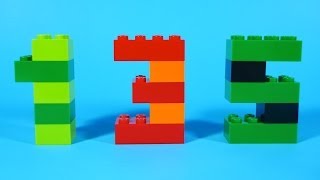
How To Build Lego NUMBERS (0-9) - 4630 LEGO® Build & Play Box Building Instructions

I built a DREAM HOUSE in LEGO...
Facts about early literacy and numeracy
🧱 Six standard 2×4 LEGO bricks can be combined in 915,103,765 different ways — endless letter and number builds!
🔤 The English alphabet has 26 letters — that’s 26 shapes you can spell with bricks to make words and names.
🔢 Arabic numerals (0–9) are used worldwide, so building those ten symbols lets you make any number.
🧮 Hands-on play with blocks improves early math skills — manipulatives help kids understand counting and patterns.
🎨 Making repeating color or size patterns with LEGO trains pattern-recognition, a key skill for math and coding.
How do you build letters and numbers with LEGO bricks?
What materials do I need to build letters and numbers with LEGO?
What ages is this activity suitable for?
What are the benefits of building letters and numbers with LEGO?
