Build a room at scale with LEGO®
Design and build a scaled model of a room using LEGO bricks, measure and plan to scale, create furniture and test layout proportions.


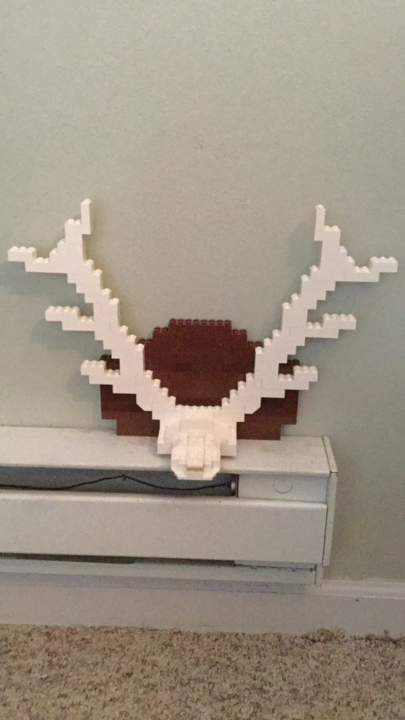

Step-by-step guide to Build a room at scale with LEGO®
How to Build an Amazing LEGO House 🏠| Step-by-Step Tutorial | How to build a Lego Modern House
Step 1
Choose one room in your home that you want to model.
Step 2
Measure the room's length width and height with your ruler or measuring tape.
Step 3
Write the three measurements down on your plain paper.
Step 4
Pick a scale that will fit on your baseplate for example 1 LEGO stud = 10 cm or 1:20.
Step 5
Convert each real measurement into your chosen model units and write the model dimensions on paper.
Step 6
Draw a to-scale floor plan on the graph paper marking walls doors and windows using the model dimensions.
Step 7
Make a list of the furniture pieces you want to include and write their target sizes in model units.
Step 8
Build each piece of furniture in LEGO to match the sizes on your list.
Step 9
Use bricks on the LEGO baseplate to build the room outline (walls) to match your floor plan.
Step 10
Place your LEGO furniture inside the model to test the layout and check proportions.
Step 11
Change any furniture sizes or wall positions that do not fit well until the layout looks right.
Step 12
Add small finishing details like rugs lamps or pictures using leftover bricks.
Step 13
Share your finished scaled LEGO room on DIY.org.
Help!?
What can we use if we don't have a LEGO baseplate or graph paper?
Use a flat piece of cardboard or poster board as a substitute baseplate and draw a grid with your ruler on plain paper so you can still make the to-scale floor plan.
My LEGO furniture keeps not fitting inside the walls — what should I check or fix?
Recheck your scale conversion from the room's real length/width/height into model units, compare each furniture's target size on your list to the drawn floor plan and baseplate space, then resize the furniture or move walls until the pieces fit the model dimensions.
How can I change the activity for different ages so it's not too hard or too easy?
For younger kids simplify the math and use a larger scale like 1 stud = 20 cm with pre-drawn floor plans and easy chunky furniture builds, while older kids can use precise tape-measure readings, smaller scales (e.g., 1:20), and complex builds like hinged doors or multi-room layouts.
What are simple ways to make the scaled LEGO room more detailed or personal?
Add finishing details from the instructions such as color-coordinated rugs, lamps and pictures made from leftover bricks, build a removable roof for access, and photograph the room to share on DIY.org.
Watch videos on how to Build a room at scale with LEGO®
I Build my First Small Modern LEGO House - MOC | Step-by-Step Speed Build
4 Videos
I Build my First Small Modern LEGO House - MOC | Step-by-Step Speed Build
How To: Build a LEGO Doll House
How to Make a LEGO Modular Building

Adding Your CRAZY Ideas to my LEGO Room!
Facts about scale modeling and architectural design for kids
🧱 A LEGO brick design from 1958 is still compatible with bricks made today — old and new pieces click together.
📏 1:12 is a common dollhouse scale (1 inch = 1 foot), a handy scale for planning tiny rooms and furniture.
🪑 An average sofa is about 84 inches long, so at 1:12 scale it would be roughly 7 inches—great for LEGO furniture sizing.
📐 LEGO studs are spaced 8 mm apart, so you can use studs like a built-in ruler when measuring to scale.
🏗️ Architects often build small-scale models to test layout and proportions — many big projects start as tiny room models.
How do you design and build a scaled room with LEGO®?
What materials do I need to build a LEGO® room model?
What ages is building a scaled LEGO® room suitable for?
What are the benefits of making a scaled room with LEGO®?
