Greater Than Sign Explanation and free lesson plan worksheet
Learn what the greater than sign (>) means with easy tips, number-line intuition, and examples using decimals and negatives. Practice with quick quizzes.
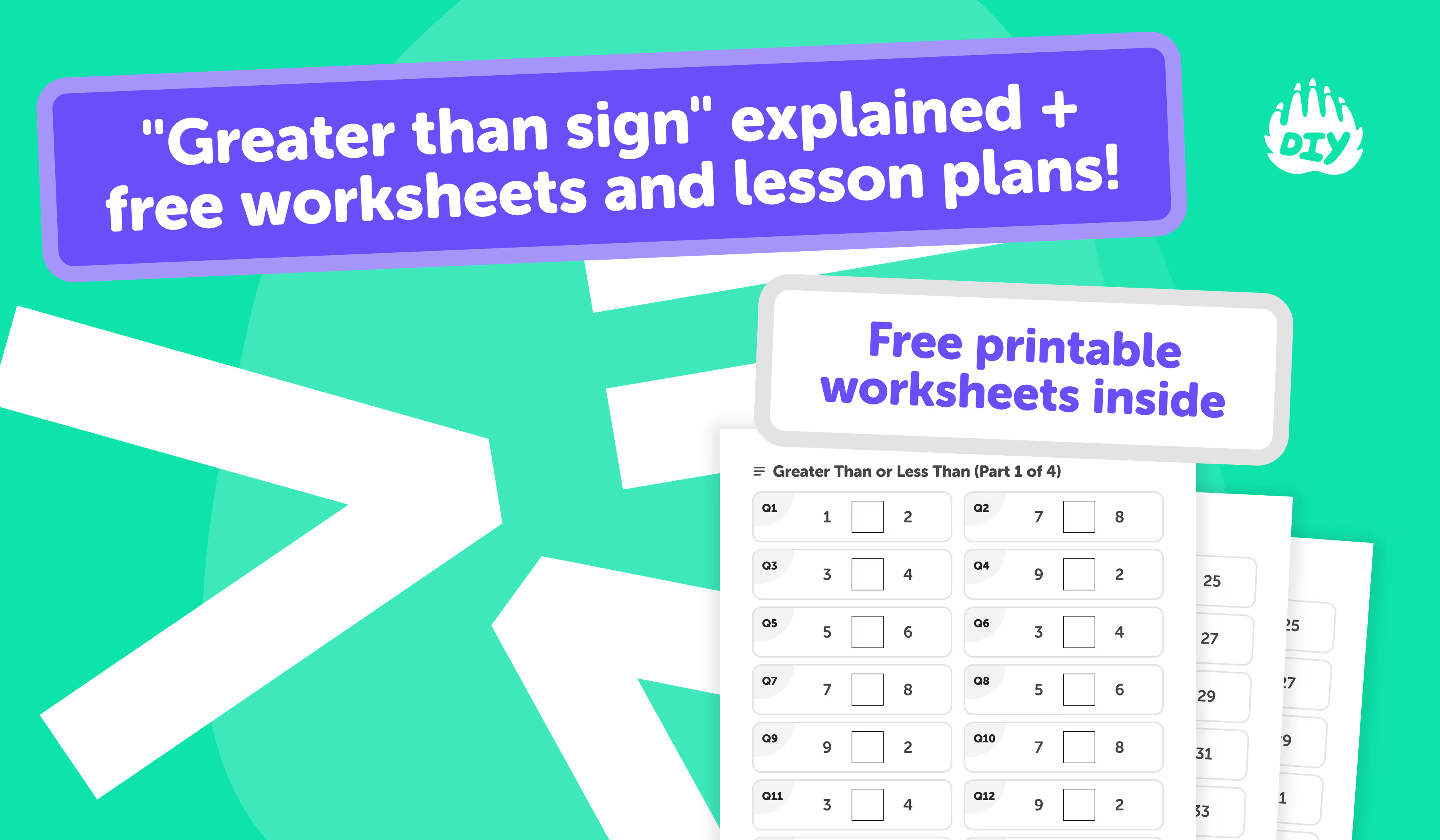
Math isn’t just about numbers it’s also about comparisons. Kids learn to ask: Which number is bigger? Which one is smaller? Are they equal?
Why Kids Learn About the Greater Than Sign
That’s where the greater than sign (>) comes in. It’s one of the first math symbols children master in elementary school. Understanding it is essential for comparing numbers, solving equations, and even handling real-world problems like money or measuring ingredients. Read on to learn more about how to teach great than signs, or download our printable greater than worksheet and materials pack for teaching.
And if your child wants extra help, the AI Homework Helper makes learning symbols fun, safe, and interactive.
What Is the Greater Than Sign?
The greater than sign (>) means that the number on the left side is bigger than the number on the right side. The wide-open side faces the larger number, and the pointy side faces the smaller number.
Example: 5 > 3 means 5 is greater than 3.
Example: 12 > 8 means 12 is greater than 8.
How to Remember Which Way It Points
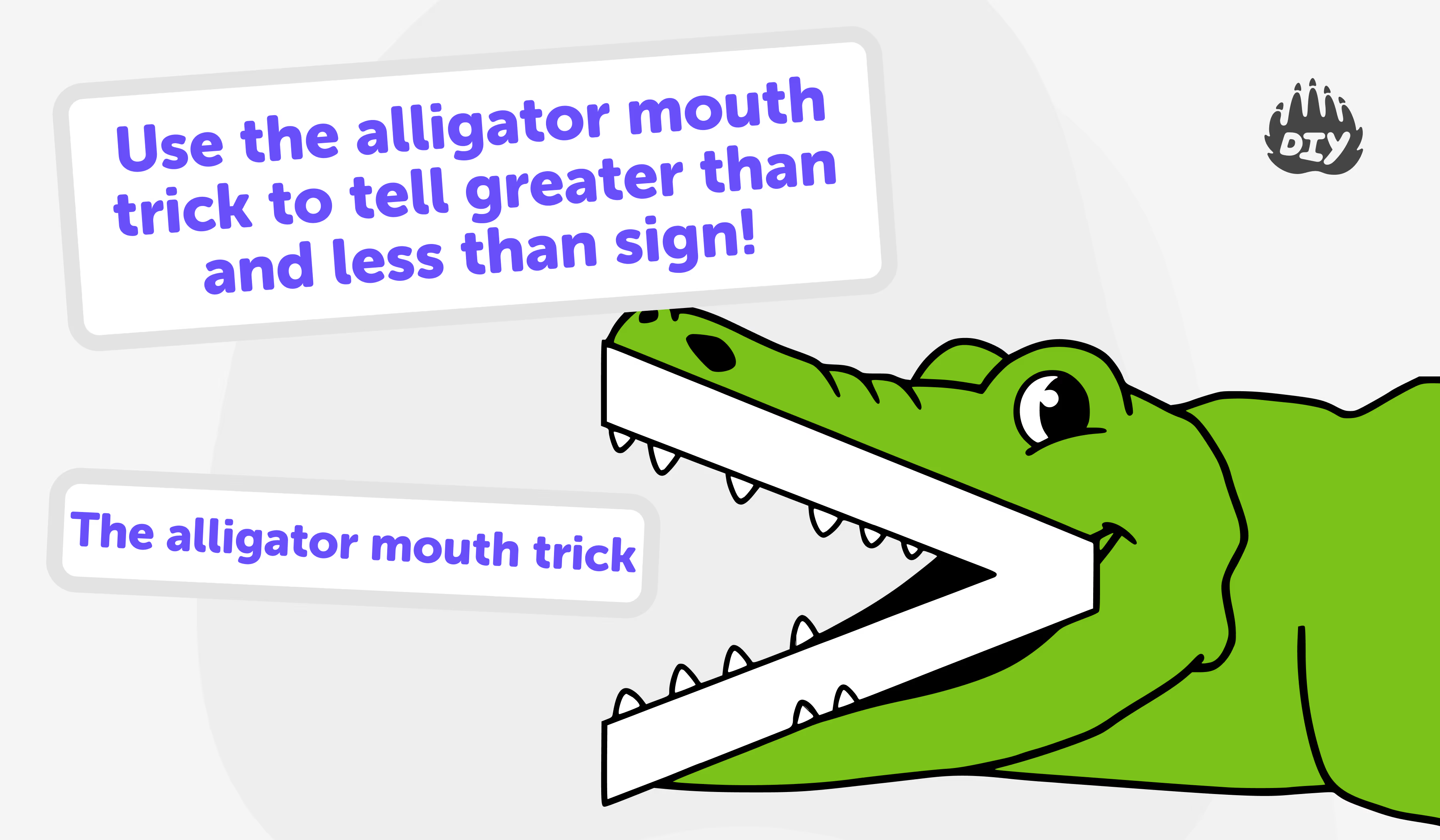
Kids often get confused between greater than (>) and less than (<). Here are some tricks:
Alligator trick: Pretend the sign is a hungry alligator. It always wants to eat the bigger number.
Open vs. pointy side: The wide open mouth points to the greater number, the pointy side to the smaller one.
Think of an arrow: The tip always points at the smaller number.
👉 Ask the DIY.org homework helper tool: “Give me practice with the greater than and less than signs.”
Everyday Examples of Greater Than
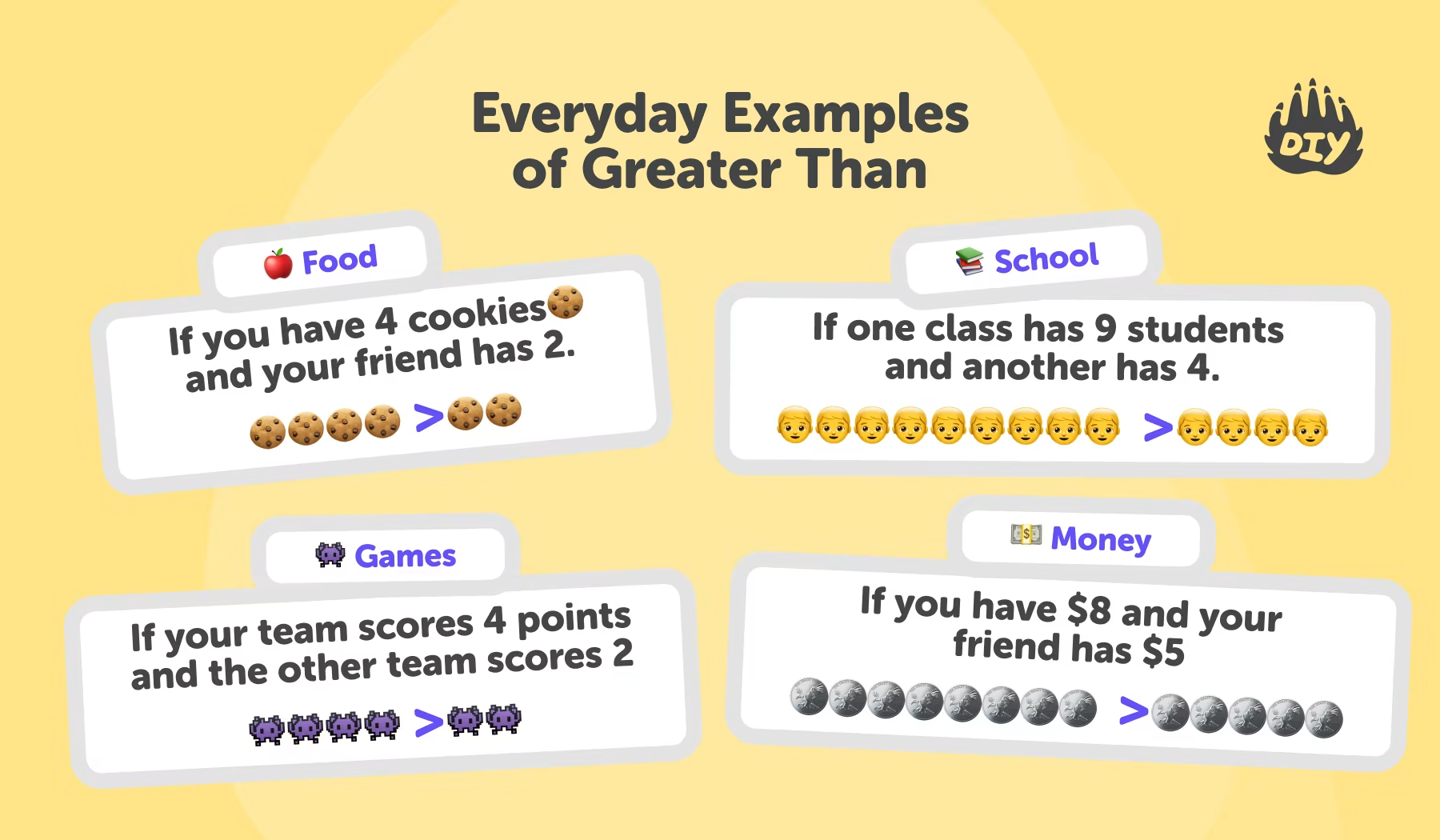
Math symbols connect to real life. These connections help kids see math everywhere.
Food: If you have 4 cookies and your friend has 2, 4 > 2.
Money: If you have $10 and your friend has $7, 10 > 7.
Games: If your team scores 8 points and the other team scores 5, 8 > 5.
School: If one class has 25 students and another has 20, 25 > 20.
Comparing Greater Than, Less Than, and Equal To
The greater than sign is part of a trio. Learning all three together builds confidence and prevents mix-ups.
Greater than (>): left is bigger (8 > 6).
Less than (<): left is smaller (4 < 9).
Equal to (=): both are the same (7 = 7).
Greater than sign printable worksheets and posters
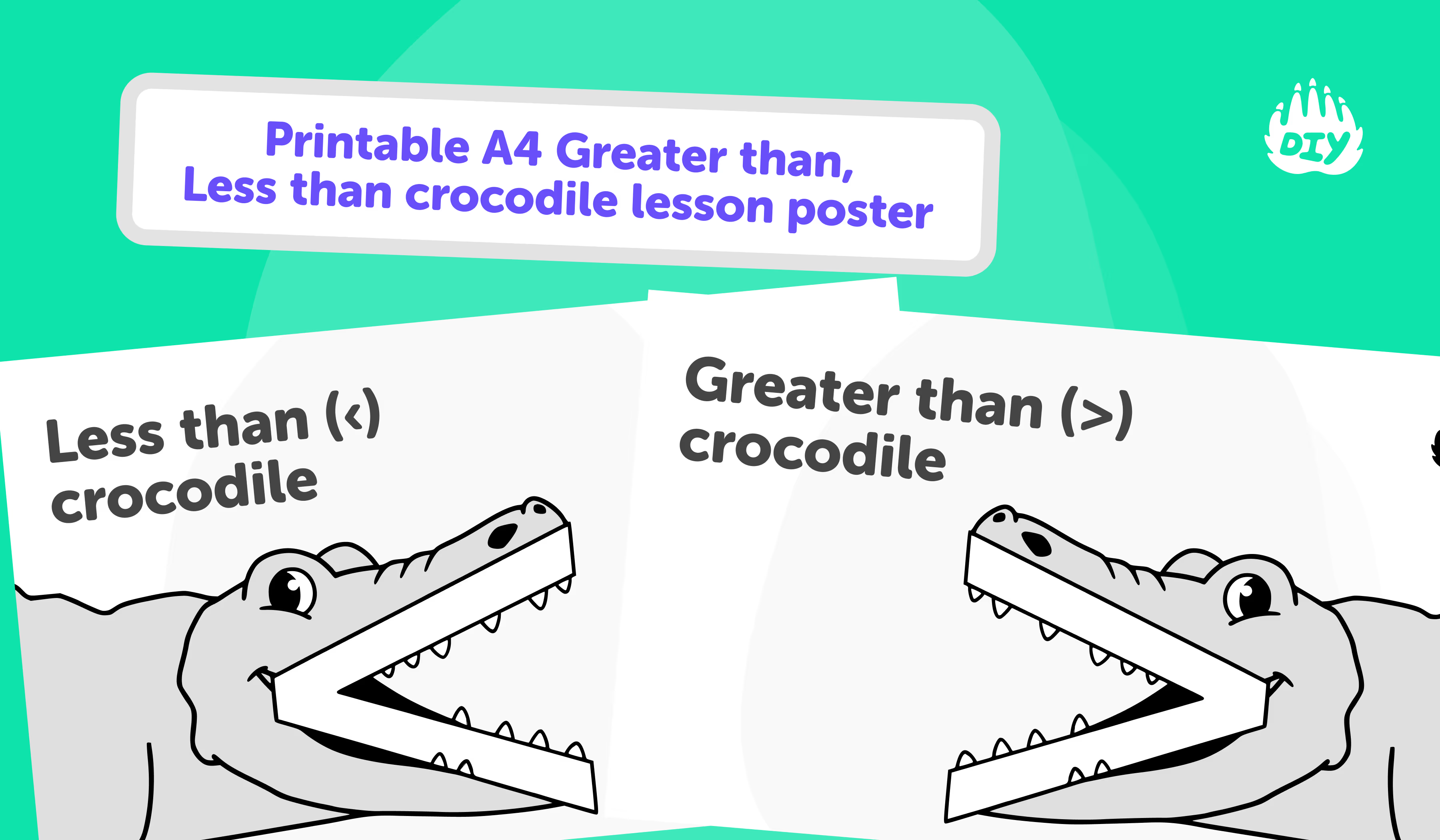
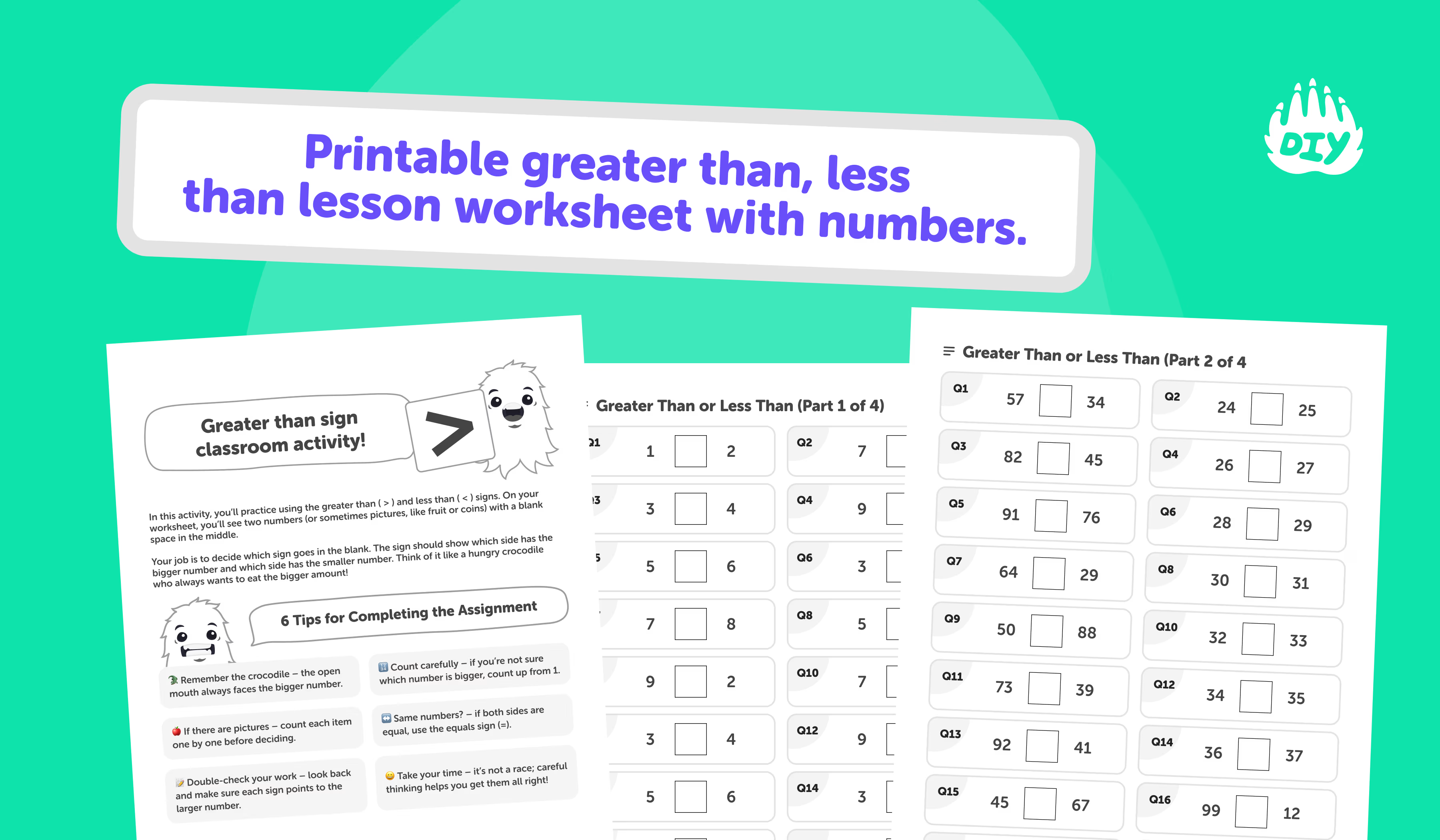
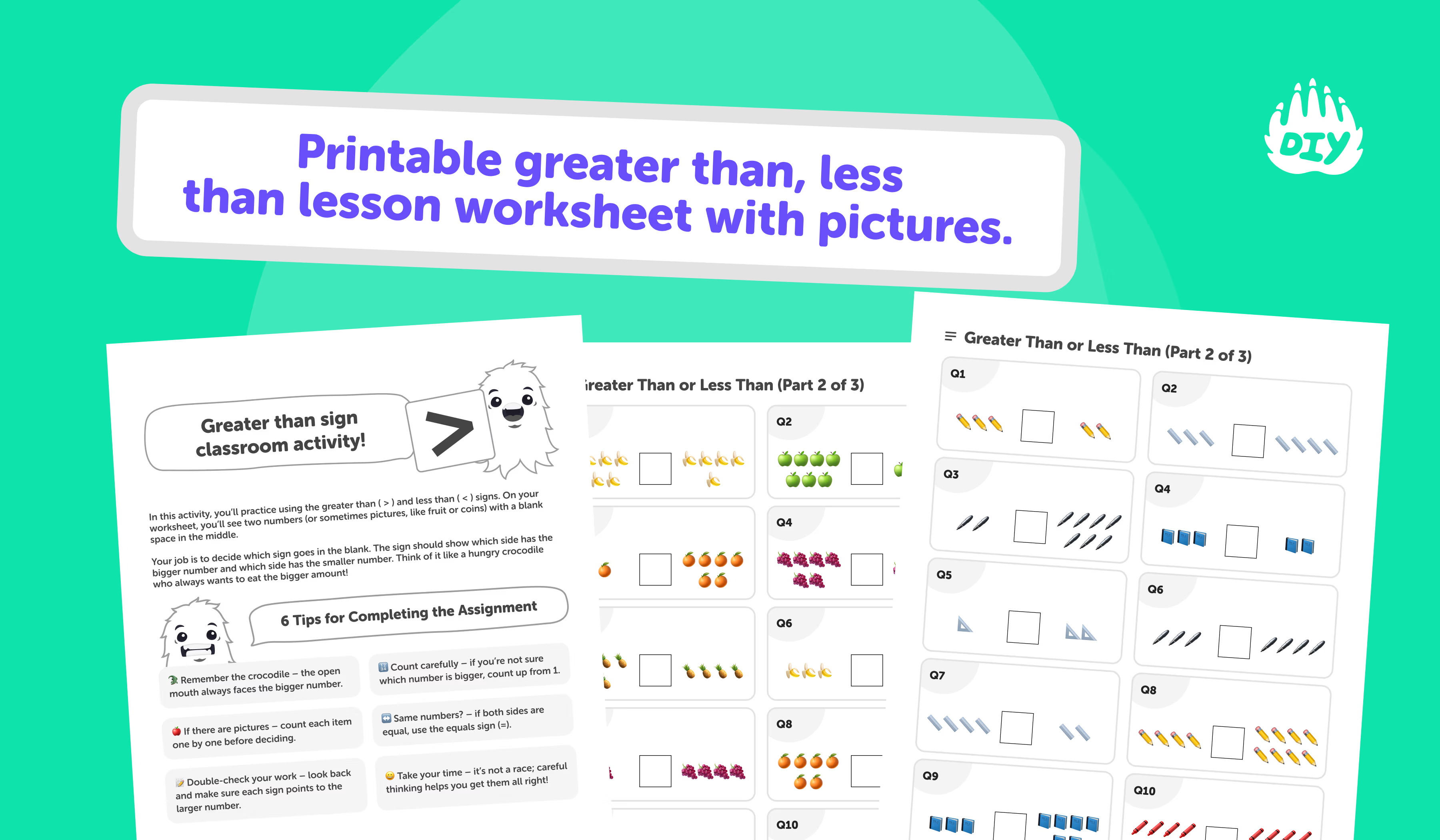
Here are some practice comparisons. Encourage your child to draw the “alligator mouth” to check their answers. Click on image or text to download the worksheet and teaching material you need.
Download crocodile posters
Download worksheets with numbers
Download worksheets with pictures
Fun Facts About the Greater Than Sign
The symbol (>) was first used in the 1600s by English mathematician Thomas Harriot.
Before that, people wrote out phrases like “is greater than.”
Today, it’s used in math, coding, and even everyday shortcuts (like arrows).
Tips for Parents Helping With Homework
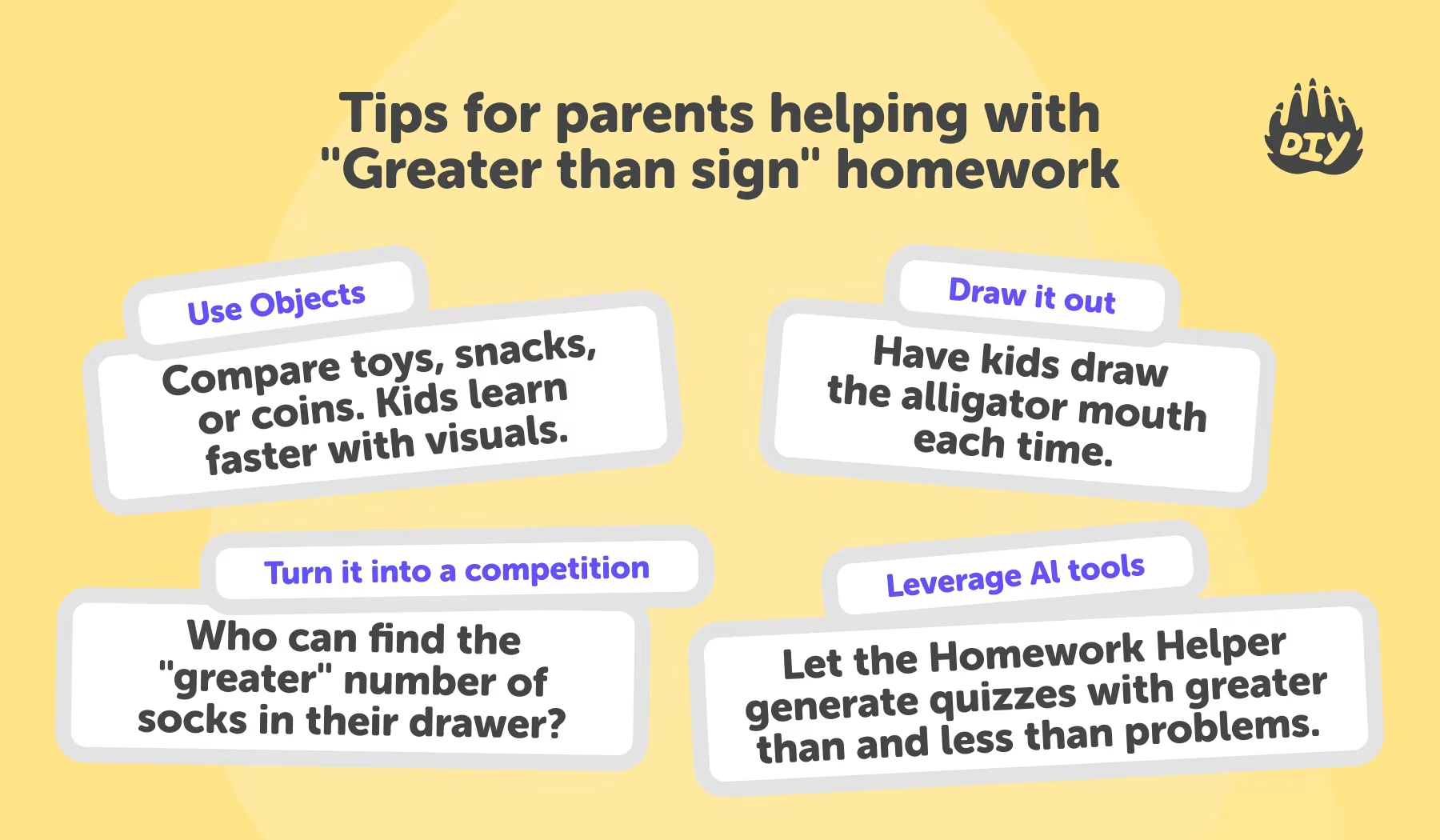
Use objects: Compare toys, snacks, or coins. Kids learn faster with visuals.
Draw it out: Have kids draw the alligator mouth each time.
Make it playful: Turn it into a competition — who can find the “greater” number of socks in their drawer?
Leverage AI tools: Let the Homework Helper generate quizzes with greater than and less than problems.
Frequently asked questions about the greater than sign
What does > mean in math?
It means the number on the left is larger than the number on the right.
How do I remember which way it points?
Think of the open mouth eating the bigger number.
Who invented the greater than sign?
Thomas Harriot, in the 1600s.
Can it be used with decimals?
Yes! Example: 2.5 > 2.3.
Can it be used with negative numbers?
Yes. Example: -3 > -5 (because -3 is closer to zero).
What’s the opposite of >?
The less than sign (<).
The Bottom Line
The greater than sign (>) is a simple but powerful math tool. It helps kids compare numbers and understand bigger vs. smaller in math and in everyday life.
With practice, the confusion disappears, and kids gain confidence in using it alongside < and =.
For ongoing support, let the AI study helper from DIY.org provide safe, interactive practice that makes math symbols second nature.
Related DIY.org Challenges & Courses
Ready to start creating?
Join hundreds of thousands of kids already building cool stuff.
Get started for free