Walter Houser Brattain Facts For Kids
Walter Houser Brattain was an American physicist known for inventing the point-contact transistor, which revolutionized modern electronics.
Select reading age
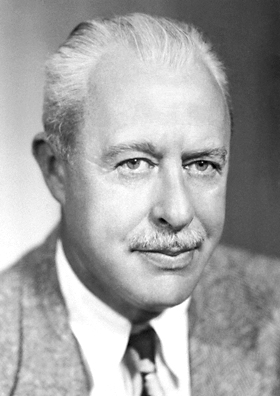
Walter Houser Brattain Facts For Kids
Videos & Quizzesincluded
About this topic
Walter Houser Brattain was an amazing American physicist 👨🔬 known for inventing the transistor! He was born on March 10, 1902, in his hometown of Êuphrates, Washington. Walter worked at a famous research place called Bell Labs 🏢, where he created incredible inventions with his friends John Bardeen and William Shockley. Together, they made the first point-contact transistor in December 1947. This tiny device helped make electronics like radios, computers, and phones work better! 🎶💻 Walter's work changed our world, and he is remembered as a brilliant scientist who helped us understand electricity and technology.
Explore with ChatDinoKey Points
Walter Brattain had a lovely personal life outside of science.
Walter's invention of the transistor earned him many awards and honors!
In 1929, Walter started working at Bell Labs, located in Murray Hill, New Jersey 🌆.
Walter Brattain’s legacy lives on, inspiring new generations of scientists and inventors!
Walter grew up in a big family with five siblings 🌟 near the mountains in Washington.
After his success at Bell Labs, Walter went on to teach at several universities, including the University of Washington and Whitman College 📚.
Thanks to Walter Brattain and his invention of the transistor, modern electronics have become an essential part of our daily lives!
Walter’s invention of the transistor was a stepping stone for many scientific developments!
In December 1947, Walter, along with John Bardeen and William Shockley, invented the first point-contact transistor!
Photos of Walter Houser Brattain

A stylized replica of the first transistor

John Bardeen, William Shockley and Walter Brattain at Bell Labs, 1948
👨👩👧👦 Personal Life
Walter Brattain had a lovely personal life outside of science. He married his wife, Mary Elizabeth, in 1929, and they had three children together 👨👩👧👦. Walter was a caring father who loved spending time with his family. He enjoyed hobbies like gardening, photography, and hiking in nature. 🌼He often took long walks and appreciated the outdoors. Even with his busy career, Walter made sure to prioritize family time. His love for learning and curiosity about the world infused excitement into everything he did! 🌳💖
Go deeper🏅 Awards And Honors
Walter's invention of the transistor earned him many awards and honors! 🏅In 1956, he, Bardeen, and Shockley won the Nobel Prize in Physics for their groundbreaking work. This is one of the highest achievements a scientist can receive! 🌍Walter was also awarded the National Medal of Science in 1964 for his contributions to technology and research. His discoveries helped pave the way for the electronic revolution, which changed how we live and communicate. Walter's achievements underline how important scientific discoveries can be in improving our daily lives! 🎊
Go deeper🌆 Career At Bell Labs
In 1929, Walter started working at Bell Labs, located in Murray Hill, New Jersey 🌆. Bell Labs was a special place for scientists and engineers, where they could experiment and invent new technologies. Walter explored the fascinating world of semiconductors, materials that could help control electricity. 💡Along with his teammates, he worked hard to solve problems and create new ideas. The teamwork and creativity at Bell Labs were crucial for Walter's journey as a scientist. His time there led to exciting discoveries, including the transistor, which opened doors for future inventions! 🔍🔧
Go deeper🎉 Legacy And Recognition
Walter Brattain’s legacy lives on, inspiring new generations of scientists and inventors! 🎉Schools, libraries, and scholarship programs honor his name, reminding everyone of his amazing contributions to science. His work laid the groundwork for the digital age and influenced countless inventions! 🛠️ Physicists and engineers continue to study his discoveries and learn from his innovative spirit. Walter’s determination and creativity show how curiosity can lead to incredible breakthroughs. Today, he is remembered not just for the transistor, but also for nurturing the minds of future scientists! 🌟🔬
Go deeper🌟 Early Life And Education
Walter grew up in a big family with five siblings 🌟 near the mountains in Washington. He loved learning and was curious about how things worked. As a kid, he enjoyed building things and playing with gadgets. Walter went to Whitman College 🎓, where he studied physics. He then earned his master’s degree at the University of Oregon. Walter was passionate about science and went even further to complete his Ph.D. at the University of Minnesota! 🎉His education prepared him to become one of the greatest inventors in the world of electronics.
Go deeper📚 Later Career And Teaching
After his success at Bell Labs, Walter went on to teach at several universities, including the University of Washington and Whitman College 📚. He loved sharing his knowledge with students and inspiring young minds to explore science. Walter taught physics and engineering, and he encouraged his students to be creative and curious 🔍. He also helped develop new ideas in electronics during his teaching career. Walter always believed in the importance of education and how sharing knowledge could change the future. Teaching was a big part of Walter Brattain’s life! 🍎✏️
Go deeper📱 Impact On Modern Electronics
Thanks to Walter Brattain and his invention of the transistor, modern electronics have become an essential part of our daily lives! 📱💻 From computers to smartphones, everything uses transistors. These tiny devices allow electronics to process information quickly and efficiently. The miniaturization of circuits made it possible for things like laptops, video games, and the Internet! 🌐Without the transistor, our technology wouldn’t be where it is today. Walter’s work has changed the way we communicate, learn, and have fun! Each invention builds upon the foundation he helped create, bringing us closer together.
Go deeper💨 Related Scientific Developments
Walter’s invention of the transistor was a stepping stone for many scientific developments! These include integrated circuits, which combine many transistors on a single chip, making electronics smaller and faster. 💨The silicon chip, created from silicon—a common element—has revolutionized computers and technology. Another development is the invention of the laser, which relies on similar principles of controlling light and electricity. 🔦Scientists are still building on Walter’s discoveries today, developing things like quantum computers and renewable energy technologies! Walter’s legacy shows us how one invention can open the door to endless possibilities! 🚪✨
Go deeper🎉 Contribution To The Invention Of The Transistor
In December 1947, Walter, along with John Bardeen and William Shockley, invented the first point-contact transistor! 🎉This tiny device could control electrical signals, making it super important for electronics. The transistor worked by allowing electric current to flow through it when needed, like turning a light switch on and off. 🌟Their invention changed the world of technology forever! Instead of relying on big vacuum tubes, which were bulky and hot, the transistor was small and efficient. This breakthrough laid the foundation for modern electronics, like computers, TVs, and smartphones! 📱💻
Go deeper