All Articles

Thyroid Gland

Thyroid Gland Facts For Kids

The thyroid gland is an endocrine organ that regulates metabolism and energy use by producing hormones primarily responsible for these functions.

🎨 Reading age for 6-8
Background blob
Thyroid Gland
Thyroid Gland
Facts for Kids!
Image by CFCF, licensed under Creative Commons Attribution-Share Alike 3.0

Do more with AI

Introduction

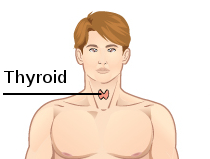
The thyroid gland is a small, butterfly-shaped organ in your neck, located just below your Adam's apple! 🦋It plays a big role in helping your body grow and stay healthy. The thyroid is made of two parts, called lobes, which wrap around your windpipe like a scarf. It produces hormones that control your metabolism, how fast or slow your body uses energy! An amazing fact is that this tiny gland helps every cell in your body to work right! The thyroid was discovered by scientists over 250 years ago and has been a topic of study ever since! 🧪

Images of Thyroid Gland

Photos of Thyroid GlandImage by CFCF, licensed under Creative Commons Attribution-Share Alike 4.0
The thyroid gland surrounds the cricoid and tracheal cartilages and consists of two lobes. This image shows a variant thyroid with a pyramidal lobe emerging from the middle of the thyroid.

The thyroid gland surrounds the cricoid and tracheal cartilages and consists of two lobes. This image shows a variant thyroid with a pyramidal lobe emerging from the middle of the thyroid.

Clear pyramidal lobe (center) as viewed from the front

Clear pyramidal lobe (center) as viewed from the front

Section of a thyroid gland under the microscope. 1 colloid, 2 follicular cells, 3 endothelial cellsImage by Uwe Gille, licensed under Creative Commons Attribution-Share Alike 3.0

Section of a thyroid gland under the microscope. 1 colloid, 2 follicular cells, 3 endothelial cells

Floor of pharynx of embryo between 35 and 37 days after fertilization.

Floor of pharynx of embryo between 35 and 37 days after fertilization.

The thyroid hormones T3 and T4 have a number of metabolic, cardiovascular and developmental effects on the body. The production is stimulated by release of thyroid stimulating hormone (TSH), which in turn depends on release of thyrotropin releasing hormone (TRH). Every downstream hormone has negative feedback and decreases the level of the hormone that stimulates its release.

The thyroid hormones T3 and T4 have a number of metabolic, cardiovascular and developmental effects on the body. The production is stimulated by release of thyroid stimulating hormone (TSH), which in turn depends on release of thyrotropin releasing hormone (TRH). Every downstream hormone has negative feedback and decreases the level of the hormone that stimulates its release.

Synthesis of the thyroid hormones, as seen on an individual thyroid follicular cell:[33] - Thyroglobulin is synthesized in the rough endoplasmic reticulum and follows the secretory pathway to enter the colloid in the lumen of the thyroid follicle by exocytosis. - Meanwhile, a sodium-iodide (Na/I) symporter pumps iodide (I−) actively into the cell, which previously has crossed the endothelium by largely unknown mechanisms. - This iodide enters the follicular lumen from the cytoplasm by the transporter pendrin, in a purportedly passive manner. - In the colloid, iodide (I−) is oxidized to iodine (I0) by an enzyme called thyroid peroxidase. - Iodine (I0) is very reactive and iodinates the thyroglobulin at tyrosyl residues in its protein chain (in total containing approximately 120 tyrosyl residues). - In conjugation, adjacent tyrosyl residues are paired together. - The entire complex re-enters the follicular cell by endocytosis. - Proteolysis by various proteases liberates thyroxine and triiodothyronine molecules, which enters the blood by largely unknown mechanisms.

Synthesis of the thyroid hormones, as seen on an individual thyroid follicular cell:[33] - Thyroglobulin is synthesized in the rough endoplasmic reticulum and follows the secretory pathway to enter the colloid in the lumen of the thyroid follicle by exocytosis. - Meanwhile, a sodium-iodide (Na/I) symporter pumps iodide (I−) actively into the cell, which previously has crossed the endothelium by largely unknown mechanisms. - This iodide enters the follicular lumen from the cytoplasm by the transporter pendrin, in a purportedly passive manner. - In the colloid, iodide (I−) is oxidized to iodine (I0) by an enzyme called thyroid peroxidase. - Iodine (I0) is very reactive and iodinates the thyroglobulin at tyrosyl residues in its protein chain (in total containing approximately 120 tyrosyl residues). - In conjugation, adjacent tyrosyl residues are paired together. - The entire complex re-enters the follicular cell by endocytosis. - Proteolysis by various proteases liberates thyroxine and triiodothyronine molecules, which enters the blood by largely unknown mechanisms.

Child affected by Congenital iodine deficiency syndrome, associated with a lack of iodine.[75]

Child affected by Congenital iodine deficiency syndrome, associated with a lack of iodine.[75]

The thyroid was named by Thomas Wharton after the ancient Greek shield of a similar pronunciation. Shown is an example of such a shield, as engraved on a coin dating from 431 to 424 BCE.Image by CNG , (uploaded by Odysses ), licensed under Creative Commons Attribution-Share Alike 3.0

The thyroid was named by Thomas Wharton after the ancient Greek shield of a similar pronunciation. Shown is an example of such a shield, as engraved on a coin dating from 431 to 424 BCE.

Photos of Thyroid GlandImage by CFCF, licensed under Creative Commons Attribution-Share Alike 4.0
The thyroid gland surrounds the cricoid and tracheal cartilages and consists of two lobes. This image shows a variant thyroid with a pyramidal lobe emerging from the middle of the thyroid.

The thyroid gland surrounds the cricoid and tracheal cartilages and consists of two lobes. This image shows a variant thyroid with a pyramidal lobe emerging from the middle of the thyroid.

Clear pyramidal lobe (center) as viewed from the front

Clear pyramidal lobe (center) as viewed from the front

Section of a thyroid gland under the microscope. 1 colloid, 2 follicular cells, 3 endothelial cellsImage by Uwe Gille, licensed under Creative Commons Attribution-Share Alike 3.0

Section of a thyroid gland under the microscope. 1 colloid, 2 follicular cells, 3 endothelial cells

Floor of pharynx of embryo between 35 and 37 days after fertilization.

Floor of pharynx of embryo between 35 and 37 days after fertilization.

The thyroid hormones T3 and T4 have a number of metabolic, cardiovascular and developmental effects on the body. The production is stimulated by release of thyroid stimulating hormone (TSH), which in turn depends on release of thyrotropin releasing hormone (TRH). Every downstream hormone has negative feedback and decreases the level of the hormone that stimulates its release.

The thyroid hormones T3 and T4 have a number of metabolic, cardiovascular and developmental effects on the body. The production is stimulated by release of thyroid stimulating hormone (TSH), which in turn depends on release of thyrotropin releasing hormone (TRH). Every downstream hormone has negative feedback and decreases the level of the hormone that stimulates its release.

Synthesis of the thyroid hormones, as seen on an individual thyroid follicular cell:[33] - Thyroglobulin is synthesized in the rough endoplasmic reticulum and follows the secretory pathway to enter the colloid in the lumen of the thyroid follicle by exocytosis. - Meanwhile, a sodium-iodide (Na/I) symporter pumps iodide (I−) actively into the cell, which previously has crossed the endothelium by largely unknown mechanisms. - This iodide enters the follicular lumen from the cytoplasm by the transporter pendrin, in a purportedly passive manner. - In the colloid, iodide (I−) is oxidized to iodine (I0) by an enzyme called thyroid peroxidase. - Iodine (I0) is very reactive and iodinates the thyroglobulin at tyrosyl residues in its protein chain (in total containing approximately 120 tyrosyl residues). - In conjugation, adjacent tyrosyl residues are paired together. - The entire complex re-enters the follicular cell by endocytosis. - Proteolysis by various proteases liberates thyroxine and triiodothyronine molecules, which enters the blood by largely unknown mechanisms.

Synthesis of the thyroid hormones, as seen on an individual thyroid follicular cell:[33] - Thyroglobulin is synthesized in the rough endoplasmic reticulum and follows the secretory pathway to enter the colloid in the lumen of the thyroid follicle by exocytosis. - Meanwhile, a sodium-iodide (Na/I) symporter pumps iodide (I−) actively into the cell, which previously has crossed the endothelium by largely unknown mechanisms. - This iodide enters the follicular lumen from the cytoplasm by the transporter pendrin, in a purportedly passive manner. - In the colloid, iodide (I−) is oxidized to iodine (I0) by an enzyme called thyroid peroxidase. - Iodine (I0) is very reactive and iodinates the thyroglobulin at tyrosyl residues in its protein chain (in total containing approximately 120 tyrosyl residues). - In conjugation, adjacent tyrosyl residues are paired together. - The entire complex re-enters the follicular cell by endocytosis. - Proteolysis by various proteases liberates thyroxine and triiodothyronine molecules, which enters the blood by largely unknown mechanisms.

Child affected by Congenital iodine deficiency syndrome, associated with a lack of iodine.[75]

Child affected by Congenital iodine deficiency syndrome, associated with a lack of iodine.[75]

The thyroid was named by Thomas Wharton after the ancient Greek shield of a similar pronunciation. Shown is an example of such a shield, as engraved on a coin dating from 431 to 424 BCE.Image by CNG , (uploaded by Odysses ), licensed under Creative Commons Attribution-Share Alike 3.0

The thyroid was named by Thomas Wharton after the ancient Greek shield of a similar pronunciation. Shown is an example of such a shield, as engraved on a coin dating from 431 to 424 BCE.

Diagnosis And Testing

Doctors can check the thyroid's health with simple tests! One way is by doing a blood test to measure levels of TSH, T3, and T4. 🩸If something seems off, they might use special scans to see what's happening inside the gland. Doctors may also check for nodules or lumps with an ultrasound. 🎥The tests are quick and help doctors understand how well the thyroid is working, so they can help keep you healthy!

Common Thyroid Disorders

Sometimes the thyroid gland can have problems, leading to disorders. One common problem is hypothyroidism, which means the gland doesn't produce enough hormones. This can make you feel tired, gain weight, or feel cold. ❄️ Another disorder is hyperthyroidism, where the thyroid makes too many hormones, causing weight loss, fast heart rate, and anxiety. 🏃There are also nodules, which are lumps that can form on the thyroid, sometimes making it hard to breathe or swallow. Recognizing these issues is important for staying healthy!

Thyroid Hormone Regulation

The body keeps the thyroid hormones balanced through a process called feedback. 🤔When hormone levels are low, the brain tells the thyroid to make more. When levels are high, the brain sends a signal to slow down hormone production. This system is like a seesaw, always trying to stay balanced! ⚖️ The pituitary gland plays an important role by releasing a hormone called TSH (Thyroid-Stimulating Hormone), which tells the thyroid how much T3 and T4 to make. This helps keep our bodies feeling just right! 😊

Anatomy Of The Thyroid Gland

The thyroid gland is about the size of a walnut and is located in the front of your neck. 🥜Its two lobes are connected by a piece of tissue called the isthmus. This gland is made mostly of special cells that can absorb iodine from the food we eat. Iodine is found in foods like fish, dairy, and seaweed. 🌊The thyroid has a cool ability to get help from the brain! It receives signals from a part of the brain called the pituitary gland, which tells it when to release hormones.

Impact On Metabolism And Growth

The thyroid gland influences how our bodies use energy, which we call metabolism! ⚡️ When the thyroid works well, it helps us grow, focus in school, and feel energetic while playing! Pediatricians believe thyroid function is essential during childhood, as it regulates growth and brain development. Children with healthy thyroids tend to have better concentration and stamina! 🏅So, eating foods rich in iodine, like fish and eggs, helps our thyroid stay happy and boosts our growth! 🌱

Functions Of The Thyroid Hormones

The thyroid produces two main hormones: thyroxine (T4) and triiodothyronine (T3). These hormones travel through the bloodstream to all parts of your body! 💉They help control how fast you grow, how your heart beats, and even how warm you feel! 🌡️ For example, children need enough thyroid hormones to grow tall and strong, while adults need them to stay energetic. Without enough thyroid hormones, people can feel tired or cold! This gland truly is a superhero for our bodies! 🦸‍♀️

Thyroid Gland In Different Cultures

Around the world, people have different beliefs about the thyroid gland and its importance! 🌍In some cultures, the health of the thyroid is linked to diet, especially the consumption of seafood rich in iodine. In traditional Chinese medicine, they emphasize balancing the whole body, including thyroid health! 🧘In India, Ayurveda views the thyroid's health as part of overall wellness, focusing on natural herbs. Different cultures may also have their ways of celebrating health-related traditions that help maintain a strong thyroid! 🎉

Treatment Options For Thyroid Conditions

If someone has a thyroid problem, there are several treatment options. For hypothyroidism, doctors often prescribe medicine made of synthetic thyroid hormones to bring hormone levels back to normal. 💊For hyperthyroidism, treatments can include medications, radioactive iodine, or sometimes surgery to remove part of the gland. 🏥Doctors choose the right treatment based on what's best for each person. Don’t worry; there are ways to help everyone feel healthy and happy! 🌈

Thyroid Gland Quiz

Q1
Question 1 of 10

Learn more about Thyroid Gland

Ready to create?

Drop Files here
Make

To create a safe space for kid creators worldwide!

Create

Vibe Coding

Kids GPT

All Tools

Kibu

Resources

Worksheets

SafeTube

Blog

FAQ

Account

Pricing

Log-in

Sign-up

Data Deletion

Company

About

Community Guidelines

Privacy Policy

Terms of Service

2025, URSOR LIMITED. All rights reserved. DIY is in no way affiliated with Minecraft™, Mojang, Microsoft, Roblox™ or YouTube. LEGO® is a trademark of the LEGO® Group which does not sponsor, endorse or authorize this website or event. Made with love in San Francisco.