All Articles

The Parthenon

The Parthenon Facts For Kids

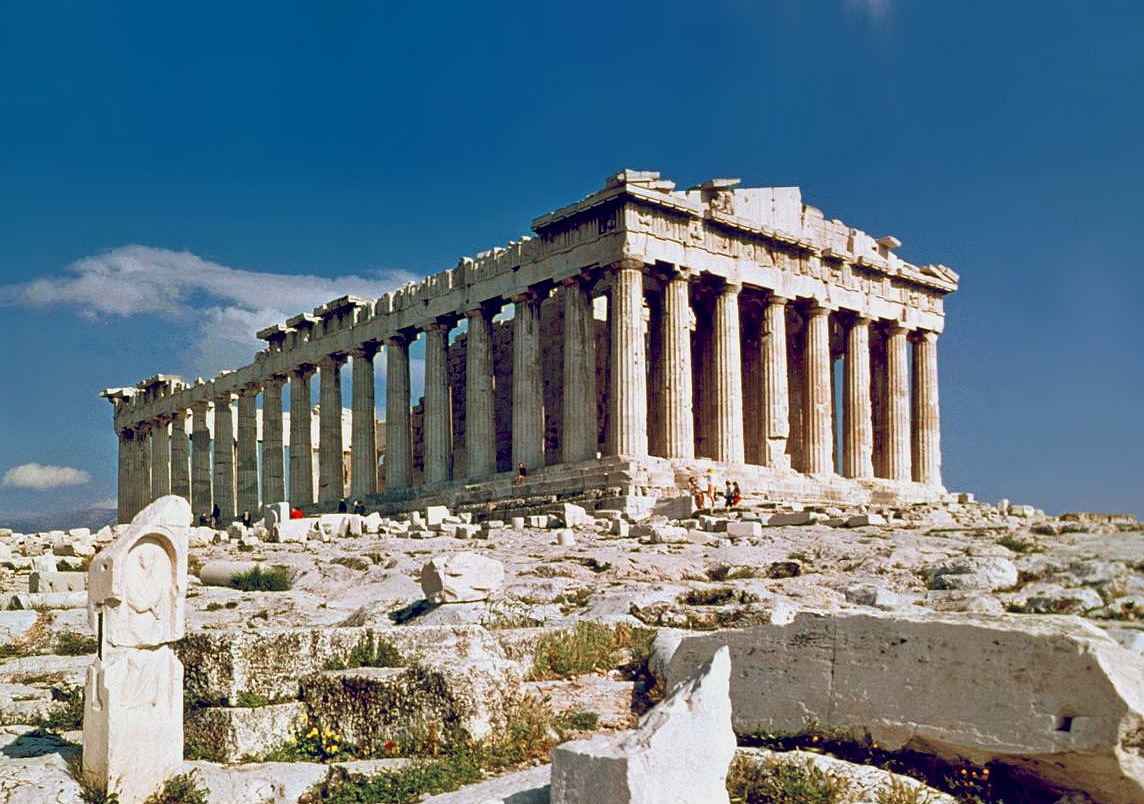
The Parthenon is an ancient temple in Athens, symbolizing the cultural and political achievements of classical Greece, particularly in honoring the goddess Athena.
🎨 Reading age for 6-8
Background blob
The Parthenon
The Parthenon
Facts for Kids!
Image by Steve Swayne, licensed under Creative Commons Attribution 2.0

Do more with AI

Introduction

The Parthenon is an ancient temple located on the Acropolis of Athens, Greece 🇬🇷. Built between 447 and 432 BC, it was dedicated to the goddess Athena, the protector of the city. The temple is famous for its impressive columns and beautiful sculptures. The Parthenon stands as a symbol of ancient Greek culture, democracy, and art. It's made from white marble, which shines brightly in the sun! ✨Every year, many tourists visit to learn about its history and admire its design. Did you know that the Parthenon was once colored and had a statue of Athena inside that was almost 40 feet tall? 🏛️

Images of The Parthenon

The Doric order of the Parthenon

The Doric order of the Parthenon

The Older Parthenon (in black) was destroyed by the Achaemenids during the Destruction of Athens in 480–479 BC, and then rebuilt by Pericles (in grey).

The Older Parthenon (in black) was destroyed by the Achaemenids during the Destruction of Athens in 480–479 BC, and then rebuilt by Pericles (in grey).

Part of the archaeological remains called Perserschutt, or "Persian rubble": remnants of the destruction of Athens by the armies of Xerxes I. Photographed in 1866, just after excavation.

Part of the archaeological remains called Perserschutt, or "Persian rubble": remnants of the destruction of Athens by the armies of Xerxes I. Photographed in 1866, just after excavation.

Animation showing the Parthenon in 2011 and how it looked originallyImage by Jordi Payà from Barcelona, Catalonia. Animated by Fallschirmjäger, licensed under Creative Commons Attribution-Share Alike 2.0

Animation showing the Parthenon in 2011 and how it looked originally

Floor plan of the ParthenonImage by Io Herodotus, licensed under Creative Commons Attribution-Share Alike 4.0

Floor plan of the Parthenon

The east facade in March 2021Image by George E. Koronaios, licensed under Creative Commons Attribution-Share Alike 2.0

The east facade in March 2021

Group from the east pediment, British MuseumImage by Another Believer, licensed under Creative Commons Attribution-Share Alike 4.0

Group from the east pediment, British Museum

Detail of the West metopesImage by No machine-readable author provided. Thermos assumed (based on copyright claims)., licensed under Creative Commons Attribution-Share Alike 2.5

Detail of the West metopes

Phidias Showing the Frieze of the Parthenon to his Friends, 1868 painting by Lawrence Alma-Tadema

Phidias Showing the Frieze of the Parthenon to his Friends, 1868 painting by Lawrence Alma-Tadema

The Doric order of the Parthenon

The Doric order of the Parthenon

The Older Parthenon (in black) was destroyed by the Achaemenids during the Destruction of Athens in 480–479 BC, and then rebuilt by Pericles (in grey).

The Older Parthenon (in black) was destroyed by the Achaemenids during the Destruction of Athens in 480–479 BC, and then rebuilt by Pericles (in grey).

Part of the archaeological remains called Perserschutt, or "Persian rubble": remnants of the destruction of Athens by the armies of Xerxes I. Photographed in 1866, just after excavation.

Part of the archaeological remains called Perserschutt, or "Persian rubble": remnants of the destruction of Athens by the armies of Xerxes I. Photographed in 1866, just after excavation.

Animation showing the Parthenon in 2011 and how it looked originallyImage by Jordi Payà from Barcelona, Catalonia. Animated by Fallschirmjäger, licensed under Creative Commons Attribution-Share Alike 2.0

Animation showing the Parthenon in 2011 and how it looked originally

Floor plan of the ParthenonImage by Io Herodotus, licensed under Creative Commons Attribution-Share Alike 4.0

Floor plan of the Parthenon

The east facade in March 2021Image by George E. Koronaios, licensed under Creative Commons Attribution-Share Alike 2.0

The east facade in March 2021

Group from the east pediment, British MuseumImage by Another Believer, licensed under Creative Commons Attribution-Share Alike 4.0

Group from the east pediment, British Museum

Detail of the West metopesImage by No machine-readable author provided. Thermos assumed (based on copyright claims)., licensed under Creative Commons Attribution-Share Alike 2.5

Detail of the West metopes

Phidias Showing the Frieze of the Parthenon to his Friends, 1868 painting by Lawrence Alma-Tadema

Phidias Showing the Frieze of the Parthenon to his Friends, 1868 painting by Lawrence Alma-Tadema

Cultural Impact

The Parthenon has inspired countless structures around the world 🇺🇸🌍. Many buildings, like the United States Capitol, feature designs similar to those of the Parthenon! It symbolizes freedom and democracy. Artists and writers have also drawn inspiration from the temple. Today, the Parthenon continues to be a powerful symbol of Greek culture, representing beauty, strength, and education about ancient civilizations. Schools and museums teach students about its importance and its role in shaping architecture and art. The Parthenon is not just a building; it's a testament to human creativity! 🎨

Art And Sculpture

Inside and outside the Parthenon were stunning sculptures made from marble 😍. One of the most famous is the statue of Athena Parthenos, created by the sculptor Phidias. It was so tall that it nearly touched the ceiling! The temple also had beautiful friezes depicting battles, gods, and important events in Greek mythology. Many of these sculptures are now housed in museums, like the British Museum. The intricate art shows the incredible skills of ancient Greek artists. These artworks tell stories about bravery, honor, and the ancient world, making them fascinating to learn about! 🖼️

Restoration Efforts

Over the years, the Parthenon has faced many challenges, including wars and pollution 🏗️💔. In the 19th century, a major restoration project began to preserve the temple. While some original pieces were taken to museums, efforts were made to restore columns and sculptures that remained. In 1975, a new restoration project started to repair damage and clean the stones. Today, experts carefully work to keep the Parthenon safe and beautiful for future generations. It's essential to preserve this incredible monument so that everyone can learn about its history! 🛠️

Educational Resources

To learn more about the Parthenon, kids can visit websites like Britannica Kids or National Geographic Kids 📚. Many museums have online exhibits that explore ancient Greece and the Parthenon. Books about Greek mythology and history are also great resources! For a fun activity, students can create their own mini Parthenon models using materials like cardboard and clay. School trips to local museums can provide a chance to see artwork inspired by the Parthenon, connecting them to ancient Greece in an exciting way! Through these activities, learning can be full of adventure! 🎒

Comparative Structures

Many famous buildings have been inspired by the Parthenon! For example, the Lincoln Memorial in Washington, D.C., has Doric-style columns and is a tribute to President Abraham Lincoln 🇺🇸. The British Museum also features the Parthenon Marbles, pieces of the temple’s ancient sculptures. Other notable buildings include the Supreme Court in the USA and the National Gallery of Art. Each of these structures carries the essence of the Parthenon, symbolizing democracy, culture, and beauty 🎉. By studying these buildings, we can appreciate how ancient ideas shaped our modern world!

Architecture And Design

The Parthenon is a fantastic example of Doric architecture, known for its simple, sturdy columns 🚪. It has 46 outer columns and 19 inner columns, making it look beautiful and strong. The building is rectangular, measuring about 228 feet long and 101 feet wide. One remarkable feature is the slight curvature of the columns, which helps it look perfect to the human eye. The entire design creates a sense of harmony and balance, reflecting ancient Greek ideals. The friezes, sculptures, and detailed carvings tell stories from Greek mythology, making it an architectural masterpiece! 🏛️

Historical Significance

The Parthenon was built during a time called the Golden Age of Athens when arts and democracy flourished 🌟. It was created to honor Athena, who is believed to have helped the Athenians win battles. The temple showcases the power and wealth of Athens as it became the center of Greek culture. The Parthenon also hosted important religious festivals, like the Panathenaia, which celebrated Athena. Over centuries, it suffered damage from wars and was used for different purposes, such as a church and a mosque. Today, it’s a UNESCO World Heritage site, reminding us of its important historical legacy! 📚

Tourism And Accessibility

Millions of visitors come to see the Parthenon every year 🌏! It's located high on the Acropolis hill, offering a beautiful view of Athens. Tourists can explore the Temple of Athena and learn about ancient Greek culture through guided tours. There are also information signs in English, so everyone can understand its importance. The area around the Parthenon has restaurants, shops, and museums, making it a fun place for families to visit. Just remember to wear comfortable shoes because there’s a bit of hiking involved! 🥾

The Parthenon Quiz

Q1
Question 1 of 10

Learn more about The Parthenon

Ready to create?

Drop Files here
Make

To create a safe space for kid creators worldwide!

Create

Vibe Coding

Kids GPT

All Tools

Kibu

Resources

Worksheets

SafeTube

Blog

FAQ

Account

Pricing

Log-in

Sign-up

Data Deletion

Company

About

Community Guidelines

Privacy Policy

Terms of Service

2025, URSOR LIMITED. All rights reserved. DIY is in no way affiliated with Minecraft™, Mojang, Microsoft, Roblox™ or YouTube. LEGO® is a trademark of the LEGO® Group which does not sponsor, endorse or authorize this website or event. Made with love in San Francisco.