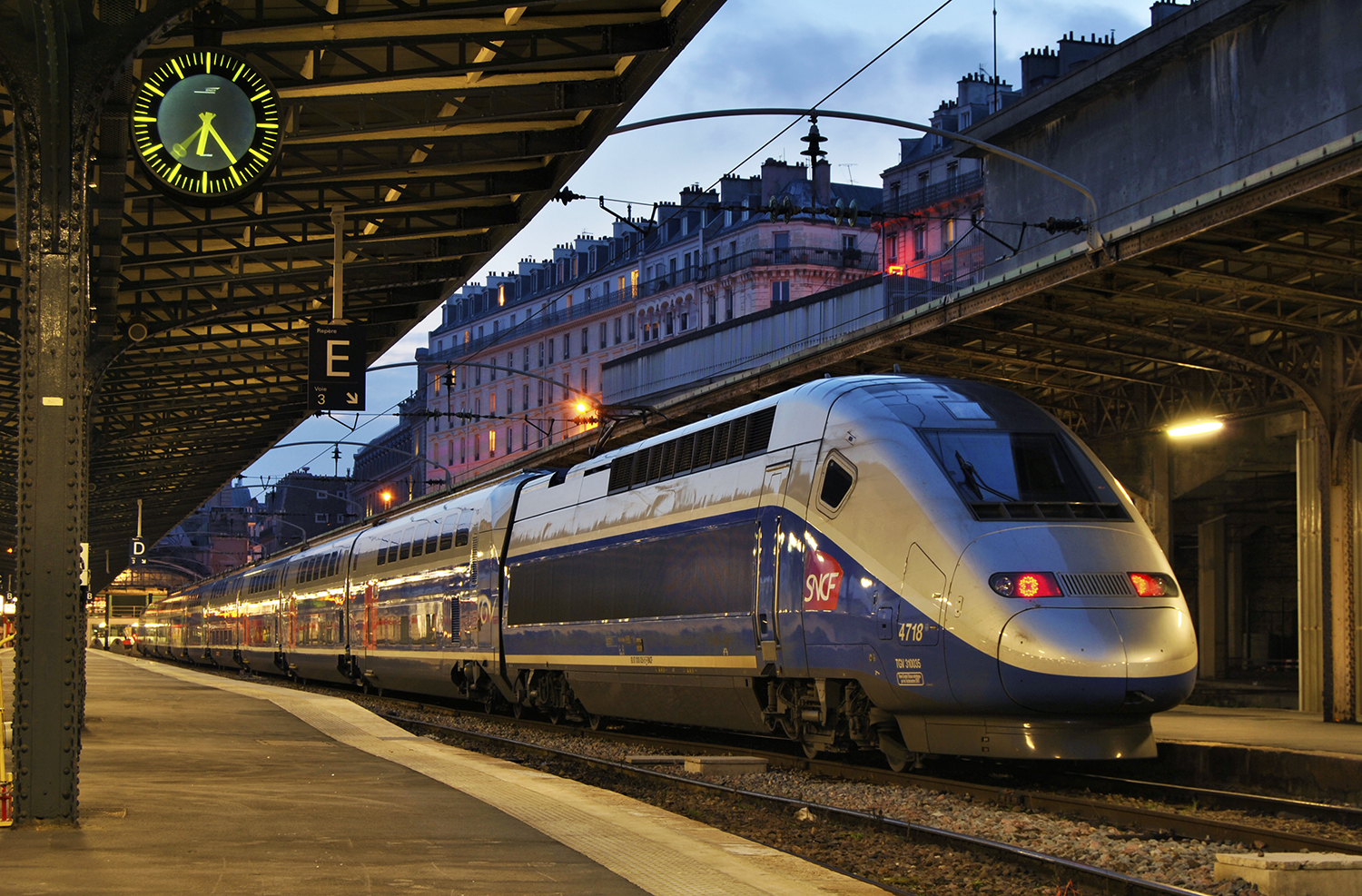
The TGV is France's iconic intercity high-speed rail service, known for its incredible speed, comfort, and extensive route network.
Set reading age
View for Kids
Easy to read and understand
View for Students
Clear, detailed explanations
View for Scholars
Deep dives and big ideas
The TGV (Train à Grande Vitesse) is a super-fast train in France! 🚄It zooms at incredible speeds of up to 320 km/h (almost 200 mph)! Imagine traveling from Paris to Marseille, which is over 775 kilometers (482 miles) apart, in just 3 hours! 😲The TGV makes exploring France easy and fun. It connects many cities like Lyon, Lille, and Bordeaux, making it super convenient for travelers. The first TGV trains started running in 1981, and since then, they have become a popular mode of transport. So, if you’re ever in France, hopping on the TGV can be an adventure! 🌍
The journey of the TGV began in France in the early 1970s. 🚂Engineers and designers wanted to create a train that traveled really fast – and they did it! The first TGV line opened on September 27, 1981, and it connected Paris to Lyon. 🌆Over time, new lines were built, shrinking travel times between cities! In 2007, the TGV set a world record for trains by reaching 575 km/h (358 mph) on a test! 🏆Today, the TGV is a symbol of French innovation and helps millions of people travel every year.
Riding the TGV is an exciting experience! 🎉When you board the train, you can find comfortable seats, spacious aisles, and even free Wi-Fi! 🚀Passengers can enjoy beautiful views of the French countryside as the train speeds by. There’s also a café car where you can buy snacks and drinks to enjoy during the trip! Many TGV trains have family-friendly carts where kids can play and have fun. 👶So whether you’re on your own or with family, taking the TGV is a memorable journey!
The TGV plays a vital role in France’s economy! 💰It makes it easier for people to travel for work and tourism, bringing in lots of money to local businesses. For example, when tourists arrive in Paris by TGV, they visit restaurants, shops, and attractions, injecting cash into the city! 🏙️ Also, the train projects create jobs for engineers, workers, and many others involved in rail transport. Helping the economy grow while keeping the travel experience enjoyable makes the TGV an essential part of France’s success! 🌟
The future of the TGV looks bright! 🌞There are plans to build new lines, making train journeys even quicker and easier. 🚄The French railway company, SNCF, is also working on new trains that will be even faster and more comfortable! 🚅Some ideas include using green energy to power the trains, which would be better for the environment. As technology grows, we can expect even more exciting developments in the realm of high-speed travel in France and beyond. The future of the TGV is sure to be thrilling!
The TGV is pretty eco-friendly! 🌱It uses electric power, which means it produces less pollution compared to cars and airplanes. In fact, traveling by TGV emits three times less carbon dioxide than flying! ✈️ The trains are also designed to consume less energy while traveling, making them more efficient. 🛤️ By choosing to ride the TGV, travelers help reduce their carbon footprint and protect the environment. This means you can travel faster while being kind to our planet! 🌏
The TGV is not just a train; it’s a piece of French culture! 🇫🇷 People in France take great pride in their amazing rail system. The TGV represents innovation, speed, and the ability to connect people. 📅Many movies and books in France even include scenes featuring the majestic TGV trains! Additionally, art and posters often celebrate the beauty of these trains. The TGV has become a symbol of modern France, showcasing the country’s achievements while allowing people to explore its rich history and diverse culture. 🎨
Even the TGV faces challenges! 😟Some people worry about the costs of building new tracks, which can be very expensive. Others think that TGV routes take too long to connect smaller towns. 🏘️ Additionally, some travelers find tickets can be pricey, especially during busy seasons. 📈Environmental concerns, like noise pollution, are also important. While the TGV is a fantastic service, it must continue to improve and address these challenges to stay the best way to travel in France! 🚆
The TGV uses amazing technology that makes it super-fast and efficient! ⚙️ The trains are designed to be aerodynamic, meaning they glide through the air easily, reducing drag. They also run on special tracks that are smoother than regular train tracks, allowing them to go faster. 💨The trains use electric engines, which are quiet and don’t pollute the air much. Plus, the TGV's tilting technology helps it navigate curves without slowing down! With all this clever engineering, the TGV gives passengers a fun and speedy ride across France!
The TGV covers a vast network of routes across France! 🌍There are over 2,600 kilometers (1,600 miles) of TGV tracks, connecting big cities and even smaller towns! 🚏The TGV has expanded to neighboring countries, like Belgium and Switzerland, allowing for international travel. The new lines continue to develop, like the Grand Paris Express, which will make getting around the capital even easier. 🗼So whether you’re going to the beach or exploring the mountains, there's a TGV route to take you there!
Many countries have high-speed trains, just like the TGV! 🚄For example, Japan has the Shinkansen, often called the "bullet train," which started running in 1964. The Shinkansen is known for its punctuality and speed. 🕒Meanwhile, Spain has the AVE, which connects cities like Madrid and Barcelona quickly! Each high-speed train has its features, but the TGV is one of the fastest and most comfortable options in Europe. 🌍It’s exciting to see how different countries use technology to improve travel!


DIY is a creative community where kids draw, build, explore ideas, and share.
No credit card required