Tawny Owl Facts For Kids
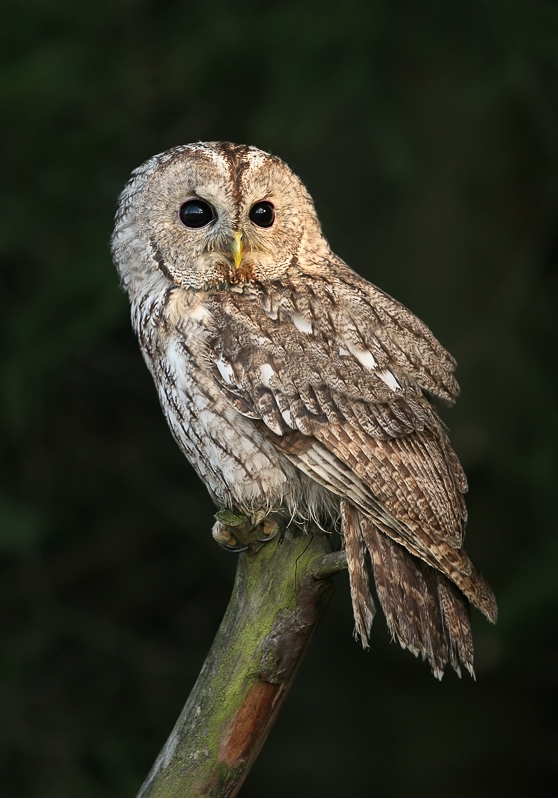
The tawny owl is a medium-sized, nocturnal bird known for its distinctive hooting and mottled brown plumage, which provides excellent camouflage in wooded habitats.
Select reading age
Tawny Owl Facts For Kids
Videos & Quizzesincluded
About this topic
The tawny owl 🦉 is a fascinating bird that lives mainly in Europe and parts of Asia. It has a round face, yellow eyes, and a mottled brown and grey body, making it excellent at hiding in trees. Tawny owls are nocturnal, which means they are active during the night and sleep during the day. They often nest in tree holes 🕳️ or old buildings. The scientific name for the tawny owl is Strix aluco, and they are known for their hooting call, which sounds like "twit twoo." These owls are skilled hunters, using their amazing hearing to find food in the dark.
Explore with ChatDinoQuick Facts
Key Points
Did you know that tawny owls can turn their heads almost completely around?
The tawny owl is currently not considered endangered, thanks to its wide range and adaptability.
In many cultures, owls symbolize wisdom and knowledge 📚.
Tawny owls usually start breeding in late winter or early spring.
Tawny owls enjoy living in woodlands, parks, and gardens 🌳.
Tawny owls are medium-sized, measuring about 33 to 39 centimeters (13 to 15 inches) long.
Tawny owls are carnivorous and love to eat small animals.
Tawny owls are famous for their distinct sounds!
Photos of Tawny Owl

Juvenile specimen of a tawny owl
![Field of view compared with a pigeon[image reference needed]](https://upload.wikimedia.org/wikipedia/commons/thumb/5/52/Fieldofview-pigeon-owl.svg/330px-Fieldofview-pigeon-owl.svg.png)
Field of view compared with a pigeon[image reference needed]
![An owl's retina has a single fovea.[5]](https://upload.wikimedia.org/wikipedia/commons/thumb/7/7c/Owlretina.svg/960px-Owlretina.svg.png)
An owl's retina has a single fovea.[5]

Individual from France perched upon a human hand

Ancient deciduous woodland is a favoured habitat

Tawny owl hiding on a tree

Tawny Owl — photo 7

Tawny Owl — photo 8

🦉 Interesting Facts
Did you know that tawny owls can turn their heads almost completely around? 🦉They can twist their necks 270 degrees, which helps them see better at night. Tawny owls are also exceptional at hearing; they can locate prey just by sound alone! Their feathers are designed to keep them silent while flying, making them stealthy hunters. Each tawny owl has a unique calling sound! 🎶Owls are known for their wisdom in stories and culture, but tawny owls have their own special mystery that makes them truly enchanting.
Go deeper📊 Conservation Status
The tawny owl is currently not considered endangered, thanks to its wide range and adaptability. However, their numbers are monitored to ensure they remain safe and healthy. 📊In some areas, habitat loss due to deforestation and urban development can affect their homes. Bird watchers and conservationists work together to protect tawny owls by preserving their natural habitats and raising awareness about these beautiful creatures. You can help by supporting local wildlife organizations that focus on preserving forests and parks! 🌳
Go deeper📚 Cultural Significance
In many cultures, owls symbolize wisdom and knowledge 📚. The tawny owl features in folklore and stories across Europe. For example, in ancient Rome, owls were considered omens, either good or bad, depending on the story. Many people admire tawny owls for their beauty and mystery, leading them to be important representations in art and literature. 🌌Some groups even believe seeing an owl means something special is about to happen! Overall, the tawny owl holds a special place in the hearts of many around the world.
Go deeper🐣 Breeding And Life Cycle
Tawny owls usually start breeding in late winter or early spring. The female lays between 2 to 4 eggs, which she incubates for about 28 to 30 days. The eggs are white and hatch into fluffy owlets! 🐣Once the owlets are born, both parents work together to feed them. After about 5 to 7 weeks, the young owls are ready to leave the nest. They learn to fly and hunt on their own. Young tawny owls stay close to their parents for a bit, but eventually become independent after a few months.
Go deeper🌳 Habitat And Distribution
Tawny owls enjoy living in woodlands, parks, and gardens 🌳. They can be found throughout much of Europe, from the UK to Scandinavia, and as far east as parts of Asia, including Russia and China. They prefer areas with plenty of trees, where they can easily find places to nest and hunt. Tawny owls are also a common sight in both rural and suburban areas. They are not migratory birds, so they stay in the same place year-round, finding food and shelter in their same habitats 🦉.
Go deeper👁️ Physical Characteristics
Tawny owls are medium-sized, measuring about 33 to 39 centimeters (13 to 15 inches) long. They typically weigh between 400 to 800 grams (0.88 to 1.76 pounds). Their most recognizable feature is their round head and big, bright yellow eyes 👁️, which help them see well in low light. These owls have soft feathers that keep them warm during chilly nights 🌙. Their wings span about 80 to 95 centimeters (31 to 37 inches) across! The tawny owl’s coloration helps it blend into tree bark, making it hard for predators and prey to spot.
Go deeper🐭 Diet And Feeding Behavior
Tawny owls are carnivorous and love to eat small animals. Their favorite meals include mice, voles 🐭, and even small birds. They hunt at night, using their sharp eyesight and incredible hearing to locate their prey. Once they spot something tasty, they swoop down silently, thanks to their quiet wings! Tawny owls have strong talons to catch and hold their food. After catching a meal, they often swallow their prey whole or tear it apart. Sometimes, they even cast pellets, which are the leftover bones and fur they can't digest!
Go deeper🌙 Vocalizations And Communication
Tawny owls are famous for their distinct sounds! They make a hooting call that sounds like "twit twoo," which is often heard during the night 🌙. This call is used for attracting a mate and defending their territory. Besides hooting, they also make other sounds like hisses and growls when they feel threatened. 👀Owls communicate through body language too, using their posture and head movements to send signals. With their excellent hearing, tawny owls can even listen for their friends and family when they are far apart!
Go deeper