All Articles

Solar Eclipse

Solar Eclipse Facts For Kids

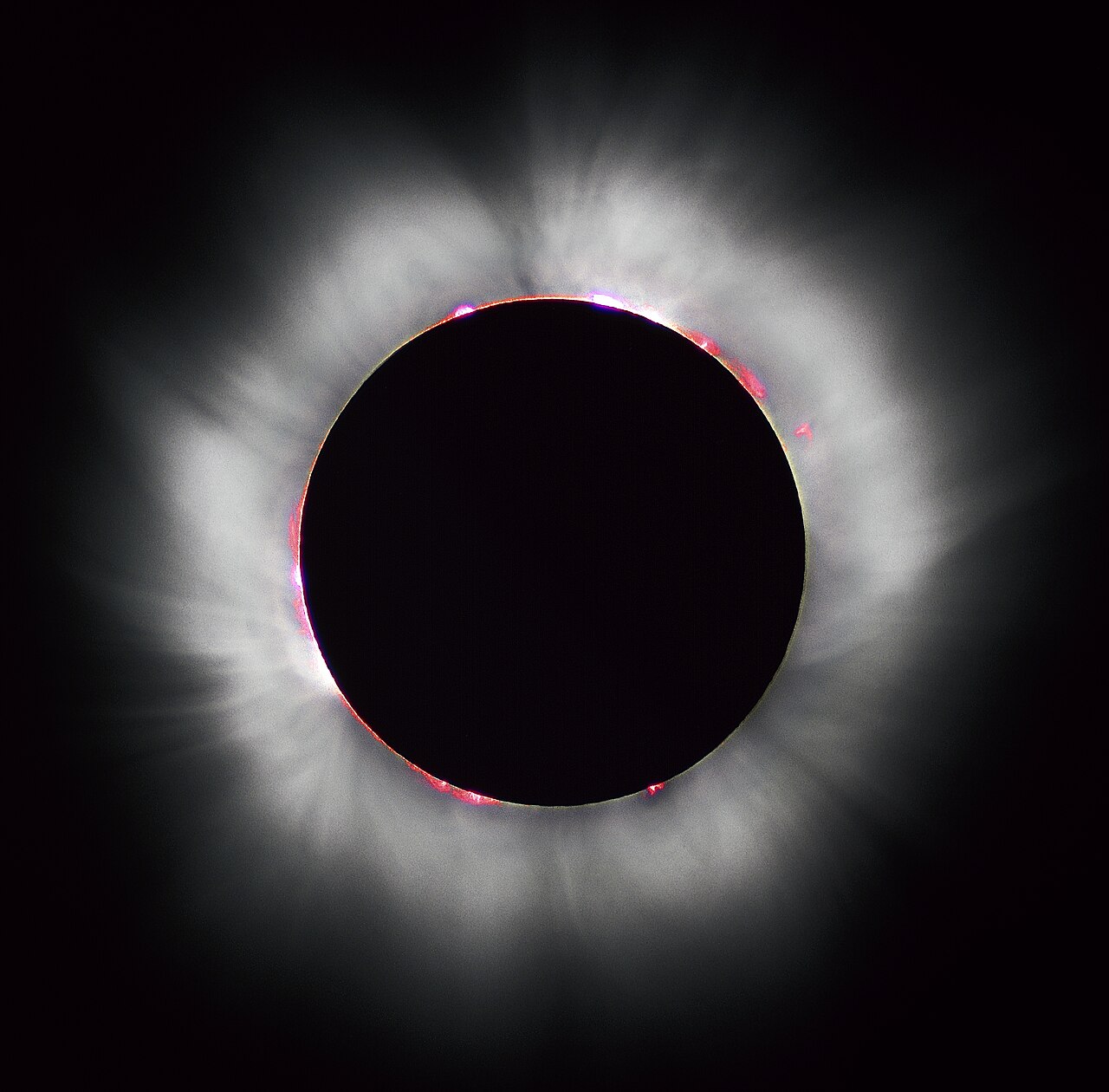
A solar eclipse is a rare astronomical event where the Moon blocks the Sun's light, casting a shadow on the Earth.
🎨 Reading age for 6-8
Background blob
Solar Eclipse
Solar Eclipse
Facts for Kids!
Image by Luc Viatour, licensed under Creative Commons Attribution-Share Alike 3.0

Do more with AI

Introduction

A solar eclipse happens when the Moon passes between the Earth and the Sun, blocking the Sun's light. 🌞🌚 This amazing event can make the day look like night for a short time! Eclipses usually last only a few minutes, but they can be very exciting to watch. There are about 2 to 5 solar eclipses every year! 🌍In some places, like the United States, people often travel to see them. The next solar eclipse is on April 8, 2024, and many people are looking forward to it!

Images of Solar Eclipse

Photos of Solar EclipseImage by Dpickd1, licensed under Creative Commons Attribution 4.0
Photos of Solar EclipseImage by Yurakum, licensed under Creative Commons Attribution-Share Alike 4.0
Geometry of a total solar eclipse (not to scale)

Geometry of a total solar eclipse (not to scale)

Photos of Solar EclipseImage by 阿爾特斯, licensed under Creative Commons Attribution-Share Alike 3.0
Photos of Solar Eclipse
From space, the Moon's shadow during the solar eclipse of March 9, 2016 appears as a dark spot moving across Earth.

From space, the Moon's shadow during the solar eclipse of March 9, 2016 appears as a dark spot moving across Earth.

Partial and annular phases of the solar eclipse of May 20, 2012Image by Brocken Inaglory, licensed under Creative Commons Attribution-Share Alike 3.0

Partial and annular phases of the solar eclipse of May 20, 2012

Comparison of minimum and maximum apparent sizes of the Sun and Moon (and planets). An annular eclipse can occur when the Sun has a larger apparent size than the Moon, whereas a total eclipse can occur when the Moon has a larger apparent size.Image by Full Moon as Seen From Denmark.jpg : Peter Freiman derivative work: Cmglee ( talk ), licensed under Creative Commons Attribution-Share Alike 3.0

Comparison of minimum and maximum apparent sizes of the Sun and Moon (and planets). An annular eclipse can occur when the Sun has a larger apparent size than the Moon, whereas a total eclipse can occur when the Moon has a larger apparent size.

The Moon's shadow over Turkey and Cyprus, seen from the ISS during a 2006 total solar eclipse.

The Moon's shadow over Turkey and Cyprus, seen from the ISS during a 2006 total solar eclipse.

Photos of Solar EclipseImage by Dpickd1, licensed under Creative Commons Attribution 4.0
Photos of Solar EclipseImage by Yurakum, licensed under Creative Commons Attribution-Share Alike 4.0
Geometry of a total solar eclipse (not to scale)

Geometry of a total solar eclipse (not to scale)

Photos of Solar EclipseImage by 阿爾特斯, licensed under Creative Commons Attribution-Share Alike 3.0
Photos of Solar Eclipse
From space, the Moon's shadow during the solar eclipse of March 9, 2016 appears as a dark spot moving across Earth.

From space, the Moon's shadow during the solar eclipse of March 9, 2016 appears as a dark spot moving across Earth.

Partial and annular phases of the solar eclipse of May 20, 2012Image by Brocken Inaglory, licensed under Creative Commons Attribution-Share Alike 3.0

Partial and annular phases of the solar eclipse of May 20, 2012

Comparison of minimum and maximum apparent sizes of the Sun and Moon (and planets). An annular eclipse can occur when the Sun has a larger apparent size than the Moon, whereas a total eclipse can occur when the Moon has a larger apparent size.Image by Full Moon as Seen From Denmark.jpg : Peter Freiman derivative work: Cmglee ( talk ), licensed under Creative Commons Attribution-Share Alike 3.0

Comparison of minimum and maximum apparent sizes of the Sun and Moon (and planets). An annular eclipse can occur when the Sun has a larger apparent size than the Moon, whereas a total eclipse can occur when the Moon has a larger apparent size.

The Moon's shadow over Turkey and Cyprus, seen from the ISS during a 2006 total solar eclipse.

The Moon's shadow over Turkey and Cyprus, seen from the ISS during a 2006 total solar eclipse.

The Path Of Totality

The "Path of Totality" is the trail where people can see a total solar eclipse! 🗺️ During the April 8, 2024, eclipse, the path will stretch across parts of Mexico, the United States, and Canada. 🌏If you stand in this path, you'll see the Sun completely disappear! Many people plan trips to be in this special area to witness the total eclipse—a once-in-a-lifetime experience! 🌟Make sure to check maps to find out if you're in the path!

Future Solar Eclipses

Exciting solar eclipses are coming soon! 🌞The next total solar eclipse is on April 8, 2024, and many people are eager to see it. A second total eclipse will occur on August 23, 2044. 🌄Future generations will have a chance to see these amazing sights, too! It’s important to keep an eye on the dates and plan ahead if you want to witness these natural wonders. So get ready, grab your eclipse glasses, and mark your calendars for these incredible events! 📅

Types Of Solar Eclipses

There are three main types of solar eclipses: total, partial, and annular. 🌒A total eclipse occurs when the Moon completely blocks the Sun, making the sky dark! 🌑A partial eclipse happens when only part of the Sun is covered, and an annular eclipse looks like a "ring of fire" around the Moon because the Moon is farther away from Earth. 🔥Each type offers a unique view and experience. They all remind us how remarkable our solar system is!

Eclipses In Popular Culture

Solar eclipses have inspired books, movies, and music! 📚In the movie "Total Eclipse," the story centers on friendship and understanding during an eclipse. In the animated series "Adventure Time," characters experience an eclipse in their adventures! 🎥Books about astronomy are filled with exciting information about eclipses. Many artists create beautiful paintings or drawings of solar eclipses to show their wonder. 🌈Eclipses continue to capture the imagination and creativity of people around the world!

How To Safely View A Solar Eclipse

It's super important to protect your eyes when watching a solar eclipse! 🥳Looking directly at the Sun can hurt your vision. You can use special solar eclipse glasses that meet safety standards to watch. 🥽Another fun way is to make a pinhole projector, which lets you see the Sun's light without looking directly at it. Remember, never look at the Sun without protection! 🔆Safety first, so everyone can enjoy this beautiful event!

Scientific Study Of Solar Eclipses

Studying solar eclipses helps scientists learn about the Sun, Moon, and Earth. 🔭During an eclipse, the Sun's corona, or outer atmosphere, can be seen for the first time. This helps scientists understand why the corona is hotter than the surface of the Sun! 🥵Telescopes and cameras are used to capture the moments during an eclipse. Events like the total solar eclipse in August 2017 were observed by many scientists, leading to new discoveries and ideas about the universe! 🚀

Historical Significance Of Solar Eclipses

People have been watching solar eclipses for thousands of years! 🕰️ Ancient civilizations like the Mayans and the Egyptians thought eclipses were special signs from their gods. For example, when a solar eclipse happened in 585 B.C., it scared a battle to stop because people feared it was an omen! 📜Scientists, like the famous English physicist Sir Isaac Newton, observed eclipses to learn more about gravity and light. Today, we understand the science behind eclipses, but they still feel magical!

Cultural Interpretations Of Solar Eclipses

Different cultures have unique beliefs about solar eclipses! In some Native American tribes, they viewed eclipses as a time to reflect and be quiet. 🦅In ancient China, it was believed that a dragon was eating the Sun! 🐉Many cultures celebrate these celestial events with festivals, storytelling, or rituals to honor the skies. Today, people still gather in groups to watch eclipses, sharing a sense of wonder and connection to the universe. 🌌

Solar Eclipse Quiz

Q1
Question 1 of 10

Learn more about Solar Eclipse

Ready to create?

Drop Files here
Make

To create a safe space for kid creators worldwide!

Create

Vibe Coding

Kids GPT

All Tools

Kibu

Resources

Worksheets

SafeTube

Blog

FAQ

Account

Pricing

Log-in

Sign-up

Data Deletion

Company

About

Community Guidelines

Privacy Policy

Terms of Service

2025, URSOR LIMITED. All rights reserved. DIY is in no way affiliated with Minecraft™, Mojang, Microsoft, Roblox™ or YouTube. LEGO® is a trademark of the LEGO® Group which does not sponsor, endorse or authorize this website or event. Made with love in San Francisco.