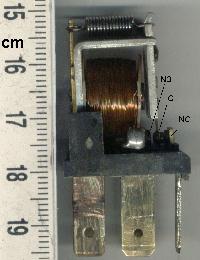
A relay is an electrically operated switch that helps control the flow of electricity between circuits safely and efficiently.
Set reading age
View for Kids
Easy to read and understand
View for Students
Clear, detailed explanations
View for Scholars
Deep dives and big ideas
A relay is like a magical switch that can turn things on and off! 🔌It uses electricity to control another circuit. Imagine you want to turn on a light in your room without walking over to it. You can press a button, and the relay will do the job! Relays are used in many things around us, like cars, computers, and even coffee machines! ☕They help save energy and make our lives easier. Understanding relays can help us learn how electricity works and how we can control our devices safely. 💡
So, how do relays actually work? Imagine a small magnet inside the relay! When you send electricity to the relay, the magnet attracts a metal arm, which then closes or opens a switch. ⚙️ This action allows or stops electricity to flow through another circuit. For example, when you press a button, it sends a signal to the relay, and BOOM! The light turns on! 🔆It's all about controlling electricity with a little help from magnets! By learning how relays work, you can understand how we can control many devices with just a simple action!
There are several types of relays, each with special uses! 🌈Some common ones include electromagnetic relays that work with magnets, solid-state relays that use electronic parts instead of moving pieces, and thermal relays that use heat to control devices! 🌡️ For example, in your kitchen, thermal relays might help an oven turn off when it gets too hot. Also, there are time-delay relays that wait before switching on or off! Different relays are like superheroes, each with a different power for various jobs! 🦸♂️
Relays have a fascinating history! The first relay was invented by an American scientist named Joseph Henry in 1835. He showed how electricity could control other electric devices. 💡Fast forward to 1889, when a man named Thomas Edison used relays in his telegraph systems! 📡This made communication faster than ever! Over the years, relays became popular in telephones and other machines. Today, relays are essential in everything from computers to smart home devices! Isn't it amazing how something invented so long ago has changed our lives? 🌍
Want to try something cool with relays? You can create your own relay project! 🛠️ One fun idea is to make a simple light switch with a relay. You’ll need a relay, a battery, wires, and an LED light. Connect the relay to the light and battery, then use a button to activate the relay. When you push the button, it will turn the light on! 🌟This is a fun way to learn how relays work and see them in action! Remember to have adult supervision and stay safe while creating! Enjoy experimenting! 🧪
Relays are everywhere! They help manage household appliances like washing machines and refrigerators. 🏠They also play a big part in cars, making sure the lights, horns, and engines work properly! 🚗In factories, relays control larger machines and equipment. Even astronauts use relays in space to control their spacecraft! 🚀Thanks to relays, we can switch devices on and off safely and efficiently in technology, homes, and even the great beyond! 🌌
Many inventors have worked on improving relays! One famous innovator is John Fleming, who invented the vacuum tube relay in 1904. This invention helped boost radio technology! 📻In 1960, engineers developed the first solid-state relay, which was faster and lasted longer than traditional ones! ⚡These advancements have led to modern technology, such as computers and smartphones, using relays! Thanks to these brilliant minds, relays have become important in everyday life! Let’s appreciate these innovations that continue to make our lives more comfortable and exciting! 🎉
The future looks bright for relay technology! 🌟With new advancements, relays are becoming even smarter. Soon, we might see relays that can connect to the internet, allowing us to control devices from anywhere! 🌐Researchers are also working on more efficient relays that use less energy, which is great for our planet! 🌍As technology evolves, relays will likely have fun and exciting uses in smart homes and more! Who knows? Maybe one day relays will help us run our homes like mini robot assistants! 🤖
Relays have both good and tricky sides! 🤔One advantage is that they can control high-voltage devices with low-voltage signals, keeping us safe from electric shocks! ✋⚡ They also help protect equipment from overloads. However, relays can sometimes be slow and might wear out over time due to their moving parts. ⏳This can cause errors in your devices. Also, solid-state relays, while faster, can be more expensive. Knowing these facts helps us choose the right relay for our needs! 🔍
You may wonder how a relay differs from a regular switch! 🕵️ A switch is usually manually operated, like turning a light on or off with your hand. Conversely, a relay uses electricity to do the same job automatically! 😊Switches are direct, while relays can control bigger systems with a little electrical signal. Think of a switch as a light switch and a relay as a magic lever that can operate more machinery with just a tiny push of power! 🔌✨ Understanding these differences helps us know how our devices work!
Like any gadget, relays can have problems! 😬Sometimes, they may not turn on or off when they should. This could happen if the relay gets old or if the electricity isn't flowing well. One common problem is contact failure, where the switch doesn't connect properly. ⚠️ If this happens, you can clean the contacts or replace the relay. Another issue can be overheating. Make sure your relay has enough ventilation so it doesn’t get too hot! 🌬️ By understanding these issues, we can keep our relays working smoothly! 🔧


DIY is a creative community where kids draw, build, explore ideas, and share.
No credit card required