Pituitary Gland Facts For Kids
The pituitary gland is a tiny but crucial endocrine gland located at the base of the brain, responsible for regulating key hormones that control growth, metabolism, and stress responses.
Select reading age

Pituitary Gland Facts For Kids
Videos & Quizzesincluded
About this topic
The pituitary gland is a tiny, pea-sized gland located at the base of our brain, right behind our nose! 🐭It's super important because it helps control many functions in our body, like growth and how we feel. There are two parts to the gland: the anterior (front) and posterior (back) parts. This amazing gland is sometimes called the "master gland" because it tells other glands what to do! 🧠It's located in a special bony pocket called the sella turcica, which protects it. Remember, though it's small, it has a BIG job! 🌟
Explore with ChatDinoKey Points
When we feel stressed, the pituitary gland swings into action!
Sometimes, the pituitary gland might not work as it should, which can lead to disorders.
The pituitary gland is shaped like a small almond or a grape!
The pituitary gland plays a vital role in helping kids grow strong and healthy!
The pituitary gland doesn’t work alone; it listens to signals from the hypothalamus!
The pituitary gland has many important jobs!
The pituitary gland also helps control when boys and girls go through puberty!
The pituitary gland produces hormones that travel through our bloodstream to different parts of the body!
Did you know that the pituitary gland is sometimes called the “polyphonic gland”?
The pituitary gland has a fascinating history!
Photos of Pituitary Gland

Pituitary Gland — photo 1

Pituitary hormones

Normal-sized hand (left) and enlarged hand caused by acromegaly (right)

Pituitary Gland — photo 4
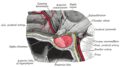
Gray1180
⏰ Role In Stress Response
When we feel stressed, the pituitary gland swings into action! ⏰It releases Adrenocorticotropic Hormone (ACTH) which tells our adrenal glands to produce cortisol, a "stress hormone." Cortisol helps us respond to stressful situations, making our heart beat faster and mind alert. This response is called the "fight or flight" response and keeps us safe! 🏃♂️ But too much stress can lead to feelings of anxiety or sadness, so it's important to relax and find ways to deal with stress, like playing, spending time with friends, or practicing deep breathing! 🌼
Go deeper📏 Pituitary Gland Disorders
Sometimes, the pituitary gland might not work as it should, which can lead to disorders. One common problem is called gigantism, where too much Growth Hormone makes a person grow too tall. 📏Another issue is dwarfism, where too little Growth Hormone prevents normal growth. There are also conditions like Cushing's disease, from too much ACTH, which can cause weight gain and other problems. It's important to see a doctor if someone feels unwell, as they can help find out if the pituitary gland is the cause! 🏥
Go deeper🍇 Anatomy Of The Pituitary Gland
The pituitary gland is shaped like a small almond or a grape! 🍇It's divided into two main parts: the anterior lobe and the posterior lobe. The anterior lobe is about 80% of the gland and produces many important hormones. The posterior lobe doesn't make hormones itself but stores them until they are needed. The pituitary gland is connected to the hypothalamus, which is a region of the brain that helps regulate body temperature and hunger. This connection allows the pituitary to receive signals about what the body needs! 🧠
Go deeper💪 The Pituitary Gland And Growth
The pituitary gland plays a vital role in helping kids grow strong and healthy! 💪When it releases Growth Hormone (GH), it tells the bones and muscles to grow. Most growth happens during sleep when the pituitary releases more GH. That’s why getting enough sleep each night is super important for kids! 🌙The right balance of GH helps children reach their full potential height. If the gland doesn’t produce enough or produces too much GH, it can lead to growth problems. Every child is unique and grows at their own pace! 🌱
Go deeper🗣️ Regulation Of Hormone Secretion
The pituitary gland doesn’t work alone; it listens to signals from the hypothalamus! 🗣️ When the hypothalamus senses that the body needs more hormones, it sends a message to the pituitary to release them. In this way, the brain controls how much hormone the pituitary secretes. Just like a dial on a radio, the hypothalamus fine-tunes the hormones to keep everything balanced. When everything is working well, our body stays healthy and happy! If things get out of whack, our body might not function properly. ⚖️
Go deeper🌈 Functions Of The Pituitary Gland
The pituitary gland has many important jobs! 🌈One of its main functions is to control growth. It sends out Growth Hormone, which tells our bones and muscles to grow bigger. It also helps manage our energy levels by sending out hormones like TSH to the thyroid. The pituitary gland controls our stress response with ACTH, helping us react to challenges! Other functions include regulating our body's water balance and helping with reproduction by sending hormones that effect production of sperm and eggs. It’s busy all day long! 💪
Go deeper🎉 Impact On Reproductive Functions
The pituitary gland also helps control when boys and girls go through puberty! 🎉It releases hormones like Luteinizing Hormone (LH) and Follicle-Stimulating Hormone (FSH), which are key for development of reproductive organs. For girls, it helps in the menstrual cycle, while for boys, it helps with sperm production. This process begins in the late childhood years and is very important for growth and development into adulthood. Having healthy reproductive hormones is essential for becoming a teenager and eventually, an adult! 🌼
Go deeper🌟 Hormones Produced By The Pituitary Gland
The pituitary gland produces hormones that travel through our bloodstream to different parts of the body! Some important hormones include Growth Hormone (GH), which helps kids grow tall, and Adrenocorticotropic Hormone (ACTH), which helps our bodies respond to stress. It also produces Thyroid-Stimulating Hormone (TSH), which helps our thyroid regulate energy. 🌟Other hormones include Prolactin, which helps mothers produce milk, and Oxytocin, which helps with bonding. Each hormone has a special job to keep our bodies healthy and happy! ❤️
Go deeper🎶 Interesting Facts About The Pituitary Gland
Did you know that the pituitary gland is sometimes called the “polyphonic gland”? 🎶This is because it influences many different hormones, just like a conductor leads an orchestra! It weighs less than a paperclip but has over 12 hormones with important tasks! 🗒️ The pituitary gland can also shrink if someone is not eating enough, which is another reason to maintain a healthy diet! Lastly, while most people have one pituitary gland, some animals, like certain frogs, can have two! Isn’t that cool? 🐸
Go deeper🌍 Historical Discoveries About The Pituitary Gland
The pituitary gland has a fascinating history! 🌍One of the first people to study it was a scientist named Pierre Flourens, who discovered it in the early 1800s. In 1902, British scientist Ernest Starling named the gland as the “master gland” because it controls other glands. Scientists like Harvey Cushing studied pituitary disorders in the early 1900s, helping us understand how it affects our bodies. Over time, we learned how important this little gland is for growth, hormones, and overall health! Today, researchers continue to study it, eager to learn even more! 🔬
Go deeper