Patagosaurus Facts For Kids
Patagosaurus is a giant, long-necked sauropod dinosaur that roamed the lush landscapes of Jurassic Patagonia, primarily feeding on vegetation.
Select reading age
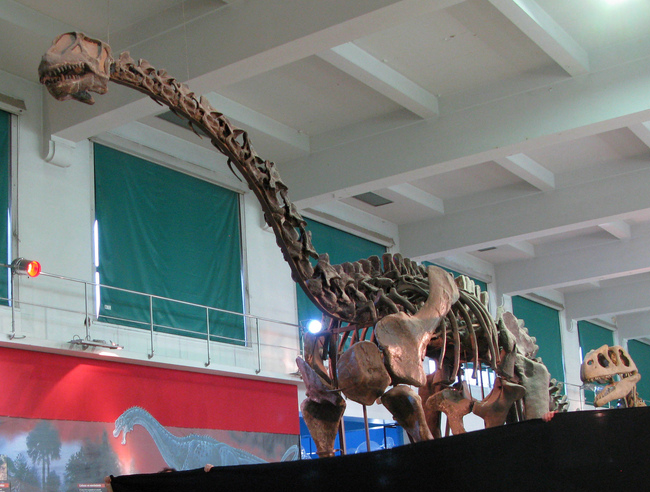
Patagosaurus Facts For Kids
Videos & Quizzesincluded
About this topic
Patagosaurus is a friendly dinosaur that roamed the Earth around 140 million years ago during the Late Jurassic period! 🦕This incredible creature was discovered in Argentina, a country in South America. Patagosaurus belonged to the sauropods, which are known for their long necks and tails. It was about 20-30 feet long, similar to a modern school bus! 🚍One of its fun features was its long neck, which allowed it to reach high leaves in the trees. Scientists believe Patagosaurus was a herbivore, which means it liked to munch on plants! 🌿
Explore with ChatDinoKey Points
As a herbivore, Patagosaurus loved to eat plants!
Paleontologists carefully study the fossils of Patagosaurus to learn more about its life and environment!
Patagosaurus had an impressive and unique body!
Patagosaurus is part of the sauropod family, which includes famous dinosaurs like Brachiosaurus and Diplodocus!
Patagosaurus lived in what is now called Patagonia, located in southern Argentina.
Patagosaurus was likely a social dinosaur, living in groups called herds!
The first Patagosaurus fossils were found in the early 1990s in Argentina!
Patagosaurus may not be as famous as T. rex, but it has inspired scientists and dinosaur lovers around the world!
Photos of Patagosaurus

Location map and stratigraphic distribution of the main sauropods of the Cañadón Asfalto Formation

Size comparison with a human

Cervical vertebra in right lateral view


Two cranial specimens, MPEF-PV 1670 and MACN-CH 933

Patagosaurus — photo 6

Patagosaurus — photo 7
🌿 Diet And Feeding Habits
As a herbivore, Patagosaurus loved to eat plants! 🌿It enjoyed feasting on leaves, ferns, and even some shrubs. Its long neck helped it reach high branches and delicious foliage that other dinosaurs couldn’t get to. 🍃While eating, Patagosaurus would graze for many hours each day to fill its big belly. It is thought that they had a special way of chewing to break down tough plant materials, which helped them digest their food better. Imagine having a super long neck to nibble on the tallest trees! 🥳
Go deeper🧑🔬 Paleontological Research
Paleontologists carefully study the fossils of Patagosaurus to learn more about its life and environment! 🧑🔬 They collect bones, examine their shape, and figure out how they fit together like a puzzle. This research helps scientists understand how dinosaurs adapted to their surroundings and what they ate. 🧩Some fossils are preserved in museums, allowing visitors to see these spectacular remains. Ongoing research about Patagosaurus continues to reveal new facts, confirming how important this dinosaur is for studying prehistoric life! Each discovery is like uncovering a new secret from the past! 🎉
Go deeper🌳 Physical Characteristics
Patagosaurus had an impressive and unique body! With a long neck and a heavy body, it was built for reaching the lush treetops and grazing on a range of plants. 🌳It had a small head compared to its enormous body, with flat teeth perfect for munching leaves. 🦷These dinosaurs had thick legs that supported their weight, much like the sturdy pillars of a building. Additionally, Patagosaurus had a long, whip-like tail that it could use to balance itself or communicate with other dinosaurs. Imagine a giant version of a friendly giraffe! 🦒
Go deeper🌟 Relation To Other Dinosaurs
Patagosaurus is part of the sauropod family, which includes famous dinosaurs like Brachiosaurus and Diplodocus! 🌟These dinosaurs were all herbivores with long necks and tails. They lived in similar environments and had similar diets, munching on leaves and ferns. Despite their similarities, each sauropod had unique characteristics. For instance, Patagosaurus was smaller than some of its more famous cousins, reaching about 20-30 feet long. Exploring these relationships helps us learn more about how different dinosaurs lived during the same time! 🌈
Go deeper🌎 Habitat And Geographic Range
Patagosaurus lived in what is now called Patagonia, located in southern Argentina. 🌎This area was once filled with dense forests and lush vegetation, providing plenty of food for our dinosaur friend. During the Late Jurassic period, the climate was warmer and more humid, making it a paradise for plant-eating dinosaurs! 🌴By understanding its habitat, scientists can learn more about how dinosaurs lived and thrived millions of years ago. It’s fascinating how many different species lived on Earth in this colorful time! 🌈
Go deeper🦕 Behavior And Social Structure
Patagosaurus was likely a social dinosaur, living in groups called herds! 🦕💕 Being in a herd helped protect them from predators. Scientists believe they communicated with each other using sounds and gestures, just like how we talk and wave to our friends. In a herd, the dinosaurs helped each other find food and stayed safe from hungry carnivores! The young Patagosaurus also learned important life lessons from older dinosaurs in their group, creating a caring and supportive community. 👫
Go deeper🕵️♂️ Fossil Discovery And Significance
The first Patagosaurus fossils were found in the early 1990s in Argentina! 🕵️♂️ Paleontologists have discovered many bones, including parts of the skull, limbs, and vertebrae. These fossils are incredibly important because they help scientists study how Patagosaurus lived and how it compared to other dinosaurs. The study of Patagosaurus helps us understand the diversity of dinosaurs in the Jurassic period and their adaptations to survive in their environment. Each new discovery tells us a little more about our Earth’s ancient past! 🦴
Go deeper🌍 Cultural Impact And Representation
Patagosaurus may not be as famous as T. rex, but it has inspired scientists and dinosaur lovers around the world! 🌍It appears in books, documentaries, and even toys! 🦖This dinosaur helps children learn about the Jurassic period and how incredible dinosaurs were. The story of Patagosaurus encourages curiosity and imagination, making learning about dinosaurs exciting and fun! It shows us that even lesser-known dinosaurs played an essential role in Earth's history, reminding us that every creature has a story to tell. 📚✨
Go deeper