Oyster Facts For Kids
Oysters are bivalve molluscs with two shells that live in marine and brackish environments, playing key ecological and culinary roles.
Select reading age

Oyster Facts For Kids
Videos & Quizzesincluded
About this topic
Oysters are special sea animals that belong to families of bivalve molluscs. 🐚They have two hard shells that protect their soft bodies inside. Oysters are found in salty waters around the world, especially in places like the Atlantic Ocean and the Gulf of Mexico. Many people enjoy eating them, and they can be really good for you! Oysters help clean the ocean by filtering out dirt and algae. They are also interesting because they can produce pearls! 🦪These special creatures have been around for millions of years, and there’s so much to learn about them!
Explore with ChatDinoKey Points
Oysters love to live in warm, shallow waters.
Oysters face several threats today, such as pollution and overfishing.
Oysters pop up in popular culture in many fun ways!
Oysters have a fascinating life cycle!
Oysters are unique because of their two shells, known as valves.
Oyster farming, or aquaculture, is the practice of raising oysters for food and other products.
Oysters have a rich cultural history around the world.
Oysters play a crucial role in keeping our oceans healthy!
Oysters are considered a tasty treat in many cultures!
Photos of Oyster

Mixed seafood in Dubai; oysters are at the edge of the tray

Removing a pearl from a pearl oyster

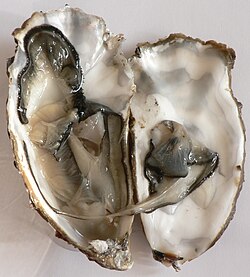
Oyster — photo 4

Oyster reef at about mid-tide off fishing pier at Hunting Island State Park, South Carolina

Rocks in intertidal zone covered by oysters, at Bangchuidao Scenic Area, Dalian, Liaoning Province, China

Pacific oyster Crassostrea gigas equipped with activity electrodes to follow their daily behaviour
![Dishes with Oysters, Fruit, and Wine, a 1620s painting by Osias Beert[34]](https://upload.wikimedia.org/wikipedia/commons/thumb/f/fa/Osias_Beert_the_Elder_-_Dishes_with_Oysters%2C_Fruit%2C_and_Wine_-_Google_Art_Project.jpg/960px-Osias_Beert_the_Elder_-_Dishes_with_Oysters%2C_Fruit%2C_and_Wine_-_Google_Art_Project.jpg)
Dishes with Oysters, Fruit, and Wine, a 1620s painting by Osias Beert[34]

Still-Life with Oysters by Alexander Adriaenssen
🌊 Habitat And Distribution
Oysters love to live in warm, shallow waters. 🌊You can find them along coastlines and in estuaries where rivers meet the sea. They like sandy or muddy bottoms where they can attach themselves to surfaces using a strong glue-like substance! 🌍The largest oyster beds can be found in areas like the Chesapeake Bay in the United States and the coastal waters of France. Oysters are social animals, often living in large colonies called reefs. These reefs provide homes for many other sea creatures, making them essential for the marine ecosystem! 🦭
Go deeper🌊 Threats And Conservation
Oysters face several threats today, such as pollution and overfishing. 🌊They are essential for ocean health, but their numbers are declining. Climate change can also harm their habitats, making conservation very important! Organizations work hard to protect oyster populations by restoring reefs and reducing pollution. 🛠️ One example is the Billion Oyster Project in New York City, which is helping to plant healthy oysters in local waters. By learning about oysters and supporting conservation efforts, we can all help keep these amazing creatures safe for the future! 💚
Go deeper🦪 Oysters In Popular Culture
Oysters pop up in popular culture in many fun ways! 🦪They appear in tales, songs, and even movies. For example, the famous character Popeye the Sailor loved spending time by the sea with his friends and enjoying shellfish like oysters! 🎥Also, some famous restaurants serve unique oyster dishes that attract food lovers. The annual Oyster Fest in cities like Galway, Ireland, celebrates fun games, music, and, of course, delicious oysters! 🎉From cartoons to festivals, oysters continue to be celebrated and enjoyed in various forms of entertainment! 🌅
Go deeper🌱 Reproduction And Life Cycle
Oysters have a fascinating life cycle! 🌱They can change their gender, starting as one and later changing to another. In warmer months, oysters release eggs and sperm into the water. They need the right temperature and salty water for the eggs to hatch! 🐣After a few weeks, baby oysters, called spat, settle down on the ocean floor and attach themselves to something hard. As they grow, they continue to build their shells. Oysters can live for many years and grow into large adults, helping to create oyster reefs that support other sea life! 💚
Go deeper🐚 Biology And Anatomy Of Oysters
Oysters are unique because of their two shells, known as valves. 🐚Their bodies are soft and can change shape inside. They have a muscle that helps open and close their shells. Oysters also have gills, which help them breathe underwater and filter food from the ocean! 🌊They mainly eat tiny plants called phytoplankton. Inside, they can sometimes create pearls, which are shiny and form when an oyster protects itself from irritants like sand. This amazing process shows how nature can create beautiful treasures! ✨
Go deeper🦪 Oyster Farming And Aquaculture
Oyster farming, or aquaculture, is the practice of raising oysters for food and other products. 🦪Farmers carefully grow them in water, providing the right conditions to help them thrive. They use special techniques, such as planting baby oysters on ropes, spacers, or in bags, to protect them from predators. 🌱This sustainable method helps supply oysters to restaurants and markets while also keeping wild oyster populations healthy. Some popular oyster farming areas include the Chesapeake Bay and the waters around New Zealand. 🍽️
Go deeper🌍 Cultural Significance Of Oysters
Oysters have a rich cultural history around the world. 🌍Since ancient times, people have enjoyed eating them, and they often symbolize good luck and prosperity! In some cultures, oysters are served on special occasions like weddings or holidays. Oysters have even inspired famous artworks and poems! 🎨Famous personalities like Ernest Hemingway and Queen Victoria have expressed their love for these tasty delicacies. With their rich history, oysters connect people to traditions, families, and the ocean! 💙
Go deeper🌊 Ecological Importance Of Oysters
Oysters play a crucial role in keeping our oceans healthy! 🌊They filter water, which means they remove harmful substances, algae, and dirt, allowing sunlight to reach underwater plants. A single oyster can filter up to 50 gallons of water a day! 🦪They also create habitats called reefs, which provide shelter and food for many marine animals like fish and crabs. By building these reefs, oysters help protect shorelines from erosion and improve water quality, making them essential for both the environment and the economy! 🌍
Go deeper🍽️ Culinary Uses And Nutritional Value
Oysters are considered a tasty treat in many cultures! 🍽️ They're often eaten raw on the half shell, baked, or even fried. They are high in nutrients, such as protein, zinc, and vitamin B12, which are important for our health. A dozen oysters can provide about 75% of the daily need for zinc! 🌟Many people enjoy eating them with lemon juice or cocktail sauce. Some famous dishes using oysters include oyster stew and oyster gumbo! When you eat oysters, you're also enjoying a part of ocean history! 🌊
Go deeper