All Articles

Otto Hahn

Otto Hahn Facts For Kids

Otto Hahn was a German chemist who pioneered nuclear chemistry and discovered nuclear fission, significantly impacting science and history.

🎨 Reading age for 6-8
Background blob
Otto Hahn
Otto Hahn
Facts for Kids!

Do more with AI

Introduction

Otto Hahn was a famous scientist born on March 8, 1879, in Frankfurt, Germany 🇩🇪. He is best known for discovering nuclear fission, which is a process that split atoms. This discovery helped us understand how to use nuclear energy for things like power and medicine! 🔬Hahn was awarded the Nobel Prize in Chemistry in 1944 for his amazing work. He worked with other scientists and loved to explore the mysteries of the tiny particles that make up everything around us. Otto Hahn's discoveries changed how we look at the universe! 🌌

Images of Otto Hahn

Otto Hahn's marble bust at the Deutsches Museum in Munich
Otto Hahn's marble bust at the Deutsches Museum in Munich

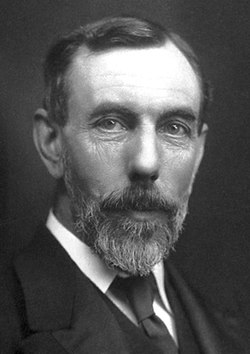
William Ramsay, London 1905

William Ramsay, London 1905

Ernest Rutherford at McGill University, Montreal 1905

Ernest Rutherford at McGill University, Montreal 1905

Hahn and Meitner, 1913, in the chemical laboratory of the Kaiser Wilhelm Institute for Chemistry. When a colleague she did not recognise said that they had met before, Meitner replied: "You probably mistake me for Professor Hahn."[13]

Hahn and Meitner, 1913, in the chemical laboratory of the Kaiser Wilhelm Institute for Chemistry. When a colleague she did not recognise said that they had met before, Meitner replied: "You probably mistake me for Professor Hahn."[13]

Physicists and chemists in Berlin in 1920. Front row, left to right: Hertha Sponer, Albert Einstein, Ingrid Franck, James Franck, Lise Meitner, Fritz Haber, and Otto Hahn. Back row, left to right: Walter Grotrian, Wilhelm Westphal, Otto von Baeyer [de], Peter Pringsheim [de] and Gustav Hertz

Physicists and chemists in Berlin in 1920. Front row, left to right: Hertha Sponer, Albert Einstein, Ingrid Franck, James Franck, Lise Meitner, Fritz Haber, and Otto Hahn. Back row, left to right: Walter Grotrian, Wilhelm Westphal, Otto von Baeyer [de], Peter Pringsheim [de] and Gustav Hertz

Former Kaiser Wilhelm Institute for Chemistry building in Berlin. Heavily damaged by bombing during the Second World War, it was restored and became part of the Free University of Berlin. It was renamed the Otto Hahn Building in 1956, and the Hahn-Meitner Building in 2010.[26][27]

Former Kaiser Wilhelm Institute for Chemistry building in Berlin. Heavily damaged by bombing during the Second World War, it was restored and became part of the Free University of Berlin. It was renamed the Otto Hahn Building in 1956, and the Hahn-Meitner Building in 2010.[26][27]

Hahn in uniform in 1915

Hahn in uniform in 1915

The decay chain of actinium. Alpha decay shifts two elements down; beta decay shifts one element up.

The decay chain of actinium. Alpha decay shifts two elements down; beta decay shifts one element up.

Awards And Honors

Otto Hahn received numerous awards for his exceptional scientific work. 🏆In 1944, he was awarded the Nobel Prize in Chemistry for his discovery of nuclear fission, which was a fantastic achievement! He became a member of many scientific societies around the world. He also received the National Medal for Science from the United States and many other awards for his extraordinary contributions to science. 🥇Otto was respected by many scientists and loved for his dedication to exploring the mysteries of the atom!

Later Years And Legacy

As Otto Hahn grew older, he continued to work in science and collaborated with other scientists around the world. He opposed the use of nuclear weapons and believed they could hurt people. 🕊️ After World War II, he worked hard to promote peaceful uses of nuclear energy. His legacy lives on as a symbol of scientific discovery, but also of responsibility in using that knowledge wisely. 🌱Otto Hahn passed away on July 28, 1968, but his incredible contributions to science are remembered and celebrated to this day!

Early Life And Education

Otto Hahn came from a lovely family in Germany. His father was a businessman, and his mother cared for him and his siblings. Otto liked to explore nature and think about how things worked. 🦋He studied at the Gymnasium in Frankfurt and then went to university. He attended the Technical University of Berlin and learned about chemistry and physics. 📚He even worked at the University of Berlin, where he had some amazing teachers, including the famous chemist, Emil Fischer. Otto loved school and became a brilliant scientist!

Discovery Of Nuclear Fission

In 1938, Hahn, Strassmann, and Meitner made a groundbreaking discovery! They found that if they bombarded uranium atoms with neutrons, the atoms would split—this was called nuclear fission! ⚛️ This was a huge moment in science because it helped people understand how to create new types of energy and even the power to make atomic bombs! 🌍Otto’s work, along with that of Lise Meitner, laid the groundwork for the future of nuclear energy, making it possible for us to harness energy from tiny particles.

Otto Hahn In Popular Culture

Otto Hahn's amazing work as a scientist has been featured in many documentaries, books, and films about science and history! 📖Educational programs highlight his discoveries and contributions to nuclear physics and chemistry. Some cartoons even mention scientists like Otto Hahn to inspire children to learn more about science! 🎬His life story teaches kids that science can have a positive impact on the world, and it encourages future generations to explore the wonders of nature just like he did!

Political Views And Controversies

Otto Hahn's work led him to have strong opinions about the use of nuclear energy. ⚖️ While he encouraged peaceful applications, he was worried about nuclear weapons hurting humanity. During World War II, his research was used for military purposes, causing a lot of debate. He often spoke out against the use of bombs and believed the knowledge should serve mankind, not destroy it. 📜To this day, people discuss how scientists should handle their discoveries, and Otto Hahn’s thoughts on responsibility remain important in science!

Career And Scientific Contributions

After finishing school, Otto Hahn worked at different research labs. One of his first jobs was at the chemistry lab at the University of Berlin. 💡He spent a lot of time learning and experimenting with elements like uranium and thorium. Over the years, he collaborated with other scientists, including Fritz Strassmann and Lise Meitner. Together, they explored the wonders of radioactivity! 🌈Otto's hard work led him to discover many important things about the nucleus of atoms, which built the path for future research in nuclear physics chemistry.

Impact On Nuclear Physics And Chemistry

Otto Hahn's discovery of nuclear fission changed the world! 🌎It opened doors for many new technologies, like nuclear power plants that generate electricity. 💡Scientists could study radioactive materials to learn more about different elements, helping us understand cancer treatment and other medical therapies! Otto's work also made people think about safety around nuclear energy and the environment. His research paved the way for detecting radioactive elements, influencing both physics and chemistry since his discoveries are still used today!

Otto Hahn Quiz

Q1
Question 1 of 10

Learn more about Otto Hahn

Ready to create?

Drop Files here
Make

To create a safe space for kid creators worldwide!

Create

Vibe Coding

Kids GPT

All Tools

Kibu

Resources

Worksheets

SafeTube

Blog

FAQ

Account

Pricing

Log-in

Sign-up

Data Deletion

Company

About

Community Guidelines

Privacy Policy

Terms of Service

2025, URSOR LIMITED. All rights reserved. DIY is in no way affiliated with Minecraft™, Mojang, Microsoft, Roblox™ or YouTube. LEGO® is a trademark of the LEGO® Group which does not sponsor, endorse or authorize this website or event. Made with love in San Francisco.