All Articles

Nephron

Nephron Facts For Kids

The nephron is the tiny, essential working unit of the kidney that filters blood and produces urine.

🎨 Reading age for 6-8
Background blob
Nephron
Nephron
Facts for Kids!
Image by Artwork by Holly Fischer, licensed under Creative Commons Attribution 3.0

Do more with AI

Introduction

The nephron is a tiny but super important part of your kidneys! 🦠Each person has about a million nephrons in their kidneys. These nephrons are like little filters that help clean your blood by removing waste and extra water. The kidneys are located in your lower back, one on each side of your spine. Nephrons help you stay healthy by balancing the fluids in your body and keeping clean water and salts. If you picture your kidneys like a sponge, then nephrons are the tiny holes that help soak up all the good things while letting the bad stuff out! 💦

Images of Nephron

Fig.1) Schematic diagram of the nephron (yellow), relevant circulation (red/blue), and the four methods of altering the filtrate.Image by Madhero88, licensed under Creative Commons Attribution 3.0

Fig.1) Schematic diagram of the nephron (yellow), relevant circulation (red/blue), and the four methods of altering the filtrate.

Fig.2) Schematic of the glomerular filtration barrier (GFB). A. The endothelial cells of the glomerulus; 1. endothelial pore (fenestra). B. Glomerular basement membrane: 1. lamina rara interna 2. lamina densa 3. lamina rara externa C. Podocytes: 1. enzymatic and structural proteins 2. filtration slit 3. diaphragmImage by M • Komorniczak -talk- , polish wikipedist. Illustration by : Michał Komorniczak This file has been released into the Creative Commons 3.0. Attribution-ShareAlike (CC BY-SA 3.0) If you use on your website or in your publication my images (either original or modified), you are requested to give me details: Michał Komorniczak (Poland) or Michal Komorniczak (Poland). For more information, write to my e-mail address: m.komorniczak.pl@gmail.com, licensed under Creative Commons Attribution-Share Alike 3.0

Fig.2) Schematic of the glomerular filtration barrier (GFB). A. The endothelial cells of the glomerulus; 1. endothelial pore (fenestra). B. Glomerular basement membrane: 1. lamina rara interna 2. lamina densa 3. lamina rara externa C. Podocytes: 1. enzymatic and structural proteins 2. filtration slit 3. diaphragm

Fig.3) Secretion and reabsorption of various substances throughout the nephron.Image by OpenStax College, licensed under Creative Commons Attribution 3.0

Fig.3) Secretion and reabsorption of various substances throughout the nephron.

Fig.4) Diagram outlining movement of ions in nephron, with the collecting ducts on the right.Image by Nephron-urine.svg : M.Komorniczak , polish wikipedist. Kidney nephron molar transport diagram.png : * Nephron-urine.svg : M.Komorniczak , polish wikipedist. derivative work: Juvo415 derivative work: Mcstrother, licensed under Creative Commons Attribution-Share Alike 3.0

Fig.4) Diagram outlining movement of ions in nephron, with the collecting ducts on the right.

Fig.5) Proximal tubule cell showing pumps involved in acid base balance, left is the lumen of tubuleImage by ColnKurtz, licensed under Creative Commons Attribution-Share Alike 4.0

Fig.5) Proximal tubule cell showing pumps involved in acid base balance, left is the lumen of tubule

Fig.6) Cross-sectional histologic preparation showing (b)small connecting tubules with simple columnar epithelium and (a) large connecting tubules with simple cuboidal epithelium.

Fig.6) Cross-sectional histologic preparation showing (b)small connecting tubules with simple columnar epithelium and (a) large connecting tubules with simple cuboidal epithelium.

Fig.7) Cross-sectional diagram of the juxtaglomerular apparatus and adjacent structures: 1) top, yellow - distal convoluted tubule; 2) top, brown -macula densa cuboidal cells surrounding arterioles; 3) small blue cells - juxtaglomerular cells; 4) large blue cells - mesangial cells; 5) tan - podocytes lining Bowman's capsule adjacent to capillaries, and parietal layer of capsule, 6)center - five glomerular capillaries, and the 6)bottom, purple - exiting tubule. Structures (2), (3), and (4) constitute the juxtaglomerular apparatus.Image by Artwork by Holly Fischer, licensed under Creative Commons Attribution 3.0

Fig.7) Cross-sectional diagram of the juxtaglomerular apparatus and adjacent structures: 1) top, yellow - distal convoluted tubule; 2) top, brown -macula densa cuboidal cells surrounding arterioles; 3) small blue cells - juxtaglomerular cells; 4) large blue cells - mesangial cells; 5) tan - podocytes lining Bowman's capsule adjacent to capillaries, and parietal layer of capsule, 6)center - five glomerular capillaries, and the 6)bottom, purple - exiting tubule. Structures (2), (3), and (4) constitute the juxtaglomerular apparatus.
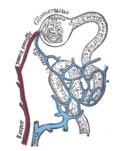
Distribution of bloodvessels in cortex of kidney.

Distribution of bloodvessels in cortex of kidney.

Glomerulus.
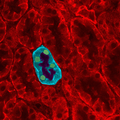
Glomerulus.

Photos of NephronImage by Original uploader was JWSchmidt at en.wikipedia, licensed under Creative Commons Attribution-Share Alike 3.0

Types Of Nephrons

Did you know there are two types of nephrons? 😲They are called cortical nephrons and juxtamedullary nephrons. Cortical nephrons are the most common and are found mostly in the outer part of the kidney. They help with filtering blood and are perfect for everyday tasks. Juxtamedullary nephrons have longer loops that dive deeper into the kidney. They are great for concentrating urine and helping your body save water, which is super important when you're thirsty! 💧So, both types of nephrons work together to keep everything running smoothly!

Filtration Process

The filtration process starts when blood enters the glomerulus. 🌪️ Tiny filters in the glomerulus catch waste while letting the good parts, like protein and cells, pass through. This filtered liquid is called filtrate, and it contains waste, salts, and some water. Then it moves into Bowman's capsule. Imagine it like a sieve that strainer separates noodles from water! 🍜After filtration, the filtrate continues down the renal tubule to the next steps, where more important adjustments happen. It’s a busy little journey inside your kidneys!

Function Of The Nephron

The main job of the nephron is to filter blood and make urine. 🧪When blood flows into the nephron, the glomerulus filters out waste, extra salt, and water. This mixture then travels through the renal tubule. During this journey, the nephron reclaims what your body still needs, like good substances and water. Finally, the leftover waste turns into urine! 🚽The nephron is like a superhero of your kidneys, making sure you have everything balanced and clean, so you can feel great every day!

Nephron And Homeostasis

Homeostasis is a big word that means keeping everything balanced! ⚖️ Nephrons play a major role in homeostasis by regulating water, salts, and other important substances in your body. When you drink lots of water, nephrons help filter out the extra, creating more urine. 💧When you're dehydrated, they save more water, making less urine. By adjusting what’s kept and what’s lost, they ensure your body has the right amount of everything. Just think, these tiny structures help keep temperatures, nutrients, and hydration in check so you can run, play, and learn!

Reabsorption Mechanisms

Reabsorption happens in the nephron after the filtration! 🌈In the renal tubule, your body needs certain things back, like water and nutrients. The nephron grabs these back through tiny holes and special channels. In the proximal convoluted tubule, most reabsorption happens — like reclaiming glucose and amino acids! 🥤The loop of Henle helps save even more water, especially when you're dehydrated! By the time the filtrate reaches the end, a lot of the good stuff has been saved, while waste is left behind to form urine. How cool is that?

Secretion In The Nephron

Secretion is another crucial job of the nephron! 🔄After reabsorption, more waste and toxins enter the renal tubule from the blood. This includes things like extra potassium or hydrogen ions. The nephron adds them to the filtrate, making sure your blood stays clean. It’s like a second chance to get rid of things your body doesn’t need! All this added waste mixes with everything else and helps prepare for the final product: urine! 🚽The nephron is always working hard to keep your body balanced!

Structure Of The Nephron

Each nephron has several cool parts! 🛠️ The main parts are the renal corpuscle and the renal tubule. The renal corpuscle is made of a tiny ball of blood vessels called the glomerulus surrounded by a cup-shaped part called Bowman's capsule. The renal tubule is a long, twisty tube where the magic happens! It has three parts: the proximal convoluted tubule, the loop of Henle, and the distal convoluted tubule. Together, these parts work like a team to help your body keep what it needs and get rid of what it doesn’t. Imagine them like different sections of a fun waterslide! 🌊

Diseases Affecting Nephrons

Sometimes, nephrons can get sick! 😟Some diseases, like diabetes or high blood pressure, can harm nephrons and make them less effective. This can lead to kidney disease and issues with waste removal. Signs of kidney problems can include swelling, fatigue, or changes in urine color. Regular check-ups can help catch problems early! 🩺Staying hydrated, eating healthy, and exercising are also important for keeping your kidneys — and nephrons — happy and working well. Just like superheroes, we have to care for our bodies!

Nephron Regeneration And Repair

Nephrons are tough, but they need help when they get damaged! 🛠️ Unfortunately, unlike some organs, nephrons can’t completely repair themselves. If some nephrons get hurt, others can sometimes take on extra work to help out. Scientists are working hard to understand how to help damaged nephrons heal better. 🧬With hopes of regeneration, researchers are looking into ways we might improve kidney health in the future. So, taking care of our kidneys now could help them perform better for longer! Every little bit counts!

Comparative Nephron Anatomy In Different Species

Nephrons are found in many animals, but there are differences! 🦓For example, fish have simpler nephrons suited for their watery homes. They can filter water efficiently! In contrast, mammals like humans have more complex nephrons. 🐶This allows us to adjust easily to different environments. Birds have special nephrons that help with water retention, which is great for flying! 🐦By studying different species, scientists can learn how nephrons work and how we can take better care of our kidneys. Isn’t nature fascinating? 🌏

Nephron Quiz

Q1
Question 1 of 10

Learn more about Nephron

Ready to create?

Drop Files here
Make

To create a safe space for kid creators worldwide!

Create

Vibe Coding

Kids GPT

All Tools

Kibu

Resources

Worksheets

SafeTube

Blog

FAQ

Account

Pricing

Log-in

Sign-up

Data Deletion

Company

About

Community Guidelines

Privacy Policy

Terms of Service

2025, URSOR LIMITED. All rights reserved. DIY is in no way affiliated with Minecraft™, Mojang, Microsoft, Roblox™ or YouTube. LEGO® is a trademark of the LEGO® Group which does not sponsor, endorse or authorize this website or event. Made with love in San Francisco.