All Articles

Mount Kenya

Mount Kenya Facts For Kids

Mount Kenya is a majestic volcanic mountain that serves as a vital source of water and biodiversity in Kenya, drawing adventurers and nature enthusiasts alike.

🎨 Reading age for 6-8
Background blob
Mount Kenya
Mount Kenya
Facts for Kids!

Do more with AI

Introduction

Mount Kenya is the tallest mountain in Kenya and the second-highest in Africa, standing at 5,199 meters (17,057 feet)! 🏔️ It is known for its beautiful snow-capped peaks and rich ecosystems. Mount Kenya is a dormant volcano, which means it hasn't erupted in a long time. The mountain is home to various unique animals and plants! Many climbers visit every year to challenge themselves and explore its stunning scenery, making it an exciting place for adventurers! 🧗‍♂️

Images of Mount Kenya

Mount Kenya, as seen from a SkySat satelliteImage by Planet Labs, licensed under Creative Commons Attribution 4.0

Mount Kenya, as seen from a SkySat satellite

Several ethnic groups that live around Mount Kenya believe the mountain to be sacred. They used to build their houses facing the mountain, with the doors on the side nearest to it.Image by Chris 73 (cropped by Mehmet Karatay ), licensed under Creative Commons Attribution-Share Alike 3.0

Several ethnic groups that live around Mount Kenya believe the mountain to be sacred. They used to build their houses facing the mountain, with the doors on the side nearest to it.

Mount Kenya was a stratovolcano and probably looked similar to Mt. Fuji[citation needed] (shown above). The lower slopes are still this shape, which is how the previous height is estimated.

Mount Kenya was a stratovolcano and probably looked similar to Mt. Fuji[citation needed] (shown above). The lower slopes are still this shape, which is how the previous height is estimated.

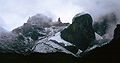
The central peaks of Mount Kenya are volcanic plugs that have resisted glacial erosion.[9] (Left to right: Point Thompson (4955m), Batian (5199m) and Nelion (5188m))

The central peaks of Mount Kenya are volcanic plugs that have resisted glacial erosion.[9] (Left to right: Point Thompson (4955m), Batian (5199m) and Nelion (5188m))

The main peaks and glaciers of Mount Kenya are near the centre of the mountain.Image by Mount_Kenya_Summit_photomap-fr.svg : Sémhur derivative work: Mehmet Karatay ( talk ), licensed under Creative Commons Attribution-Share Alike 3.0

The main peaks and glaciers of Mount Kenya are near the centre of the mountain.

Photos of Mount KenyaImage by User:Chris 73, licensed under Creative Commons Attribution-Share Alike 3.0
Photos of Mount KenyaImage by Franco Pecchio, licensed under Creative Commons Attribution 2.0
Photos of Mount KenyaImage by Mehmet Karatay, licensed under Creative Commons Attribution-Share Alike 3.0
Mount Kenya, as seen from a SkySat satelliteImage by Planet Labs, licensed under Creative Commons Attribution 4.0

Mount Kenya, as seen from a SkySat satellite

Several ethnic groups that live around Mount Kenya believe the mountain to be sacred. They used to build their houses facing the mountain, with the doors on the side nearest to it.Image by Chris 73 (cropped by Mehmet Karatay ), licensed under Creative Commons Attribution-Share Alike 3.0

Several ethnic groups that live around Mount Kenya believe the mountain to be sacred. They used to build their houses facing the mountain, with the doors on the side nearest to it.

Mount Kenya was a stratovolcano and probably looked similar to Mt. Fuji[citation needed] (shown above). The lower slopes are still this shape, which is how the previous height is estimated.

Mount Kenya was a stratovolcano and probably looked similar to Mt. Fuji[citation needed] (shown above). The lower slopes are still this shape, which is how the previous height is estimated.

The central peaks of Mount Kenya are volcanic plugs that have resisted glacial erosion.[9] (Left to right: Point Thompson (4955m), Batian (5199m) and Nelion (5188m))

The central peaks of Mount Kenya are volcanic plugs that have resisted glacial erosion.[9] (Left to right: Point Thompson (4955m), Batian (5199m) and Nelion (5188m))

The main peaks and glaciers of Mount Kenya are near the centre of the mountain.Image by Mount_Kenya_Summit_photomap-fr.svg : Sémhur derivative work: Mehmet Karatay ( talk ), licensed under Creative Commons Attribution-Share Alike 3.0

The main peaks and glaciers of Mount Kenya are near the centre of the mountain.

Photos of Mount KenyaImage by User:Chris 73, licensed under Creative Commons Attribution-Share Alike 3.0
Photos of Mount KenyaImage by Franco Pecchio, licensed under Creative Commons Attribution 2.0
Photos of Mount KenyaImage by Mehmet Karatay, licensed under Creative Commons Attribution-Share Alike 3.0
Mount Kenya, as seen from a SkySat satelliteImage by Planet Labs, licensed under Creative Commons Attribution 4.0

Mount Kenya, as seen from a SkySat satellite

Several ethnic groups that live around Mount Kenya believe the mountain to be sacred. They used to build their houses facing the mountain, with the doors on the side nearest to it.Image by Chris 73 (cropped by Mehmet Karatay ), licensed under Creative Commons Attribution-Share Alike 3.0

Several ethnic groups that live around Mount Kenya believe the mountain to be sacred. They used to build their houses facing the mountain, with the doors on the side nearest to it.

Mount Kenya was a stratovolcano and probably looked similar to Mt. Fuji[citation needed] (shown above). The lower slopes are still this shape, which is how the previous height is estimated.

Mount Kenya was a stratovolcano and probably looked similar to Mt. Fuji[citation needed] (shown above). The lower slopes are still this shape, which is how the previous height is estimated.

The central peaks of Mount Kenya are volcanic plugs that have resisted glacial erosion.[9] (Left to right: Point Thompson (4955m), Batian (5199m) and Nelion (5188m))

The central peaks of Mount Kenya are volcanic plugs that have resisted glacial erosion.[9] (Left to right: Point Thompson (4955m), Batian (5199m) and Nelion (5188m))

The main peaks and glaciers of Mount Kenya are near the centre of the mountain.Image by Mount_Kenya_Summit_photomap-fr.svg : Sémhur derivative work: Mehmet Karatay ( talk ), licensed under Creative Commons Attribution-Share Alike 3.0

The main peaks and glaciers of Mount Kenya are near the centre of the mountain.

Photos of Mount KenyaImage by User:Chris 73, licensed under Creative Commons Attribution-Share Alike 3.0
Photos of Mount KenyaImage by Franco Pecchio, licensed under Creative Commons Attribution 2.0
Photos of Mount KenyaImage by Mehmet Karatay, licensed under Creative Commons Attribution-Share Alike 3.0

Flora And Fauna

Mount Kenya is home to more than 2,000 different plant species! 🌼You can find giant lobelias and unique trees, such as the African yellowwood. The mountain is also a habitat for many animals, including elephants, buffalo, and unique birds like the montane white-eye. 🦋Some rare species, such as the endemic Mount Kenya hyrax, can be found here too! The variety of life makes Mount Kenya a special place on Earth!

Climate And Weather

Mount Kenya has a cool mountain climate. 🥶The weather changes quickly, depending on the altitude. At the base, temperatures are warm, but as you climb higher, it gets cooler! The mountain receives a lot of rainfall, especially during the rainy seasons (March to May and October to December). ❄️ Snow and ice can be found on the peaks even when it's sunny at lower levels!

Conservation Efforts

To protect Mount Kenya's unique ecosystems, many conservation efforts are underway! 🌍The Kenyan Wildlife Service works to safeguard the mountain's flora and fauna. Local communities and organizations are involved in protecting the area, too. By educating people about the importance of nature, they encourage eco-friendly tourism and sustainable practices to help preserve the mountain for future generations! 🌱

Cultural Significance

Mount Kenya holds great importance in Kikuyu culture, as they believe it is home to their god, Ngai. 🌄Many legends and stories are passed down through generations about the mountain. The Kikuyu people see it as a sacred place. People visit Mount Kenya to celebrate and honor their traditions. The mountain also plays a role in national pride for Kenyans. 🇰🇪

Geography And Location

Mount Kenya is located in central Kenya, about 150 kilometers (93 miles) north of Nairobi, the capital city. 🗺️ It is part of Mount Kenya National Park, which was established to protect its unique environments. The mountain has several distinct peaks, with Batian Peak being the highest. Mount Kenya is surrounded by lush forests, grasslands, and alpine areas, making it a beautiful place to explore! 🌳

Geology And Formations

Mount Kenya is a dormant volcano, formed about 3 million years ago! 🌋Over time, volcanic activity created the beautiful peaks we see today. The mountain has several different rock types, including granite and volcanic rock. Erosion from glaciers helped shape its unique formations and valleys, giving it a stunning landscape. Geologists study Mount Kenya to learn more about its past and how volcanoes can form! 🔍

Tourism And Activities

Many visitors come to Mount Kenya every year to explore its beauty! 🥳Popular activities include hiking, rock climbing, and wildlife watching. Tourists can also enjoy camping under the stars, fishing in lakes, and experiencing local culture. 🌲Guided tours are available for climbers who want to reach the peaks safely. Whether you're an adventurer or someone who loves nature, Mount Kenya has something for everyone! 🌟

Climbing And Hiking Routes

There are several routes to climb Mount Kenya. The most popular routes for hikers are the Mihuti and Sirimon paths. 🥾The ascent can take 5 to 7 days, depending on the route and climber's experience. Adventurers can enjoy breathtaking views, wildflowers, and even a chance to see snow at higher altitudes! It's essential to be well-prepared and hike with a guide to stay safe on this beautiful mountain. 🏕️

Did you know?

🏔️ Mount Kenya is the highest mountain in Kenya, standing at 5,199 meters (17,057 feet).

🌋 It is an extinct stratovolcano, formed around 3 million years ago.

🌲 Mount Kenya is home to diverse ecosystems, ranging from montane forest to alpine deserts.

🌁 The mountain's iconic peaks include Batian Peak, Nelion Peak, and Point Lenana.

🐾 The region around Mount Kenya supports various wildlife, including elephants, leopards, and endemic plant species.

🏞️ Mount Kenya was designated a UNESCO World Heritage Site in 1997.

🌦️ The mountain receives substantial rainfall, contributing to the numerous rivers originating from its glaciers.

🧗‍♂️ It offers various climbing routes, attracting mountaineers from all around the globe.

🎶 Mount Kenya holds cultural significance for the Kikuyu people, who consider it sacred.

📷 The picturesque landscapes of Mount Kenya make it a popular destination for photographers and nature lovers.

Mount Kenya Quiz

Q1
Question 1 of 10

Learn more about Mount Kenya

Ready to create?

Drop Files here
Make

To create a safe space for kid creators worldwide!

Create

Vibe Coding

Kids GPT

All Tools

Kibu

Resources

Worksheets

SafeTube

Blog

FAQ

Account

Pricing

Log-in

Sign-up

Data Deletion

Company

About

Community Guidelines

Privacy Policy

Terms of Service

2025, URSOR LIMITED. All rights reserved. DIY is in no way affiliated with Minecraft™, Mojang, Microsoft, Roblox™ or YouTube. LEGO® is a trademark of the LEGO® Group which does not sponsor, endorse or authorize this website or event. Made with love in San Francisco.