All Articles

Memnon

Memnon Facts For Kids

Memnon is a mythical figure in Greek mythology, known for his role as a noble warrior in the Trojan War and as the son of the goddess of dawn, Eos.
🎨 Reading age for 6-8
Background blob
Memnon
Memnon
Facts for Kids!
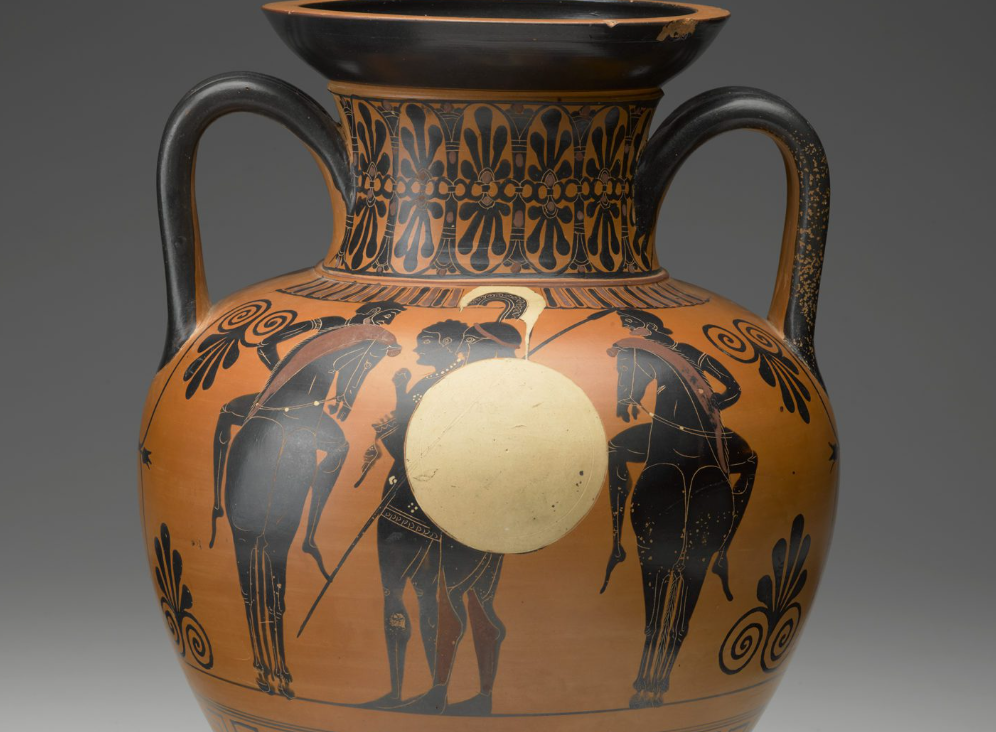
Image by Attributed to the Three Line Group, Greek, Attic, Neck-Amphora Featuring Herakles and King Memnon (detail), 530—520 BCE, terracotta, black-figure, H. 16 ½ — Diam. 12 ¼ in., Purchased with funds from the North Carolina State Art Society (Robert F. Phifer Bequest), licensed under Creative Commons Attribution-Share Alike 4.0

Do more with AI

Introduction

Memnon was a hero from ancient Greek mythology, known as the son of the goddess Eos (the Dawn) and Tithonus, a mortal. 🌅He lived in Ethiopia, a land located in northeast Africa, and was famous for his incredible fighting skills. Memnon is best known for his role in the Trojan War, where he fought on the side of the Trojans against the Greeks. He was said to have been so handsome and strong that even the gods admired him! ⚔️ Memnon's name is often connected to themes of bravery and the fight against evil.

Images of Memnon

Eos retrieving the body of her son Memnon from the battlefield (detail); Etruscan bronze mirror, c. 450–420 BC

Eos retrieving the body of her son Memnon from the battlefield (detail); Etruscan bronze mirror, c. 450–420 BC

A black archer whose feet and legs face left, upper body facing right, flanked by two Amazones. "Mayence identifies the black person with Memnon, whereas Beazley and Bothmer regard him as an attendant of Memnon." Object ID: A130[5] Amphora Origin: Attica Category: Vase painting Material: terracotta; Location: Musées Royaux d'Art et d'Histoire; Bruxelles, BelgiumArtist: The Swing Painter Dating: 460-440 BCE

A black archer whose feet and legs face left, upper body facing right, flanked by two Amazones. "Mayence identifies the black person with Memnon, whereas Beazley and Bothmer regard him as an attendant of Memnon." Object ID: A130[5] Amphora Origin: Attica Category: Vase painting Material: terracotta; Location: Musées Royaux d'Art et d'Histoire; Bruxelles, BelgiumArtist: The Swing Painter Dating: 460-440 BCE

A Battle from the Trojan War in which two of the war's greatest heroes, Achilles and Memnon, clash in the presence of their mothers, the goddesses Thetis and Eos. Each warrior has his chariot standing by, with charioteers at the ready. Inscriptions, in the Corinthian alphabet, identify the figures. Walters Art Museum 48.2230 CC0 1.0

A Battle from the Trojan War in which two of the war's greatest heroes, Achilles and Memnon, clash in the presence of their mothers, the goddesses Thetis and Eos. Each warrior has his chariot standing by, with charioteers at the ready. Inscriptions, in the Corinthian alphabet, identify the figures. Walters Art Museum 48.2230 CC0 1.0

Photos of Memnon
Memnon Pieta:[3] Devotional image or narrative. Eos poignantly lifts her fallen son, Memnon, who lays listlessly in her arms. She is dressed in a finely pleated Ionic chiton which reveals the lines of her legs, wears a patterned sakkos on her head, and has elaborately patterned wings. Her arms and parts of the torso of Memnon are gone and restored with plain clay. Memnon's head and arms fall lifeless down at the right. Some details of his anatomy and the bleeding wounds are done in dilute glaze. The exergue upon which she stands has a tongue border at top; the border around the tondo is formed of alternating crosses, maeanders (alternating directions), and X's; the last two maeanders above the exergue mistakenly overlap.[4]

Memnon Pieta:[3] Devotional image or narrative. Eos poignantly lifts her fallen son, Memnon, who lays listlessly in her arms. She is dressed in a finely pleated Ionic chiton which reveals the lines of her legs, wears a patterned sakkos on her head, and has elaborately patterned wings. Her arms and parts of the torso of Memnon are gone and restored with plain clay. Memnon's head and arms fall lifeless down at the right. Some details of his anatomy and the bleeding wounds are done in dilute glaze. The exergue upon which she stands has a tongue border at top; the border around the tondo is formed of alternating crosses, maeanders (alternating directions), and X's; the last two maeanders above the exergue mistakenly overlap.[4]

White-ground alabastron: 480BC (circa) A figure (perhaps Memnon) to right, looking to left, with black face; he is attired as an archer, in sleeved jerkin, linen cuirass, and anaxyrides (trousers), all embroidered, in right hand a double-headed axe, over left arm a garment with maeander-border and fringe. Museum number 1875,0309.24 https://www.britishmuseum.org/collection/object/G_1875-0309-24Image by The Trustees of the British Museum, licensed under Creative Commons Attribution 4.0

White-ground alabastron: 480BC (circa) A figure (perhaps Memnon) to right, looking to left, with black face; he is attired as an archer, in sleeved jerkin, linen cuirass, and anaxyrides (trousers), all embroidered, in right hand a double-headed axe, over left arm a garment with maeander-border and fringe. Museum number 1875,0309.24 https://www.britishmuseum.org/collection/object/G_1875-0309-24

Artist: Bernard Picart (1673 - 1733) French Title: Plate from 'Le Temple des Muses' (Memnon's Statue) Date: 1731 Materials: Engraving on paper Accession number: P 3036.3 National Galleries of Scotland

Artist: Bernard Picart (1673 - 1733) French Title: Plate from 'Le Temple des Muses' (Memnon's Statue) Date: 1731 Materials: Engraving on paper Accession number: P 3036.3 National Galleries of Scotland

Plate 125: Aurora Asking Jupiter to Honor Memnon (Aurora an Iove Memnoni, mortis honorem petit), from Ovid's 'Metamorphoses' Artist: Antonio Tempesta (Italian, Florence 1555–1630 Rome)

Plate 125: Aurora Asking Jupiter to Honor Memnon (Aurora an Iove Memnoni, mortis honorem petit), from Ovid's 'Metamorphoses' Artist: Antonio Tempesta (Italian, Florence 1555–1630 Rome)

Cybèle remettant à deux génies Memnon, 1560 engraving by Giorgio Ghisi, Louvre Inventory number: 4414 LR/ Recto

Cybèle remettant à deux génies Memnon, 1560 engraving by Giorgio Ghisi, Louvre Inventory number: 4414 LR/ Recto

Eos retrieving the body of her son Memnon from the battlefield (detail); Etruscan bronze mirror, c. 450–420 BC

Eos retrieving the body of her son Memnon from the battlefield (detail); Etruscan bronze mirror, c. 450–420 BC

A black archer whose feet and legs face left, upper body facing right, flanked by two Amazones. "Mayence identifies the black person with Memnon, whereas Beazley and Bothmer regard him as an attendant of Memnon." Object ID: A130[5] Amphora Origin: Attica Category: Vase painting Material: terracotta; Location: Musées Royaux d'Art et d'Histoire; Bruxelles, BelgiumArtist: The Swing Painter Dating: 460-440 BCE

A black archer whose feet and legs face left, upper body facing right, flanked by two Amazones. "Mayence identifies the black person with Memnon, whereas Beazley and Bothmer regard him as an attendant of Memnon." Object ID: A130[5] Amphora Origin: Attica Category: Vase painting Material: terracotta; Location: Musées Royaux d'Art et d'Histoire; Bruxelles, BelgiumArtist: The Swing Painter Dating: 460-440 BCE

A Battle from the Trojan War in which two of the war's greatest heroes, Achilles and Memnon, clash in the presence of their mothers, the goddesses Thetis and Eos. Each warrior has his chariot standing by, with charioteers at the ready. Inscriptions, in the Corinthian alphabet, identify the figures. Walters Art Museum 48.2230 CC0 1.0

A Battle from the Trojan War in which two of the war's greatest heroes, Achilles and Memnon, clash in the presence of their mothers, the goddesses Thetis and Eos. Each warrior has his chariot standing by, with charioteers at the ready. Inscriptions, in the Corinthian alphabet, identify the figures. Walters Art Museum 48.2230 CC0 1.0

Photos of Memnon
Memnon Pieta:[3] Devotional image or narrative. Eos poignantly lifts her fallen son, Memnon, who lays listlessly in her arms. She is dressed in a finely pleated Ionic chiton which reveals the lines of her legs, wears a patterned sakkos on her head, and has elaborately patterned wings. Her arms and parts of the torso of Memnon are gone and restored with plain clay. Memnon's head and arms fall lifeless down at the right. Some details of his anatomy and the bleeding wounds are done in dilute glaze. The exergue upon which she stands has a tongue border at top; the border around the tondo is formed of alternating crosses, maeanders (alternating directions), and X's; the last two maeanders above the exergue mistakenly overlap.[4]

Memnon Pieta:[3] Devotional image or narrative. Eos poignantly lifts her fallen son, Memnon, who lays listlessly in her arms. She is dressed in a finely pleated Ionic chiton which reveals the lines of her legs, wears a patterned sakkos on her head, and has elaborately patterned wings. Her arms and parts of the torso of Memnon are gone and restored with plain clay. Memnon's head and arms fall lifeless down at the right. Some details of his anatomy and the bleeding wounds are done in dilute glaze. The exergue upon which she stands has a tongue border at top; the border around the tondo is formed of alternating crosses, maeanders (alternating directions), and X's; the last two maeanders above the exergue mistakenly overlap.[4]

White-ground alabastron: 480BC (circa) A figure (perhaps Memnon) to right, looking to left, with black face; he is attired as an archer, in sleeved jerkin, linen cuirass, and anaxyrides (trousers), all embroidered, in right hand a double-headed axe, over left arm a garment with maeander-border and fringe. Museum number 1875,0309.24 https://www.britishmuseum.org/collection/object/G_1875-0309-24Image by The Trustees of the British Museum, licensed under Creative Commons Attribution 4.0

White-ground alabastron: 480BC (circa) A figure (perhaps Memnon) to right, looking to left, with black face; he is attired as an archer, in sleeved jerkin, linen cuirass, and anaxyrides (trousers), all embroidered, in right hand a double-headed axe, over left arm a garment with maeander-border and fringe. Museum number 1875,0309.24 https://www.britishmuseum.org/collection/object/G_1875-0309-24

Artist: Bernard Picart (1673 - 1733) French Title: Plate from 'Le Temple des Muses' (Memnon's Statue) Date: 1731 Materials: Engraving on paper Accession number: P 3036.3 National Galleries of Scotland

Artist: Bernard Picart (1673 - 1733) French Title: Plate from 'Le Temple des Muses' (Memnon's Statue) Date: 1731 Materials: Engraving on paper Accession number: P 3036.3 National Galleries of Scotland

Plate 125: Aurora Asking Jupiter to Honor Memnon (Aurora an Iove Memnoni, mortis honorem petit), from Ovid's 'Metamorphoses' Artist: Antonio Tempesta (Italian, Florence 1555–1630 Rome)

Plate 125: Aurora Asking Jupiter to Honor Memnon (Aurora an Iove Memnoni, mortis honorem petit), from Ovid's 'Metamorphoses' Artist: Antonio Tempesta (Italian, Florence 1555–1630 Rome)

Cybèle remettant à deux génies Memnon, 1560 engraving by Giorgio Ghisi, Louvre Inventory number: 4414 LR/ Recto

Cybèle remettant à deux génies Memnon, 1560 engraving by Giorgio Ghisi, Louvre Inventory number: 4414 LR/ Recto

Cultural Impact

Memnon's legacy has influenced art, literature, and even music for many centuries! 🎨His story has inspired countless poets and artists, from ancient times to today. The idea of a hero with a tragic fate resonates with many, teaching us about courage and love. Additionally, the Colossi of Memnon inspired travelers and explorers throughout history, leading to the development of tourism in Egypt. His name also appears in stories, movies, and games, reminding us of his role in mythology. 🎭

Preservation Efforts

To keep the Colossi of Memnon safe from weather and time, many preservation efforts are in place! 🌧️ Nowadays, experts study the statues, repairing any damage and protecting them from issues like erosion. Organizations work hard to promote awareness about the importance of ancient structures and the need to safeguard them for future generations. Efforts include cleaning the site regularly and educating visitors on proper conduct while exploring. By caring for the Colossi, we ensure that Memnon's legacy will live on for many years! 🛡️

Mythology And Legends

Memnon's adventures are filled with fantastic stories and legends! One tale says that after his mother Eos mourned for him, the gods felt sorry for her. They transformed Memnon into a beautiful bird called a phoenix, known for rising from its ashes. 🦅This made him a symbol of rebirth and immortality. Another story speaks about the tears of Eos, which not only brought morning dew but also became the beautiful flowers we see today. So, every time you see a flower, you can think of Memnon and his mother's love for him! 🌸

Architecture And Design

In Ethiopia, a place called Aksum erected huge statues to honor Memnon. One of the most famous sites associated with him is the Colossi of Memnon, two gigantic stone statues located in Egypt. 🗿These statues are about 60 feet tall and depict Memnon. The Colossi were built around 1400 BCE to guard the tomb of Pharaoh Amenhotep III. The statues were so big that people thought they could talk! When the wind blew through them, they made mysterious sounds which added to Memnon's legendary status. 🌬️

Historical Significance

Memnon's story was important to the ancient Greeks and inspired many tales. One famous event is his battle with Achilles, the greatest Greek warrior. This fight happened during the Trojan War, a legendary conflict sparked by the kidnapping of Helen, the wife of a Greek king. 🏰Ancient Greeks believed that Achilles killed Memnon, which made many people sad because they saw Memnon as a noble hero. His death was said to be so powerful that his mother, Eos, cried tears that turned into dew every morning. This represented her deep sadness over losing her son. 😢

Tourism And Accessibility

The Colossi of Memnon are a popular tourist destination in Luxor, Egypt. 🏖️ Visitors from around the world come to see these magnificent statues. Luxor is home to many historical sites, like temples and tombs, making it an exciting place to explore! 🌍The Colossi are easily accessible, and visitors can take guided tours to learn more about Memnon and his fascinating stories. Many tourists enjoy taking photos in front of these giant statues, making memories and bringing a piece of history back home! 📸

Archaeological Discoveries

Exciting discoveries about Memnon and ancient Egypt continue to be made! Archaeologists have found inscriptions and carvings of the Colossi of Memnon, unraveling more about its history. 🔍In 1819, a British traveler named Giovanni Battista Belzoni discovered a broken statue near the Colossi, which some believe is a representation of Memnon's mother, Eos. Excavations in the vicinity have also uncovered artifacts that tell stories of ancient rituals and honors dedicated to Memnon. These findings help us learn how ancient cultures celebrated their heroes! 📜

Comparative Analysis With Other Ancient Sites

When comparing the Colossi of Memnon to other ancient sites like the Great Pyramids of Egypt or Stonehenge in England, size and significance stand out. 🏜️ Both the Pyramids and the Colossi were created to honor important figures: Pharaohs. However, the Colossi represent a mythological hero, while the Pyramids represent the afterlife. Regarding age, the Colossi are younger than the Pyramids, but they carry delightful stories like others, showing how history connects different cultures in unique ways! 🏛️

Memnon Quiz

Q1
Question 1 of 10

Learn more about Memnon

Ready to create?

Drop Files here
Make

To create a safe space for kid creators worldwide!

Create

Vibe Coding

Kids GPT

All Tools

Kibu

Resources

Worksheets

SafeTube

Blog

FAQ

Account

Pricing

Log-in

Sign-up

Data Deletion

Company

About

Community Guidelines

Privacy Policy

Terms of Service

2025, URSOR LIMITED. All rights reserved. DIY is in no way affiliated with Minecraft™, Mojang, Microsoft, Roblox™ or YouTube. LEGO® is a trademark of the LEGO® Group which does not sponsor, endorse or authorize this website or event. Made with love in San Francisco.