Mammary Gland Facts For Kids
A mammary gland is an exocrine gland in humans and other mammals that produces milk to feed young offspring.
Select reading age

Mammary Gland Facts For Kids
Videos & Quizzesincluded
About this topic
Mammary glands are special parts of the bodies of mammals, like humans, dogs, cats, and even whales! 🐋These glands help to produce milk, which is very important for baby animals when they are born. Milk gives them the nutrients and energy they need to grow strong! Your own mom has mammary glands which allowed her to feed you as a baby. There are many different types of mammals, and each one has its way of caring for their young using milk. Isn’t that amazing? 😍Let’s dive deeper into how these glands work!
Explore with ChatDinoKey Points
Sometimes, mammary glands can have problems, just like any other part of the body.
Mammary glands can come in different shapes and sizes depending on the animal!
Mammary glands are made up of special cells that can produce milk.
Mammary glands start developing even before a baby is born!
Mammary glands evolved over millions of years to help mammals survive.
Milk is not just plain liquid—it's packed with nutrients!
Milk production is controlled by hormones in the body.
What a mother eats can change the milk she produces!
Breastfeeding is important in many cultures worldwide!
Different mammals have different mammary glands!
Photos of Mammary Gland

Mammary Gland — photo 1


Light micrograph of a human proliferating mammary gland during estrous cycle. Sprouting gland tissue can be seen in the upper left field (haematoxylin eosin staining).
Mammary Gland — photo 4

Mammary Gland — photo 5

Mammary Gland — photo 6

Mammary Gland — photo 7

الخنازير.

Mammary Gland — photo 9
😷 Mammary Gland Disorders
Sometimes, mammary glands can have problems, just like any other part of the body. One common issue is mastitis, an infection that can make the glands sore and swollen. 😷Other problems can include lumps or cysts. If something seems wrong, it's important to talk to a doctor! Regular check-ups help keep them healthy. Luckily, most issues can be treated. Taking good care of ourselves is very important to staying strong and healthy!
Go deeper🐕 Types Of Mammary Glands
Mammary glands can come in different shapes and sizes depending on the animal! 🐕For example, cows have large mammary glands to produce a lot of milk for their calves, while mice have smaller ones because they have small babies. The two main types of mammary glands are tubuloalveolar glands and lobulated glands. Tubuloalveolar glands look like little tubes that have swollen parts, while lobulated glands are made of lots of tiny lobes. Each animal’s mammary glands are specially designed to help take care of their young!
Go deeper🌊 Anatomy Of Mammary Glands
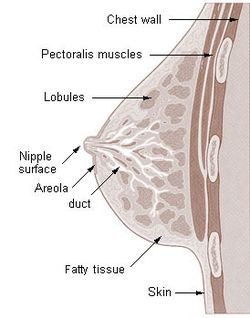
Mammary glands are made up of special cells that can produce milk. They are usually found in pairs and are located in the chest area, but dogs have them along their bellies too! Each mammary gland has small tubes called ducts that carry milk to the nipple, where babies can drink it. The nipple has little holes that allow milk to flow out. 🌊There are also fat and connective tissues that support the glands. Humans have two mammary glands, while other animals can have many more. For example, cats can have up to 8!
Go deeper🍼 Mammary Gland Development
Mammary glands start developing even before a baby is born! In girls, they begin to grow during puberty, when they start to change into young women. At this time, the mammary tissues grow larger and prepare for the future. 🍼When a woman becomes pregnant, her mammary glands get even bigger and are ready to produce milk for her baby. The process is very natural, and it makes sure that moms are ready to help nourish their little ones when they arrive!
Go deeper🦋 Evolution Of Mammary Glands
Mammary glands evolved over millions of years to help mammals survive. 🦋Early mammals, like the ones that lived 200 million years ago, had simple glands that provided some milk to their young. As mammals evolved, their glands also improved, becoming more efficient at feeding babies. This change is part of what helped mammals to thrive and become one of the most successful groups of animals on Earth. Today, all mammals have these marvelous glands!
Go deeper🥛 Milk Production And Composition
Milk is not just plain liquid—it's packed with nutrients! 🥛This tasty fluid contains proteins, fats, vitamins, and minerals that help babies grow! For humans, breast milk is around 87% water, which keeps babies hydrated. It also has antibodies that help keep them safe from germs! The composition of milk can change depending on the needs of the baby. For example, if a baby is sick, a mom's milk can have special proteins to help them feel better. Isn’t that cool? 🌟
Go deeper🤱 Hormonal Regulation Of Lactation
Milk production is controlled by hormones in the body. Two important hormones are prolactin and oxytocin. Prolactin helps make milk, while oxytocin helps move the milk down to the nipple when a baby is feeding. 🤱This means that when a baby suckles, it tells the mom’s body to make more milk! Hormones are like little messengers that tell our bodies what to do. When a baby drinks milk, it helps both the baby and the mom feel happy and comfortable!
Go deeper🥦 Impact Of Nutrition On Lactation
What a mother eats can change the milk she produces! 🥦If a mom eats healthy foods like fruits and veggies, her milk will be nutritious for her baby. If she eats junk food, the milk may not be as healthy. Drinking lots of water is also important because it helps the body make enough milk. Moms all around the world are encouraged to eat balanced diets to help their babies grow strong and healthy! Remember, what you eat matters! 🍎
Go deeper🌍 Cultural Significance Of Breastfeeding
Breastfeeding is important in many cultures worldwide! 🌍In some places, mothers breastfeed for many months, while in others, they use bottles once the baby is old enough. Many believe that breastfeeding helps create strong bonds between mothers and their babies. Sharing that special time can make both feel loved and safe! Different societies also have their traditions and beliefs around feeding, showing how breastfeeding is a big part of family life!
Go deeper🦙 Mammary Glands In Different Mammal Species
Different mammals have different mammary glands! 🦙For example, sea lions and elephants have multiple teats, while gorillas have only two! Each species has adapted their glands to suit their needs. For instance, kangaroos have their mammary glands shaped specifically to help their young feed while in their pouch. Each mammal's milk is also unique—in fact, dolphin milk is different than cow milk! Isn’t it fun to learn how unique each mammal is?
Go deeper