Joseph Priestley was an 18th-century English chemist, theologian, and political theorist known for his discoveries in gas chemistry and advocacy for civil liberties.
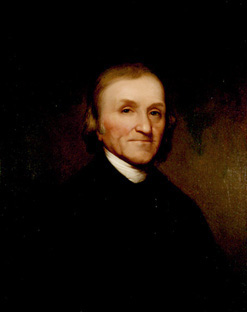
Joseph Priestley was a famous scientist, born on March 13, 1733, in Yorkshire, Englandπ¬π§. He is best known for discovering oxygen and understanding gases better. Priestley was a curious thinker and loved to experiment! He spent his life studying the air and how different gases work. Did you know that without Priestley's work, we might not understand breathing or how plants help us? π±He also was a teacher and wrote many books, helping people learn about science. His discoveries changed the way we see the world around us. π
Priestley's birthplace (since demolished) in Fieldhead, Birstall, West Yorkshire β about six miles (10 km) southwest of Leeds[14]
Title page of Rudiments of English Grammar (1761)
A redacted version of A New Chart of History (1765); Priestley believed this chart would "impress" upon students "a just image of the rise, progress, extent, duration, and contemporary state of all the considerable empires that have ever existed in the world"[34]
Priestley's "electrical machine for amateur experimentalists", illustrated in the first edition of his Familiar Introduction to the Study of Electricity (1768)
Title page to The History and Present State of Electricity (1769)
The earliest known portrait of Priestley, known as the "Leeds" portrait (c. 1763); except for his membership on the Leeds Library Committee, Priestley was not active in the town's social life[56]
Priestley had been working on Institutes of Natural and Revealed Religion since his Daventry days.
π‘ Biography
Joseph Priestley was born in a small town called Fieldhead, Englandπ‘. He was the first of five children in his family. As a boy, he loved to read and was very smart! πHe became a teacher, but he loved science most of all. In 1765, Priestley moved to Americaπ and worked hard to research gases. He made many discoveries, including one about a special gas he called "dephlogisticated air," which we now know as oxygen! His findings helped other scientists, and he even became friends with famous people like Benjamin Franklin!
Joseph Priestley's work left a lasting impact on science and philosophy. ποΈ Today, we honor him for his discoveries! There are schools named after him, and he is remembered as a groundbreaking scientist. His contributions to chemistry and the study of gases have influenced many advancements in science. Every time you take a breath, you can thank Priestley for helping us understand oxygen and its importance! π«His name is celebrated at science fairs, and he's a popular figure in science education around the world!
Joseph Priestley did not just make discoveries in science; he was also involved in politics! He believed in freedom and was an advocate for the American Revolutionπ . Priestley thought everyone should have a voice, similar to the rights we have today. He supported the idea of government giving people rights, especially in America! πΊπΈ However, his political views made him unwanted in England, so he moved to America in 1794. He continued to engage with political ideas and help shape a better future for everyone! β
Priestley loved to perform fun experiments with gases! π§ͺOne of his most famous experiments involved carbonated water. He discovered that if you put carbon dioxide in water, it makes it fizzy! πHe also found out that plants produced oxygen, which is the air we breathe! π³He did this by placing a plant in sunlight and measuring the oxygen level. Through his experiments, he showed that different gases can have different properties, like how they smell and react. Science can be so exciting with hands-on experiments!
Today, Joseph Priestley is still studied in schools! π«Children learn about his discoveries in science classes and how he influenced many other scientists. His legacy is celebrated during Chemistry weeks and science fairs, where kids explore gases and chemistry π! There are even museums that display his work. His spirit of curiosity and experimentation inspires young scientists to look at the world with wonder and excitement! Priestleyβs passion teaches us that asking questions and learning is super cool! π
Aside from chemistry, Joseph Priestley was also a great thinker who wrote about philosophy! βοΈ He published many books exploring big ideas like freedom and faith. One of his famous books was called "A History of the Corruptions of Christianity." In it, he talked about believing in what you choose! πHe wondered how people think and why they believe certain things. Priestley's writings influenced many others to think critically about their beliefs and question what they learned. Sharing ideas helps us grow and learn together!
Joseph Priestley's work led to important discoveries in chemistry! He discovered several gases, including carbon dioxide, which fizzles in sodaπΉ! Priestley developed a special way to make gases using a technique called "decalcification." This means he would separate gases from liquids. His experiments helped us understand that air is made up of different gases, not just one kind, changing how we learn about chemistry! β¨Priestley's work was so important that he is often called the "father of modern chemistry!" Thatβs quite a title!
Joseph Priestley was a Unitarian, which means he believed in one God and had different ideas about faith. He wrote a lot about religion and even disagreed with some traditional beliefsποΈ. These ideas made him popular with some, but controversial with others, leading to debates! He faced challenges during his time, such as being attacked in England for his beliefs. On July 14, 1791, a mob burned down his house! π₯This showed how people can have different opinions about faith and how important it is to respect beliefs.
Joseph Priestley inspired many scientists after him, including Antoine Lavoisier, who improved the understanding of gases. Lavoisier is often called the "father of modern chemistry," too! πPriestley's oxygen discovery helped chemists understand combustion, respiration, and photosynthesis. πΌOther scientists build their work on his discoveries and experiments. Even today, researchers refer back to Priestley's findings, and his legacy lives on in classrooms! His curiosity encouraged others to be researchers and think outside the box. Science is a teamwork adventure!