The ivory-billed woodpecker is a large, striking bird historically found in the southeastern United States, now considered possibly extinct due to habitat loss and hunting.

Set reading age
View for Kids
Easy to read and understand
View for Students
Clear, detailed explanations
View for Scholars
Deep dives and big ideas
The ivory-billed woodpecker is a large bird that was once found in the southeastern United States and parts of Cuba. 🦜It is known for its striking black-and-white feathers and a long ivory-colored bill. This bird is considered one of the most wanted birds to spot! Some people say it was last seen in the 1940s, but many believe it may be hiding in deep forests. With a wingspan of up to 30 inches, it’s very impressive! People are still searching for it today because it's mysterious and special. Can you imagine spotting one? 🌲✨
Many birdwatchers and scientists have dedicated their time searching for the ivory-billed woodpecker over the years. 🔍In the early 2000s, some people claimed to have spotted the bird in Arkansas, leading to renewed hope! There are ongoing expeditions aiming to confirm if the bird is still alive. Wildlife groups are using tools like cameras and sound recordings to listen for its distinctive calls. The search for the ivory-billed woodpecker reminds us of our commitment to conservation and understanding the wonders of nature! 🌲🌟
The ivory-billed woodpecker has come to symbolize the struggle to protect endangered species. 🦋Books, documentaries, and art feature this incredible bird, inspiring many people to care about wildlife. Schools teach students about its story to raise awareness. Even though we might never see one of these birds, their legacy teaches us how important it is to take care of our planet. By learning about the ivory-billed woodpecker, we can help protect other animals, too, and make sure they have a place to thrive! 🌍📚
Ivory-billed woodpeckers are known for their loud drumming sounds! 🔊They bang on trees to communicate and find food. Their diet mainly consists of insects, especially beetle larvae, which they extract from tree bark using their long bill. They are also known to eat nuts and fruit. They usually forage alone or in pairs and are very careful while looking for food. The birds create hollows in trees for nesting, which can be as deep as 20 inches. Their skill in climbing trees helps them to find plenty to eat and perfect places to raise their young! 🌰🐞
Ivory-billed woodpeckers love to live in large, dense forests with lots of old trees. 🍃In the United States, they were mostly found in places like Florida, Louisiana, and the Carolinas. These forests provided plenty of insects and places to nest. They also liked swamps and riverbanks where they could find food easily. Unfortunately, many of these habitats have been destroyed due to logging and development. Today, people hope that they still exist in hidden forest areas! Finding these birds in their natural habitat is like finding a hidden treasure! 🗺️🏞️
The ivory-billed woodpecker has been listed as critically endangered and possibly extinct by the International Union for Conservation of Nature (IUCN). 🌍This means that there are very few, if any, of these magnificent birds left in the wild. Its population declined due to habitat destruction and hunting. Various organizations are working hard to conserve forests and create environments where these birds could thrive again! Conservation efforts matter because protecting habitats means not only helping ivory-billed woodpeckers but many other wildlife species too! 🌱💪
Many scientists study the ivory-billed woodpecker and its habitat to understand why it disappeared. 🦅Studies on its nesting habits, diet, and behavior help conservationists create better environments for the species. The search and studies also help improve how we protect other endangered birds. As technology improves, researchers use cameras and drones to search for evidence of its existence, hoping to learn more. This ongoing research shows us how science plays a key role in protecting wildlife and preserving nature for future generations! 🔬🎓
The ivory-billed woodpecker was once a common sight in American forests, representing the beauty of nature. 🌼It is featured in many Native American legends. The bird was so beautiful that people called it the “Lord God Bird.” This nickname shows how admired it was! Unfortunately, by the mid-20th century, the bird nearly vanished due to deforestation and other human activities. Its history teaches us the importance of protecting our wildlife and natural habitats to prevent other species from facing the same fate. 🌳🐦
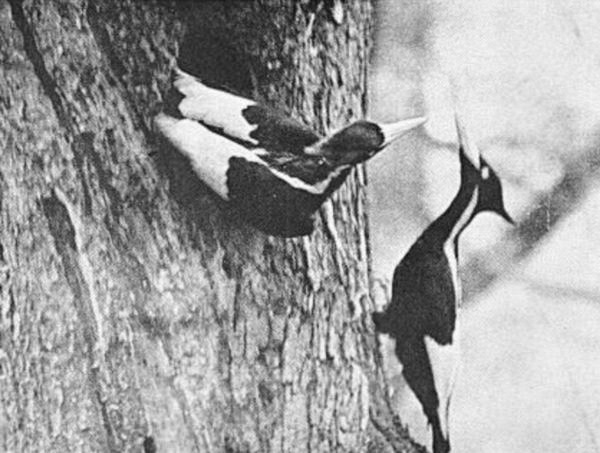
The ivory-billed woodpecker is a big bird, measuring about 18 to 20 inches long! 🐦Its feathers are glossy black on the back and white on the belly. It has a distinctive long, ivory bill that helps it dig into trees for insects. One of its most remarkable features is its striking crest on the head, which is red for males! Female ivory-billed woodpeckers have a black crest. When they fly, their large wings make a loud whooshing sound. Their sharp claws help them cling to tree trunks as they search for food. 🌳💚