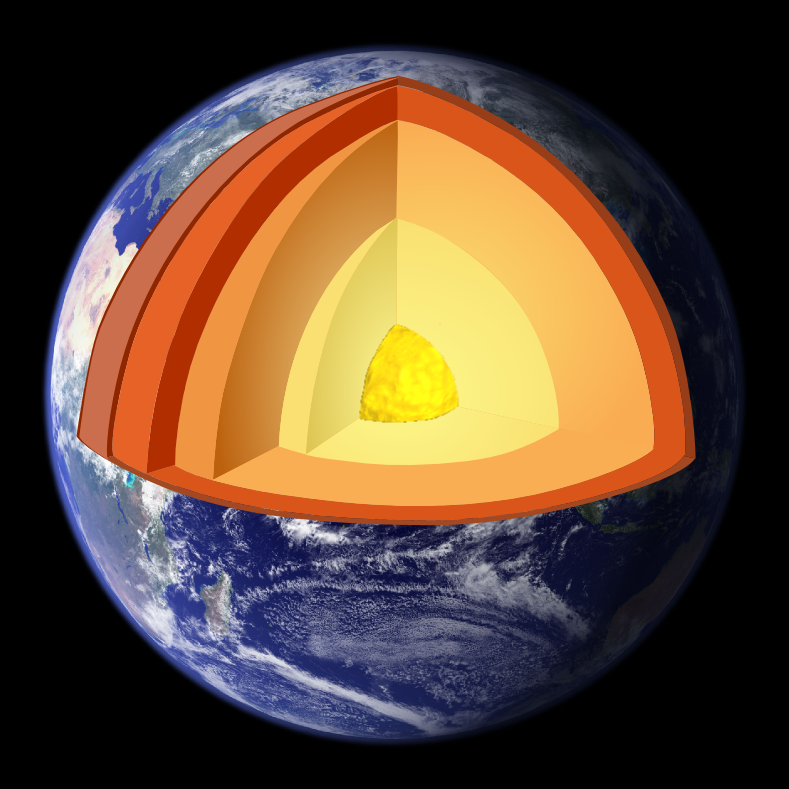
The internal structure of Earth consists of four main layers: the crust, mantle, outer core, and inner core, each with unique properties and characteristics that shape our planet.
Set reading age
View for Kids
Easy to read and understand
View for Students
Clear, detailed explanations
View for Scholars
Deep dives and big ideas
Earth is like a giant puzzle made of different layers! 🧩There are four main layers: the Crust, Mantle, Outer Core, and Inner Core. Each layer has its own unique features. The Crust is where we live, while the Inner Core is super hot! 🔥Did you know that the Earth is about 4.5 billion years old? 🌍Scientists study these layers to know how our planet works. With exciting tools and technology, we learn about earthquakes and volcanoes, helping us understand what happens below our feet! 🚀Isn’t it cool to think about everything that’s going on deep inside the Earth?
The Crust is the very top layer of Earth, where we walk, build, and play! 🏠It's like a thin skin compared to the rest of the planet, only about 5 to 70 kilometers thick. The Crust is made of rocks and soil and can be broken into pieces called tectonic plates. 🌍These plates float on the Mantle below. The continents, oceans, mountains, and valleys we see all sit on the Crust. The Crust is also where we find many minerals and resources, like gold and diamonds! 💎Isn’t it amazing that so much is packed into the layer where we live?
Below the Crust is the Mantle, which is much thicker than the Crust—about 2,900 kilometers! 🚀The Mantle is made of hot, flowing rocks and minerals. This layer moves slowly, like melted chocolate! 🍫Because of this movement, it creates convection currents that help move the tectonic plates above it. The Mantle is divided into two parts: the upper and lower Mantle. The upper part is more solid, while the lower part can flow more easily. 🌊Scientists use special tools to study the Mantle, helping us learn more about our planet's secrets! 🔍
The Inner Core is the very center of Earth and is made of solid iron and nickel. 🪨It is incredibly hot, with temperatures reaching between 4,000 to 5,000 degrees Celsius! 🔥That's hotter than the surface of the Sun! ☀️ Surprisingly, despite the heat, the Inner Core is solid because of the enormous pressure surrounding it. The Inner Core is about 1,200 kilometers thick. It spins slowly, and scientists believe it might even rotate faster than the surface of our planet! 🌍This layer is a mystery, making scientists excited to learn more about it! 🧪
The Outer Core is a liquid layer that surrounds the Inner Core! 🌊It is about 2,200 kilometers thick and made mostly of iron and nickel. This layer is super hot, with temperatures reaching up to 4,500 degrees Celsius! 🔥The movement of the liquid metal in the Outer Core creates Earth's magnetic field, which protects us from harmful solar rays. 🛡️ Because it's liquid, you can't stand on it like the other layers. Instead, it swirls around, making Earth’s magnetic field a fascinating topic for scientists! ⚡Isn’t it cool to think about how the Outer Core helps us?
Each layer of Earth has a unique composition! 🌍The Crust is made of rocks like granite and basalt. The Mantle has silicate minerals, rich in iron magnesium and is semi-solid. The Outer Core is primarily liquid iron and nickel, while the Inner Core is solid iron and some nickel. Each material behaves differently under pressure and temperature, affecting how the layers move and interact. 🧪Discovering what the Earth is made of helps scientists learn more about its history and the processes that shape it over time! 🕒
The Lithosphere and Asthenosphere are two important parts of the Earth's upper layers! 🌍The Lithosphere includes the Crust and the uppermost part of the Mantle. It’s hard and solid, which is great for building! 🏗️ Below the Lithosphere is the Asthenosphere, a partially molten zone that allows the Lithosphere to float and move. 🌊This layer is fluid-like, almost like a thick paste! The movement of the Lithosphere on top of the Asthenosphere leads to exciting events, like earthquakes and volcanic eruptions! 🌋Together, they play a big role in shaping the Earth’s surface!
Seismic waves are the energy waves created by earthquakes. 🌪️ When these waves travel through the Earth, they help scientists study its layers! 🧪There are two main types: P-waves (primary waves) and S-waves (secondary waves). P-waves are fast and can move through solid and liquid layers. S-waves are slower and only travel through solid Earth. By observing how these waves move and change speed, scientists can learn about the different layers inside the Earth! 🌍This information helps us understand earthquake risks and the planet’s structure better! 📊
Plate tectonics is the idea that the Earth's lithosphere is broken into pieces called tectonic plates that slowly move! 🌍These plates float on the semi-fluid Asthenosphere beneath them. They can collide, pull apart, or slide against each other, causing earthquakes, tsunamis, and volcanic eruptions. 🌊For example, in California, the Pacific and North American plates slide past each other, causing frequent earthquakes! 🌪️ By studying these movements, scientists learn how Earth's interior works and predict natural events to keep us safe! Isn’t it amazing how everything is connected under our feet? 🔗
As we go deeper into the Earth, both temperature and pressure increase! 🌡️ In the Crust, the temperature is cool enough for us to live while it gets hotter as we reach the Mantle and Core. For every 30 meters you dig down, the temperature can rise by 1 degree Celsius! 🔥Pressure also builds up as you go deeper. At the Inner Core, the pressure is about 3.6 million times higher than at sea level! 🌊Understanding these changes helps scientists determine what happens in each layer and how they affect the Earth's structure!
Earth has been forming for about 4.5 billion years! 🌌It all started as a big cloud of dust and gas, which came together to form our planet. As it formed, heavy materials sank to the center, creating the Inner Core and Outer Core. Lighter materials made their way to the surface, forming the Crust, while the Mantle formed in between! 🌏These layers shape the Earth and are still changing over time, making our planet a dynamic and exciting place to explore! 🚀Isn’t it incredible how Earth was crafted so long ago?


DIY is a creative community where kids draw, build, explore ideas, and share.
No credit card required