All Articles

Influenza

Influenza Facts For Kids

Influenza, commonly known as the flu, is an infectious disease caused by influenza viruses that primarily affect the respiratory system.

🎨 Reading age for 6-8
Background blob
Influenza
Influenza
Facts for Kids!

Do more with AI

Introduction

Influenza, often called the flu, is a sickness that makes people feel tired, achy, and sometimes feverish 🤒. It is caused by tiny germs called viruses that can spread from person to person. The flu can make you cough, sneeze, and feel chilly 🥶. It usually happens in the winter and can affect people of all ages. It's super important to take care of your health during flu season! Keeping your hands clean and getting vaccinated are great ways to stay healthy! Did you know that millions get the flu every year? That’s why knowing about it is essential!

Images of Influenza

Symptoms of influenza,[2][3] with fever and cough the most common symptoms[4]
Symptoms of influenza,[2][3] with fever and cough the most common symptoms[4]

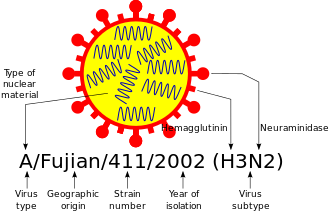
Influenza virus nomenclature (for a Fujian flu virus)Image by Burschik, licensed under Creative Commons Attribution-Share Alike 3.0

Influenza virus nomenclature (for a Fujian flu virus)

Diagram of influenza nomenclature

Diagram of influenza nomenclature

Structure of the influenza virion. The hemagglutinin (HA) and neuraminidase (NA) proteins are shown on the surface of the particle. The viral RNAs that make up the genome are shown as red coils inside the particle and bound to ribonucleoproteins (RNP).

Structure of the influenza virion. The hemagglutinin (HA) and neuraminidase (NA) proteins are shown on the surface of the particle. The viral RNAs that make up the genome are shown as red coils inside the particle and bound to ribonucleoproteins (RNP).

Host cell invasion and replication by the influenza virusImage by User:YK Times, licensed under Creative Commons Attribution-Share Alike 3.0

Host cell invasion and replication by the influenza virus

Evolution mechanisms of IAV. (A) Antigenic Drift: Gradual accumulation of mutations in the genome of IAVs leads to emergence of new virus variants. (B) Antigenic Shift: The reassortment of genetic segments between two or more invading IAVs in a host cell can lead to emergence of an antigenically novel subtype.Image by Ahmed Mostafa, Elsayed M. Abdelwhab, Thomas C. Mettenleiter, and Stephan Pleschka, licensed under Creative Commons Attribution 4.0

Evolution mechanisms of IAV. (A) Antigenic Drift: Gradual accumulation of mutations in the genome of IAVs leads to emergence of new virus variants. (B) Antigenic Shift: The reassortment of genetic segments between two or more invading IAVs in a host cell can lead to emergence of an antigenically novel subtype.

How the different sites of infection (shown in red) of H1N1 and H5N1 influences their transmission and lethality[42]

How the different sites of infection (shown in red) of H1N1 and H5N1 influences their transmission and lethality[42]

Giving an influenza vaccination

Giving an influenza vaccination

An Influenza A&B Antigen Test (bottom) showing negative results for both Influenza A and B)Image by Amrithraj, licensed under Creative Commons Attribution-Share Alike 4.0

An Influenza A&B Antigen Test (bottom) showing negative results for both Influenza A and B)

Treatment Options

If you have the flu, there are ways to feel better and recover! 🌈Resting, drinking lots of water and soup, and taking medicine to help with fever and body aches are helpful. Sometimes doctors give antiviral medicines that can shorten how long the flu lasts. It's essential to take these when they are prescribed. 🍲🥤 Over-the-counter medicines can help make you feel comfortable, but remember to always ask an adult before taking any medicines! It’s really important to listen to your body and take care of yourself while you heal!

Influenza Pandemics

Throughout history, there have been several influenza pandemics that affected millions of people! 🌍The most famous one is the 1918 Spanish Flu, which impacted about one-third of the world's population! There are also other pandemics, like the H1N1 flu in 2009. These pandemics happen when a new flu virus spreads quickly across many countries. Scientists and health organizations learn a lot from these outbreaks to protect everyone from future flu pandemics. Working together, we can be better prepared to handle and stop the spread of the flu!

History Of Influenza

The history of influenza goes back a long time! The first known flu pandemic happened in 1580! 🗓️ Many people got sick all over the world. In the 1918 flu pandemic, over 50 million people became ill 🦠. It was called the "Spanish Flu," and it spread quickly. Scientists have studied the flu for many years, helping us understand more about how it spreads and how to fight it. The World Health Organization (WHO) helps track and study influenza so we can be prepared and safe! Knowing our history helps us prevent future flu waves.

Symptoms Of Influenza

When someone has the flu, they often experience several symptoms! Common signs are fever, cough, sore throat, runny or stuffy nose 🤧, body aches, headaches, chills, and tiredness. Kids may also feel stomach pain and have diarrhea or vomiting 🤮. Symptoms usually last about a week, but some people may feel tired for a longer time. If you have any of these symptoms, it's important to rest, drink fluids, and stay home from school to help recover and not spread it to others! If it gets really bad, see a doctor!

Diagnosis Of Influenza

Doctors can find out if you have the flu by asking questions about your symptoms and doing a quick test! 🩺The test usually involves a swab (like a long cotton swab) that goes into your nose or throat. It only takes a few minutes! Some tests can show results in less than 30 minutes. If it’s the flu, your doctor will suggest ways to help you feel better! Knowing if you have the flu helps doctors give the right medicine and advice to stop it from spreading and keep everyone safe! 😊📅

Impact On Public Health

Influenza is a significant public health concern! 🌡️ Each year, millions of people get the flu, and thousands go to the hospital. This can put a lot of pressure on doctors and hospitals, especially during the flu season! Health organizations work hard to educate people about the flu and encourage vaccinations to keep everyone healthy. Community measures like school closings during outbreaks can help prevent the spread! By understanding and protecting against the flu, we can help keep our friends, family, and community strong and healthy! Let’s care for each other! 🤝

Transmission Of Influenza

The flu spreads easily! It can travel through tiny droplets when someone coughs, sneezes, or even talks. 😮When these droplets land on people or surfaces, they can catch the virus. This is why washing your hands often is so important! 🧼You can also catch the flu by touching something that someone with the virus touched and then touching your mouth, nose, or eyes. The virus can live on surfaces for several hours! If someone in your house is sick, be extra careful to protect yourself and others from catching it too!

Prevention And Vaccination

One of the best ways to stop the flu is by getting a flu shot! 💉The vaccine helps your body protect itself if you catch the virus. The flu shot is updated every year to keep up with changing viruses. Besides getting vaccinated, washing your hands regularly and covering your mouth when you cough or sneeze can help prevent the spread 😷. Healthy habits like eating fruits and vegetables and getting enough sleep also keep your immune system strong! Remember, prevention is better than cure. Stay healthy and have fun! 🍏🌟

Types Of Influenza Viruses

There are four main types of influenza viruses: A, B, C, and D. The most common types are A and B, which cause seasonal flu outbreaks 😊. Type A viruses can infect both humans and animals, like birds 🦅 and pigs 🐖. Type B viruses mainly affect humans. Type C is usually mild and doesn’t cause big outbreaks, while Type D mostly affects cattle 🐄, not humans. Each type can change or mutate, which is why new flu vaccines need to be made every year. Scientists work hard to monitor these viruses to keep us healthy!

Myths And Misconceptions About Influenza

There are many myths about the flu that people can believe! One common myth is that you can get the flu from the vaccine, but that’s not true! 💉The flu shot contains inactivated viruses that cannot give you the flu. Another myth is that the flu is just a bad cold, but the flu can be much more serious! It’s also false that healthy people don’t need the flu shot – everyone can benefit from it! Learning the facts about the flu helps protect you and your loved ones. Always ask an adult if you have questions! 🤔✨

Influenza Quiz

Q1
Question 1 of 10

Learn more about Influenza

Ready to create?

Drop Files here
Make

To create a safe space for kid creators worldwide!

Create

Vibe Coding

Kids GPT

All Tools

Kibu

Resources

Worksheets

SafeTube

Blog

FAQ

Account

Pricing

Log-in

Sign-up

Data Deletion

Company

About

Community Guidelines

Privacy Policy

Terms of Service

2025, URSOR LIMITED. All rights reserved. DIY is in no way affiliated with Minecraft™, Mojang, Microsoft, Roblox™ or YouTube. LEGO® is a trademark of the LEGO® Group which does not sponsor, endorse or authorize this website or event. Made with love in San Francisco.