All Articles

Iliad

Iliad Facts For Kids

Iliad is a French telecommunications company renowned for its affordable mobile and internet services, focusing on customer satisfaction and innovation.

🎨 Reading age for 6-8
Background blob
Iliad
Iliad
Facts for Kids!
Image by Osama Shukir Muhammed Amin FRCP(Glasg), licensed under Creative Commons Attribution-Share Alike 4.0

Do more with AI

Introduction

The Iliad is an ancient Greek epic poem, written by Homer around the 8th century BCE 📜. It tells the story of the Trojan War, a huge battle between the Greeks and Trojans. This poem has 24 books and is about the hero Achilles and his anger 🌊. The Iliad is important because it teaches us about bravery, friendship, and the consequences of anger. It is one of the oldest stories we have, and it still influences stories in movies and books today! 🎬📚

Images of Iliad

Photos of Iliad
The first verses of the Iliad

The first verses of the Iliad

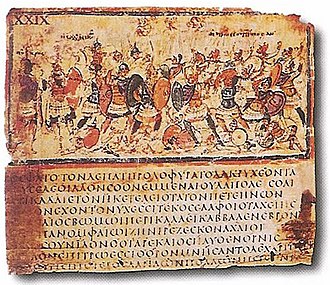
Iliad, Book VIII, lines 245–253, Greek manuscript, late 5th, early 6th centuries AD

Iliad, Book VIII, lines 245–253, Greek manuscript, late 5th, early 6th centuries AD

Thetis at Hephaestus's forge waiting to receive Achilles's new weapons, fresco from Pompeii, 1st century

Thetis at Hephaestus's forge waiting to receive Achilles's new weapons, fresco from Pompeii, 1st century

A detail of fresco from the François Tomb at Vulci, showing the sacrifice of Trojan slaves. From left to right: Agamemnon, ghost of Patroclus, Vanth, Achilles beheading a slave, Charun, Ajax the Great, a slave, Ajax the Lesser. 350–330 BC

A detail of fresco from the François Tomb at Vulci, showing the sacrifice of Trojan slaves. From left to right: Agamemnon, ghost of Patroclus, Vanth, Achilles beheading a slave, Charun, Ajax the Great, a slave, Ajax the Lesser. 350–330 BC

Hypnos and Thanatos carrying the body of Sarpedon from the battlefield of Troy; detail from an Attic white-ground lekythos, c. 440 BC

Hypnos and Thanatos carrying the body of Sarpedon from the battlefield of Troy; detail from an Attic white-ground lekythos, c. 440 BC

The Wrath of Achilles (1819), by Michel Martin Drolling

The Wrath of Achilles (1819), by Michel Martin Drolling

Achilles Slays Hector, by Peter Paul Rubens (1630–1635)

Achilles Slays Hector, by Peter Paul Rubens (1630–1635)

Homer Reciting his Poems by Thomas Lawrence, 1790

Homer Reciting his Poems by Thomas Lawrence, 1790

Photos of Iliad
The first verses of the Iliad

The first verses of the Iliad

Iliad, Book VIII, lines 245–253, Greek manuscript, late 5th, early 6th centuries AD

Iliad, Book VIII, lines 245–253, Greek manuscript, late 5th, early 6th centuries AD

Thetis at Hephaestus's forge waiting to receive Achilles's new weapons, fresco from Pompeii, 1st century

Thetis at Hephaestus's forge waiting to receive Achilles's new weapons, fresco from Pompeii, 1st century

A detail of fresco from the François Tomb at Vulci, showing the sacrifice of Trojan slaves. From left to right: Agamemnon, ghost of Patroclus, Vanth, Achilles beheading a slave, Charun, Ajax the Great, a slave, Ajax the Lesser. 350–330 BC

A detail of fresco from the François Tomb at Vulci, showing the sacrifice of Trojan slaves. From left to right: Agamemnon, ghost of Patroclus, Vanth, Achilles beheading a slave, Charun, Ajax the Great, a slave, Ajax the Lesser. 350–330 BC

Hypnos and Thanatos carrying the body of Sarpedon from the battlefield of Troy; detail from an Attic white-ground lekythos, c. 440 BC

Hypnos and Thanatos carrying the body of Sarpedon from the battlefield of Troy; detail from an Attic white-ground lekythos, c. 440 BC

The Wrath of Achilles (1819), by Michel Martin Drolling

The Wrath of Achilles (1819), by Michel Martin Drolling

Achilles Slays Hector, by Peter Paul Rubens (1630–1635)

Achilles Slays Hector, by Peter Paul Rubens (1630–1635)

Homer Reciting his Poems by Thomas Lawrence, 1790

Homer Reciting his Poems by Thomas Lawrence, 1790

Fun Facts

Did you know that The Iliad is only one part of a larger story about the Trojan War? The other part is called The Odyssey, focusing on Odysseus's journey home 🌊! The Iliad has been translated into many languages around the world! The title "Iliad" comes from "Ilium," another name for the city of Troy! Are you ready to explore the adventures of Achilles and Hector? 🏰The story is full of excitement, friendships, and lessons that still matter today! 🌟

Adaptations

Over the years, The Iliad has been adapted into many forms! There are films, like "Troy," which brings the story to life with actors and special effects 🎥. Many cartoon and animated versions exist for kids, making the story more relatable and fun 🌈. Some video games also use characters from The Iliad, allowing players to engage in epic battles! There are also modern retellings in books that give new perspectives on the famous tale 📚.

Plot Summary

The Iliad begins in the tenth year of the Trojan War. Achilles is furious because Agamemnon takes his prize, Briseis 😠. This sparks a conflict that leads to Achilles refusing to fight. Many brave battles occur, and the heroes show their skills ⚔️. Achilles’s friend Patroclus wears his armor but is killed by Hector, which angers Achilles! He returns to battle, seeks revenge, and ultimately kills Hector. The story ends with Hector's funeral, showing respect even for enemies 🏯.

Cultural Impact

The Iliad has greatly influenced literature, art, and culture around the world. Many stories, movies, and even video games have been inspired by its characters and plot 🎮. Famous works, like Shakespeare's plays and modern fantasy series, draw from its themes of heroism and conflict. The Iliad's exploration of human emotions has helped shape how we think about stories today. It is studied in schools and remains a favorite among readers of all ages 📖.

Main Characters

The Iliad has many exciting characters! Achilles is the hero, known for his strength and courage 🛡️. He is part of the Greek army. Agamemnon is the leader of the Greeks, and he often fights with Achilles 🤬. Hector is the brave prince of Troy and fights for his city. Paris, Hector's brother, started the war by taking Helen, the wife of a Greek king 👑. Other notable characters include Patroclus, Achilles's best friend, and the goddess Athena, who helps the Greeks! ✨

Literary Devices

Homer uses several literary devices in The Iliad! One popular device is "epithets" – descriptive phrases for characters, such as "swift-footed Achilles" 🏃‍♂️. "Similies" are also common; Homer compares events using phrases like "like a lion fighting" 🦁. The poem is written in "dactylic hexameter," a special rhythm that gives it a musical feel 🎶. Lastly, the "in medias res" technique begins the story in the middle of action, capturing the reader’s attention right away 💫!

Themes And Motifs

The Iliad explores many important themes. One big theme is "anger" – Achilles's rage drives the story! 😤Another theme is "honor"; many characters fight for their honor and the honor of their families. The idea of fate is also significant, as characters often struggle against what is meant to happen 🎭. Friendship plays a crucial role too, especially between Achilles and Patroclus. Finally, the impact of war and its consequences is a recurring motif, showing how it affects everyone involved 🌪️.

Historical Context

The Iliad is set during the Trojan War, which many believe happened around 1200 BCE in ancient Greece 🇬🇷. This war was sparked by the abduction of Helen. The poem reflects the culture of the time, where honor and bravery were essential for heroes. The Greeks used the poem to remember their past, and it helped pass down values through generations. It also shows the mixture of human actions and divine interventions by gods and goddesses 🏺.

Iliad Quiz

Q1
Question 1 of 10

Learn more about Iliad

Ready to create?

Make

To create a safe space for kid creators worldwide!

Create

Vibe Coding

Kids GPT

All Tools

Kibu

Resources

Worksheets

SafeTube

Blog

FAQ

Account

Pricing

Log-in

Sign-up

Data Deletion

Company

About

Community Guidelines

Privacy Policy

Terms of Service

2025, URSOR LIMITED. All rights reserved. DIY is in no way affiliated with Minecraft™, Mojang, Microsoft, Roblox™ or YouTube. LEGO® is a trademark of the LEGO® Group which does not sponsor, endorse or authorize this website or event. Made with love in San Francisco.