All Articles

George Stephenson

George Stephenson Facts For Kids

George Stephenson was an English civil and mechanical engineer during the Industrial Revolution, known for his groundbreaking contributions to railway transportation.

🎨 Reading age for 6-8
Background blob
George Stephenson
Facts for Kids!

Do more with AI

Introduction

George Stephenson was a famous engineer from England who helped create the modern railway! 🚂He was born on June 9, 1781, in a small village called Wylam, Northumberland. George was a clever man who loved machines and trains from a young age. He worked hard to study and became known as the "Father of Railways." 🌍 He also invented the first steam locomotive, which means it could move using steam power! George Stephenson's ideas changed how people traveled and helped connect different places in a whole new way.

Images of George Stephenson

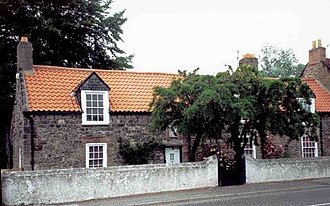
Dial Cottage, in West Moor, Killingworth. The sun-dial made and installed by George Stephenson can be seen above the front door.Image by Bill Henderson, licensed under Creative Commons Attribution-Share Alike 2.0

Dial Cottage, in West Moor, Killingworth. The sun-dial made and installed by George Stephenson can be seen above the front door.

Stephenson's safety lamp at right, shown with Davy's lamp on the left

Stephenson's safety lamp at right, shown with Davy's lamp on the left

Early Stephenson locomotive in Samuel Smiles' Lives of the Engineers (1862).[7] Called an 1816 Killingworth Colliery locomotive (often claimed to be Blücher), it looks more like the slightly later Hetton colliery railway locomotives whose 1852 replica Lyons was still operating in Smiles' time.[7]

Early Stephenson locomotive in Samuel Smiles' Lives of the Engineers (1862).[7] Called an 1816 Killingworth Colliery locomotive (often claimed to be Blücher), it looks more like the slightly later Hetton colliery railway locomotives whose 1852 replica Lyons was still operating in Smiles' time.[7]

Fishbelly rail with half-lap joint, patented by Stephenson 1816

Fishbelly rail with half-lap joint, patented by Stephenson 1816

The No. 1 engine, called Locomotion, for the Stockton & Darlington Railway

The No. 1 engine, called Locomotion, for the Stockton & Darlington Railway

Experiment, the first railway carriage

Experiment, the first railway carriage

Statue of George Stephenson at the National Railway Museum, YorkImage by Photo by and copyright Tagishsimon, licensed under Creative Commons Attribution-Share Alike 3.0

Statue of George Stephenson at the National Railway Museum, York

First passenger railway, L&MR

First passenger railway, L&MR

Stephenson's bridge

Stephenson's bridge

Dial Cottage, in West Moor, Killingworth. The sun-dial made and installed by George Stephenson can be seen above the front door.Image by Bill Henderson, licensed under Creative Commons Attribution-Share Alike 2.0

Dial Cottage, in West Moor, Killingworth. The sun-dial made and installed by George Stephenson can be seen above the front door.

Stephenson's safety lamp at right, shown with Davy's lamp on the left

Stephenson's safety lamp at right, shown with Davy's lamp on the left

Early Stephenson locomotive in Samuel Smiles' Lives of the Engineers (1862).[7] Called an 1816 Killingworth Colliery locomotive (often claimed to be Blücher), it looks more like the slightly later Hetton colliery railway locomotives whose 1852 replica Lyons was still operating in Smiles' time.[7]

Early Stephenson locomotive in Samuel Smiles' Lives of the Engineers (1862).[7] Called an 1816 Killingworth Colliery locomotive (often claimed to be Blücher), it looks more like the slightly later Hetton colliery railway locomotives whose 1852 replica Lyons was still operating in Smiles' time.[7]

Fishbelly rail with half-lap joint, patented by Stephenson 1816

Fishbelly rail with half-lap joint, patented by Stephenson 1816

The No. 1 engine, called Locomotion, for the Stockton & Darlington Railway

The No. 1 engine, called Locomotion, for the Stockton & Darlington Railway

Experiment, the first railway carriage

Experiment, the first railway carriage

Statue of George Stephenson at the National Railway Museum, YorkImage by Photo by and copyright Tagishsimon, licensed under Creative Commons Attribution-Share Alike 3.0

Statue of George Stephenson at the National Railway Museum, York

First passenger railway, L&MR

First passenger railway, L&MR

Stephenson's bridge

Stephenson's bridge

Early Life

George Stephenson didn't have a lot of money growing up. His father was a fireman in the local coal mine, and George often worked there too! ⚒️ As a child, he was curious about how things worked. He taught himself to read and write. 📖Later, he became an engine-wright, which means he learned to build and fix machines. He worked in different places, learning all about steam engines. This experience helped him think of better ways to build railways! George's childhood was hard, but it made him strong and determined to succeed.

Later Life

In his later life, George Stephenson continued to work on railways and improve train designs. 🚃He became very successful and was even called "the Railway King!" George loved to help others understand how trains worked, so he mentored many young engineers. He also built railways in other places, such as Belgium and Germany. 🌍Despite being famous, he always remembered his humble beginnings and worked hard to make rail transport better for everyone.

The Rocket

One of George Stephenson's most famous trains was called “The Rocket.” 🚀 It was built in 1829 for a special competition to find the best locomotive. The Rocket was super fast and could go over 30 miles per hour! 🏎️ It had a special design with big wheels and a boiler that made steam. The Rocket impressed everyone and won the competition, helping to make George famous! After this, many railways wanted to use his design. The Rocket helped change train travel forever, making it faster and more exciting!

Awards And Honors

Throughout his life, George Stephenson received many honors! 🏅He was recognized for his amazing work in engineering and transportation. Many railways proudly display his name, and some places are named after him! In 1838, he was appointed to the Justinian Society of Engineers. After he passed away on August 12, 1848, his achievements continued to be celebrated. Schools and institutions teach his work, promoting engineering and science. George's legacy will always live on as a symbol of hard work and ingenuity!

Legacy And Recognition

George Stephenson's legacy is immense! 🌟Today, we remember him as the "Father of Railways" because his ideas changed our world. Many places have statues and museums to honor his contributions. Trains today look different, but they all owe a lot to George's inventions. He showed that with creativity and hard work, big changes can happen. 🏆People still study his designs and learn from his work in engineering. George Stephenson is famous for creating a railway system that connects people, cities, and countries!

Impact On Transportation

George Stephenson's work had a massive effect on how people and goods are transported! 🚍Before trains, travel was slow and difficult. With George’s steam engines, people could travel hundreds of miles in just a few hours. This meant they could visit family, work in distant places, and attend events without long journeys! 🎉Trains also made it easier to transport goods like coal, food, and clothing. Because everything moved faster, stores had more products to sell. Thanks to George Stephenson, trains became the best way to travel and transport things!

The Locomotive Revolution

The Locomotive Revolution was a time when trains became very important for travel and trade! 🚄In the early 1800s, George Stephenson's ideas helped many people realize how fast and efficient trains could be. Trains were much faster than horses, and they could carry heavier loads. This revolution led to the invention of more trains and tracks, connecting cities across England. Because of George's work, people could travel long distances quickly and safely. It helped everyone explore new places and boosted the economy by moving goods faster than ever before! 🌈

Inventions And Innovations

One of the coolest things about George was that he didn't just improve trains; he invented many clever machines! 🚀He created the "Locomotion No. 1," which was one of the first steam engines to pull a train. He also developed new ways to build tracks, using iron instead of wood. George used his knowledge of steam to build the world's first public railway! This train carried passengers and goods, making it easier for people to travel and move supplies. His inventions paved the way for future trains and were crucial for the railway system we know today!

Influence On Future Engineers

George Stephenson inspired many future engineers! ⚙️ He showed how science and creativity can work together to solve problems. Today’s engineers use the ideas he developed to design trains, bridges, and even spaceships! 🚀Schools teach about his work so new generations can learn how to invent and innovate. Young students who love to build should remember George as someone who followed his dreams. His story teaches us that with passion and determination, anyone can make a difference in the world!

The Stockton And Darlington Railway

In 1825, George Stephenson opened the first-ever railway that was made for both passengers and freight called the Stockton and Darlington Railway! 🚂This line ran from Stockton to Darlington in northeast England. The railway was about 25 miles long and had steam locomotives running on it! It was a huge success and showed how trains could change transportation. 🚀People started to realize that they could travel for work or fun more easily. This railway was the beginning of many other railways across England and beyond!

George Stephenson Quiz

Q1
Question 1 of 10

Learn more about George Stephenson

Ready to create?

Drop Files here
Make

To create a safe space for kid creators worldwide!

Create

Vibe Coding

Kids GPT

All Tools

Kibu

Resources

Worksheets

SafeTube

Blog

FAQ

Account

Pricing

Log-in

Sign-up

Data Deletion

Company

About

Community Guidelines

Privacy Policy

Terms of Service

2025, URSOR LIMITED. All rights reserved. DIY is in no way affiliated with Minecraft™, Mojang, Microsoft, Roblox™ or YouTube. LEGO® is a trademark of the LEGO® Group which does not sponsor, endorse or authorize this website or event. Made with love in San Francisco.