Frankenstein Facts For Kids
Frankenstein is a novel by Mary Shelley about a scientist who creates a sentient creature through an unorthodox experiment, leading to tragic consequences.
Select reading age

Frankenstein Facts For Kids
Videos & Quizzesincluded
About this topic
"Frankenstein," written by Mary Shelley in 1818, tells the story of a man named Victor Frankenstein who creates a creature from body parts. 🧟♂️ This creature becomes alive but faces rejection because of its scary appearance. The story explores feelings of loneliness and the need for companionship. It also raises questions about science and responsibility. Mary Shelley was just 18 years old when she wrote this famous novel! 📚The book is part of the Gothic genre, which means it often involves mysterious or creepy elements. Get ready for an adventure full of excitement and learning! 🌟
Explore with ChatDinoKey Points
"Frankenstein" explores several important themes.
The book "Frankenstein" was published during the Romantic era, a time when people valued emotion, nature, and imagination.
In the 1800s, science was changing fast!
Mary Shelley uses numerous literary techniques to engage readers.
"Frankenstein" raises fascinating questions about life, responsibility, and ethics.
"Frankenstein" remains influential even today!
"Frankenstein" is one of the most adapted stories in literature!
The main character is Victor Frankenstein, a curious scientist who plays with nature.
Photos of Frankenstein
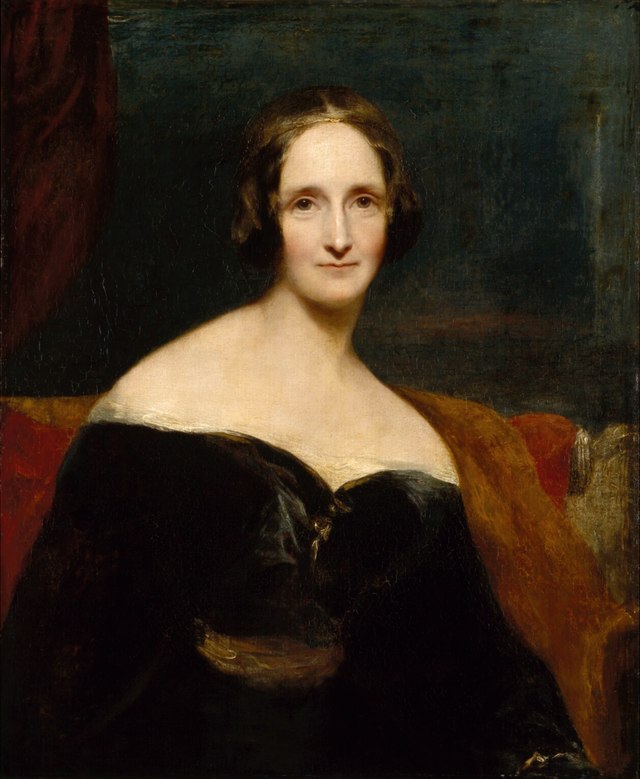
Mary Shelley by Richard Rothwell (1840–41)

Draft of Frankenstein ("It was on a dreary night of November that I beheld my man completed ...")
![An English editorial cartoonist conceives the Irish Fenian movement as akin to Frankenstein's creature, in the wake of the Phoenix Park murders in an 1882 issue of Punch.[40]](https://upload.wikimedia.org/wikipedia/commons/thumb/b/b3/Punch_Anti-Irish_propaganda_%281882%29_Irish_Frankenstein_%28cropped%29.jpg/330px-Punch_Anti-Irish_propaganda_%281882%29_Irish_Frankenstein_%28cropped%29.jpg)
An English editorial cartoonist conceives the Irish Fenian movement as akin to Frankenstein's creature, in the wake of the Phoenix Park murders in an 1882 issue of Punch.[40]

Frankenstein — photo 4

Frankenstein — photo 5
![Illustration by Theodor von Holst from the frontispiece of the 1831 edition[47]](https://upload.wikimedia.org/wikipedia/commons/thumb/e/e6/Frontispiece_to_Frankenstein_1831.jpg/960px-Frontispiece_to_Frankenstein_1831.jpg)
Illustration by Theodor von Holst from the frontispiece of the 1831 edition[47]

In 1910, Edison Studios released the first motion-picture adaptation of Shelley's story.

A variety of different editions
💔 Themes And Motifs
"Frankenstein" explores several important themes. First, it talks about isolation and loneliness. The Creature wants friends but is always rejected, showing how important connections are. 💔Another theme is ambition. Victor's desire to create life leads him down a dangerous path, teaching us that too much ambition without responsibility can cause harm. ⚠️ Nature, as a backdrop, also plays a role; it represents beauty and danger. 🌳Overall, these themes encourage readers to think about friendship, consequences, and the natural world around them!
Go deeper🎨 Historical Context
The book "Frankenstein" was published during the Romantic era, a time when people valued emotion, nature, and imagination. 🎨Mary Shelley wrote it after a summer in Geneva, Switzerland, where she and other writers challenged each other's creativity. In 1816, they had a ghost story contest that inspired her to create Frankenstein! This was also a period when science was advancing rapidly, with discoveries in electricity and anatomy. ⚡️ By blending science and horror, Mary Shelley sparked debates about ethical responsibilities in experiments. Her story is still relevant today, reminding us about the balance between knowledge and morality.
Go deeper⚗️ Scientific Context
In the 1800s, science was changing fast! ⚗️ People were discovering more about electricity, anatomy, and how living things work. This intrigued Mary Shelley and inspired her to create a story about a scientist exploring life and death. Victor Frankenstein uses electricity to bring the Creature to life, which taps into the excitement of scientific discovery during that time. ⚡️ Today, we understand that life is complex and should be treated with care. 💖Shelley's work urges us to think carefully about how science and technology affect our lives, reminding us of the power and limits of knowledge!
Go deeper👹 Literary Techniques
Mary Shelley uses numerous literary techniques to engage readers. One is symbolism; the Creature symbolizes the consequences of playing God. 👹Shelley also employs foreshadowing, hinting at future events that create suspense! 🕵️♀️ The story uses descriptive language to help the reader visualize creepy settings, like the dark mountains and eerie laboratories. 🌌Additionally, the framing device of multiple narrators—Victor’s and Walton’s tales—creates a layered story. This keeps readers on their toes while exposing different viewpoints! 📖These techniques enhance the emotional depth of the story.
Go deeper🤔 Philosophical Questions
"Frankenstein" raises fascinating questions about life, responsibility, and ethics. 🤔One big question is: Should we create life if we can't take care of it? Victor's creation leads to chaos because he doesn't think through the consequences. Another question is: What makes someone a monster? 🐲The Creature, although scary-looking, craves love, while Victor becomes monstrous by abandoning him. Ultimately, the story encourages us to reflect on what it means to be human and the importance of our choices. ❤️ These themes provoke deep thoughts about our moral responsibilities to one another and the creatures we create!
Go deeper📅 Legacy And Modern Relevance
"Frankenstein" remains influential even today! 📅Its themes about scientific responsibility and the search for love resonate with modern audiences. Many scientists and filmmakers continue to reference Shelley’s monster in their work, linking it with current issues like artificial intelligence and genetic engineering. 🤖The story challenges us to consider how our inventions can impact society. Schools teach "Frankenstein" to inspire discussions about ethics in science, demonstrating its ongoing relevance. Moreover, it encourages creativity, showing us that stories can spark change and lead to exciting discussions about who we are as humans! 🌍
Go deeper🎭 Cultural Impact And Adaptations
"Frankenstein" is one of the most adapted stories in literature! 🎭It’s been turned into movies, plays, and even cartoons! The first film adapted from the book came out in 1931 and became a classic horror movie. 🎥Since then, many reinterpretations have appeared, including comedies and animated versions. The character of Frankenstein's Creature has become a symbol of misunderstood monsters in popular culture. 🧟♂️ The themes of the story continue to inspire discussions about science and ethics today, making it a very important story across different generations!
Go deeper🧬 Characters And Their Significance
The main character is Victor Frankenstein, a curious scientist who plays with nature. 🧬He wants to create life but learns that it comes with serious consequences. Then there's the Creature, a being made from body parts, who feels lonely and misunderstood. 😢Other important characters include Elizabeth, Victor's fiancée, and Captain Walton, who narrates parts of the story. Each character helps show major themes like love, loneliness, and responsibility. 🤝They remind us how important friendships are and the impact of our choices on others!
Go deeper